
Bush dog
Speothos venaticus
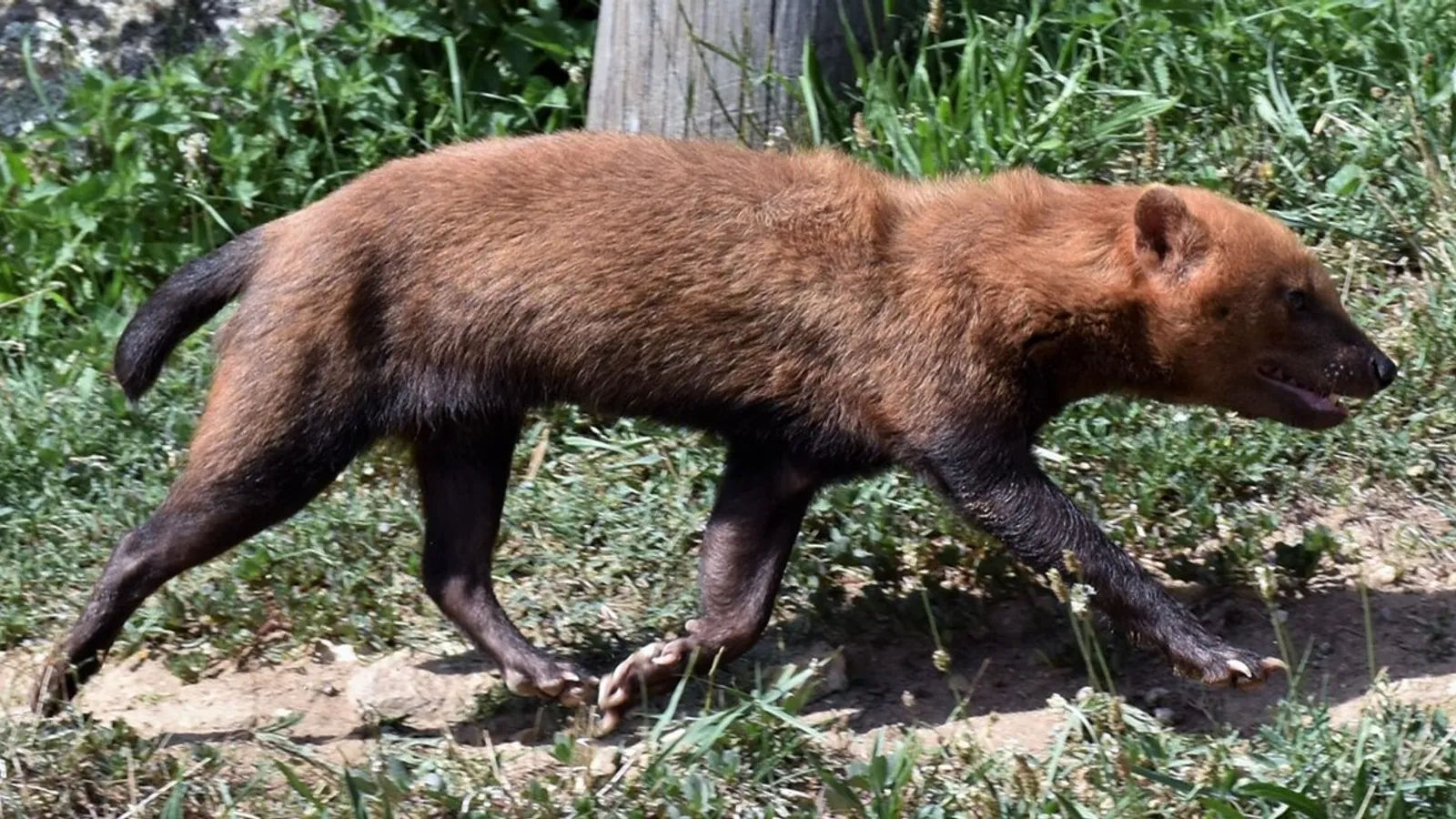
— Where the name comes from
Speothos is “cave jackal”, from the Greek spéos, “cave”, and thṓs, “jackal”, because it shelters in burrows and cavities. Venaticus is the Latin for “of the hunt”, the adjective used for hounds. A curiosity of natural history: the species was described by Peter Wilhelm Lund in 1842 from fossil remains, and only afterwards was it discovered to be still alive.
— Facts
- Group
- Mammals · Mammalia
- Order
- Carnivores
- Habitat
- Lowland rainforest, gallery forest, wet savannah
- Range
- From Panama to Paraguay and southern Brazil
- Size
- 57–75 cm of body, 5–8 kg
- Diet
- Carnivore — paca, agouti and other rodents, hunted in groups
- Lifespan
- About 10 years
— Characteristics
- 01
It has very short legs, a stocky body and webbed toes: it looks more like a mustelid than a dog.
- 02
It has a reduced dental formula, with fewer molars than other canids.
- 03
It hunts in groups of six to twelve, driving prey towards water.
— What sets it apart
It was known dead before it was known alive. The Danish naturalist Lund described it in 1842 from bones found in the caves of Minas Gerais, cataloguing it as an extinct Pleistocene species; the following year he described living animals believing them to be something else. It took years to realise that the fossil and the beast running through the forest were the same animal, and by the rule of priority the living dog kept the name it had been given as an extinct one.
