
Chinese hamster
Cricetulus griseus
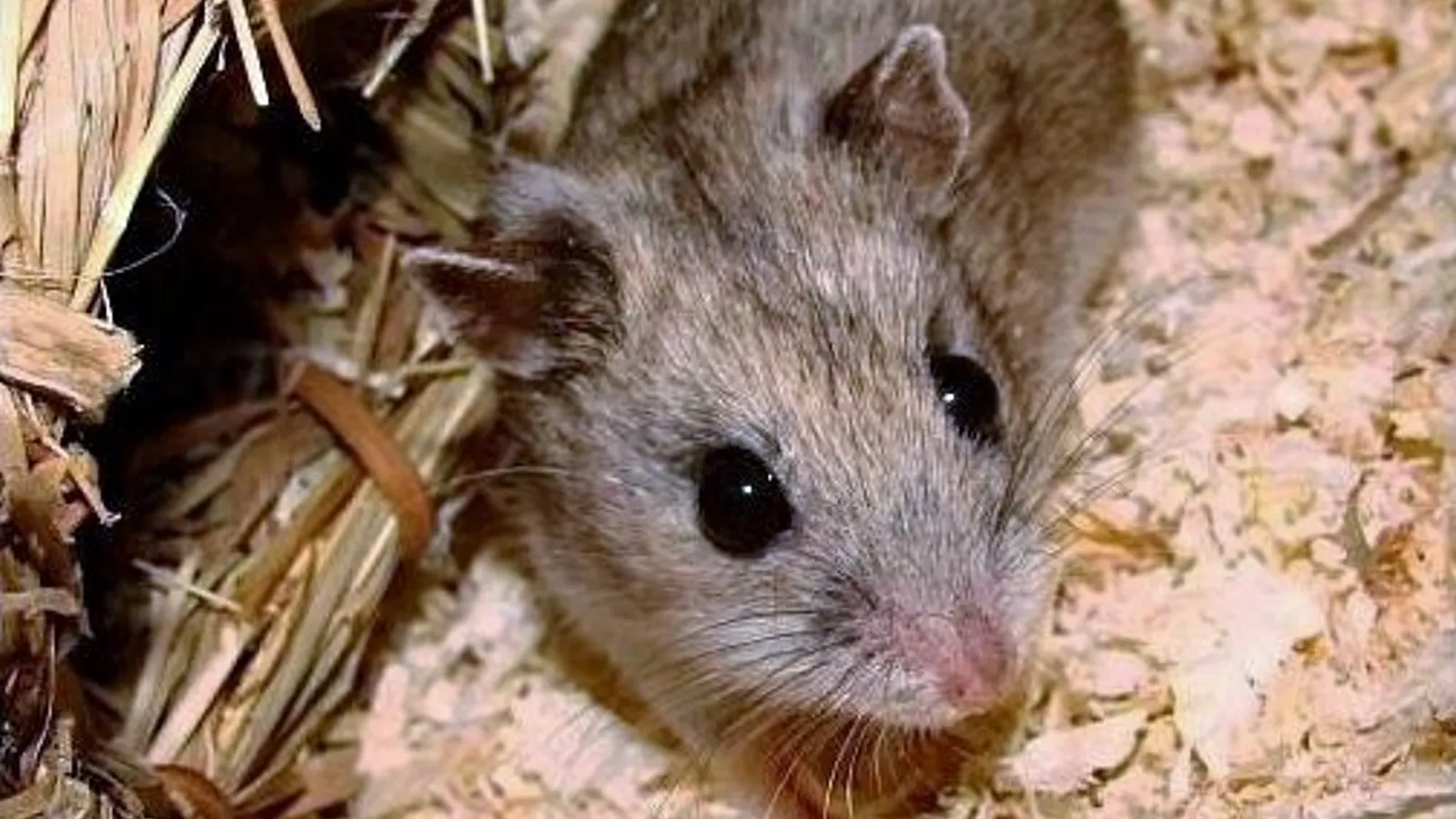
— Where the name comes from
Cricetulus is the diminutive of Cricetus, the hamster: “little hamster”. The word Cricetus in turn comes from the Czech křeček, by way of medieval Latin — a Slavic name imitating the animal’s shrill call. Griseus is late Latin for “grey”, from the Germanic gris.
— Facts
- Group
- Mammals · Mammalia
- Order
- Rodents
- Habitat
- Steppe, cultivated fields, sandy ground
- Range
- Mongolia and northern China
- Size
- 8–12 cm, tail 2–3 cm, 30–45 g
- Diet
- Seeds, grain, shoots, insects
- Lifespan
- 2–3 years
— Characteristics
- 01
It has a longer tail than most hamsters, almost mouse-like.
- 02
It has only twenty-two chromosomes, very few for a mammal.
- 03
On the steppe it digs shallow burrows and lays in stores of seed.
— What sets it apart
Half the world’s biological medicines come out of its ovaries. In 1957 a cell line drawn from the ovary of a female of this species — the CHO cells — proved able to grow indefinitely in culture and to fold complex human proteins correctly; ever since, monoclonal antibodies, erythropoietin, insulin, clotting factors and much of the recombinant vaccine supply have been produced inside descendants of those cells. A rodent of the Mongolian steppe is the invisible factory of modern pharmacology.
