
Hooded crow
Corvus cornix
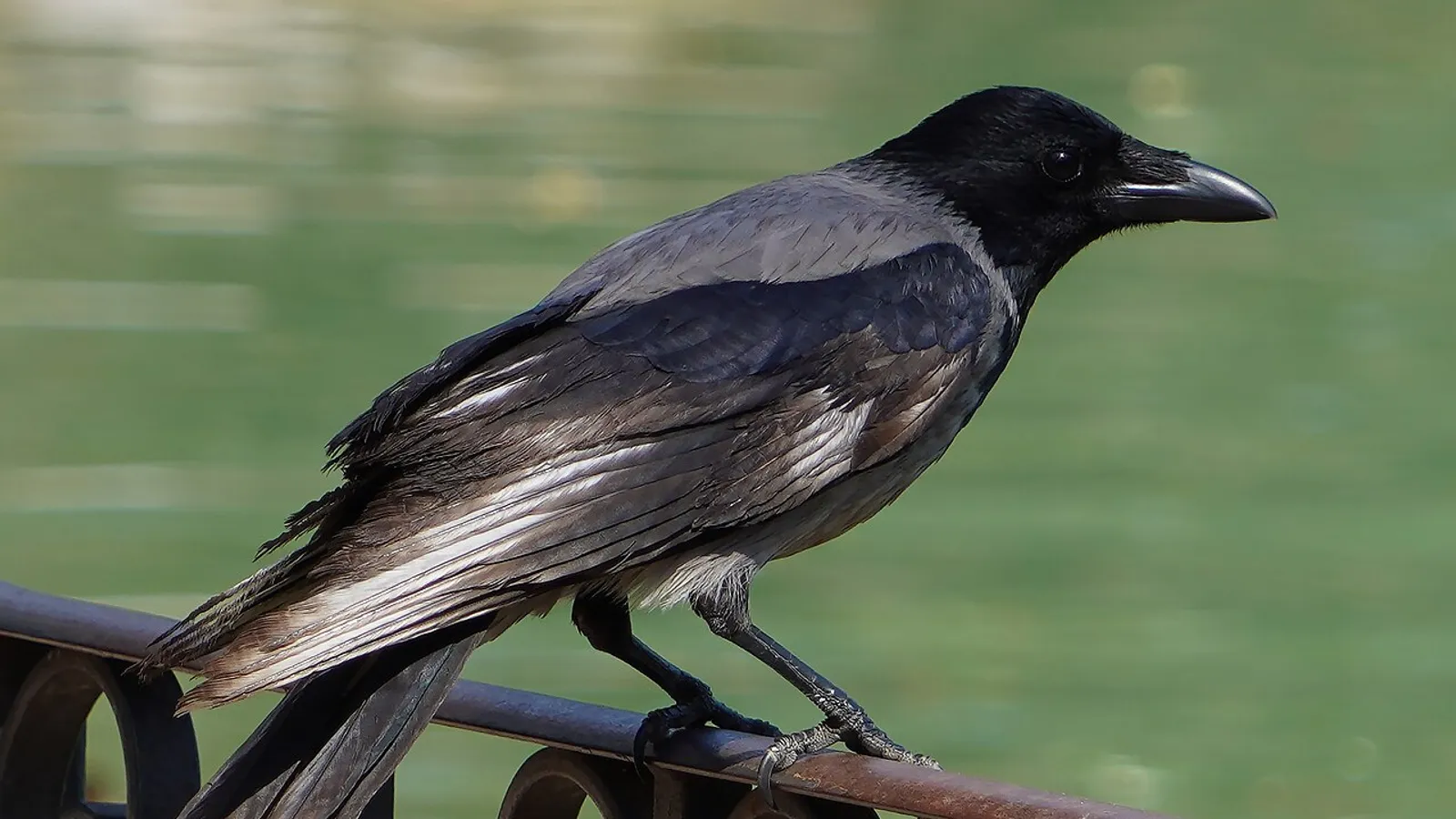
— Where the name comes from
Cornix is the crow in Latin, onomatopoeic in origin like the Greek korṓnē and like the Italian gracchiare: all of them imitate the same call. The binomial therefore says crow twice, once generically and once specifically. In Italy it is also called monachina, “little nun”, for the grey mantle across the shoulders, which looks like a garment worn over the black.
— Facts
- Group
- Birds · Aves
- Order
- Passerines
- Habitat
- Farmland, refuse tips, coasts, town parks
- Range
- Eastern and northern Europe, Italy, the Middle East, Central Asia
- Size
- 45–50 cm, wingspan 93–104 cm, 400–600 g
- Diet
- Omnivorous — carrion, eggs, insects, grain, rubbish
- Lifespan
- 8 years in the wild
— Characteristics
- 01
It drops nuts and mussels onto tarmac to open them.
- 02
It defends a territory as a pair, all year round.
- 03
It recognises individual human faces and remembers them for years.
— What sets it apart
The line that separates it from the carrion crow crosses Europe from the Elbe to the Alps and is only a few tens of kilometres wide: inside that band the two interbreed and produce fertile hybrids, outside it they hardly ever mix. Comparing the genomes showed the differences to be minimal and concentrated in a few regions — those governing plumage colour and mate recognition. They are two species separating now, and what keeps them apart is not biology but taste: each prefers to marry its own colour.
