
European rabbit
Oryctolagus cuniculus
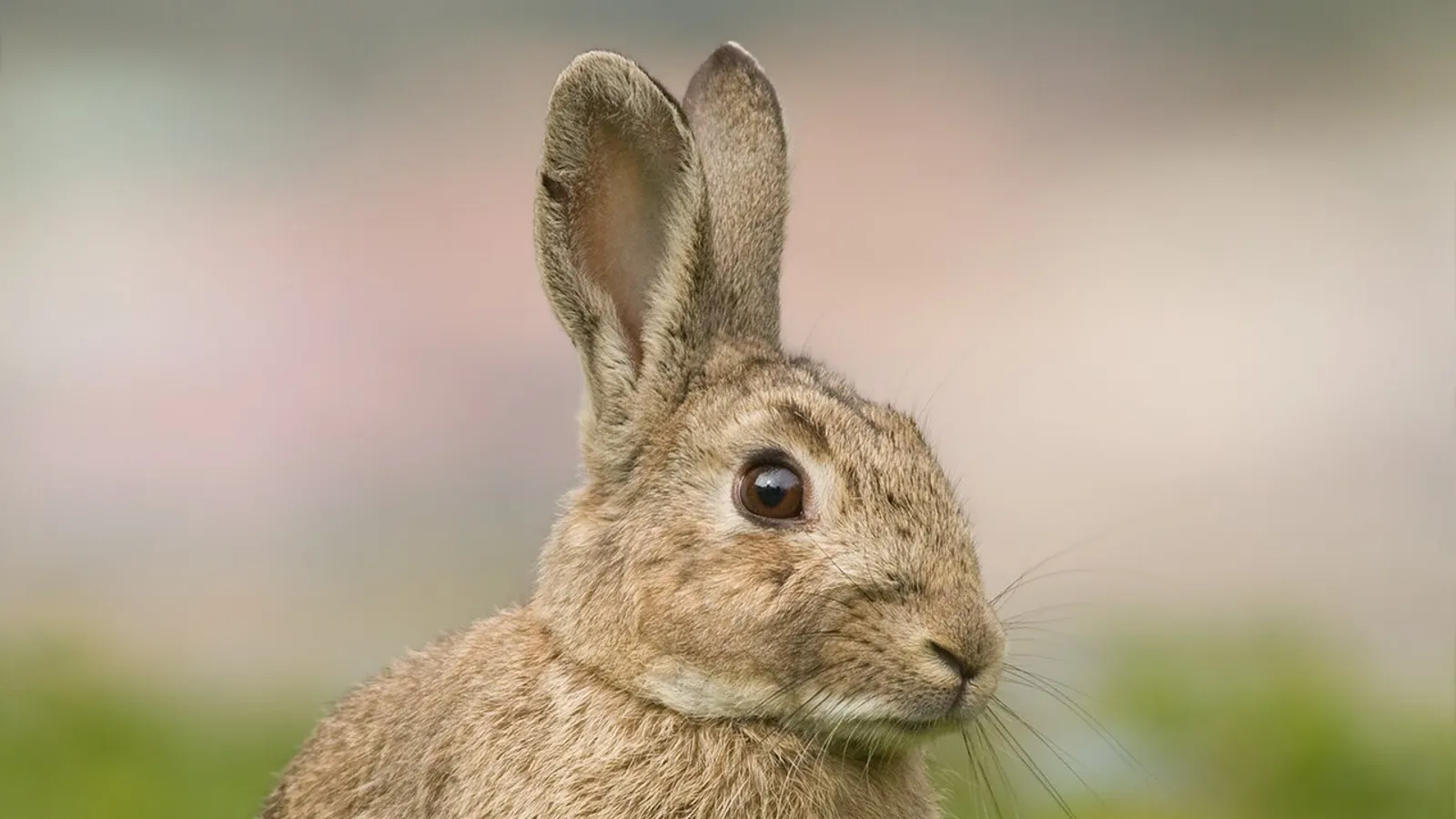
— Where the name comes from
Oryctolagus, from the Greek oryktós (dug) and lagṓs (hare): the “hare that digs”. The Latin cuniculus meant both the rabbit and the underground tunnel — the animal and its burrow bore the same name. From cuniculus comes the mining term for a gallery as well.
— Facts
- Group
- Mammals · Mammalia
- Order
- Lagomorphs
- Habitat
- Scrub, grassland and sandy ground that is easy to dig
- Range
- Native to the Iberian peninsula, introduced across much of the world
- Size
- 34–50 cm, 1.2–2 kg
- Diet
- Herbivore — grass, bark, shoots
- Lifespan
- 3–4 years in the wild
— Characteristics
- 01
Digs connected burrow systems, warrens, inhabited by large colonies.
- 02
Re-digests its own soft droppings at night to recover nutrients missed the first time.
- 03
A single pair could in theory produce hundreds of descendants in a year.
— What sets it apart
The wild rabbit is the ancestor of every domestic rabbit on the planet — and yet in its homeland, the Iberian peninsula, it is now threatened with extinction, cut down by two viruses and by habitat loss. Its collapse drags the Iberian lynx and Bonelli’s eagle down with it, predators that depend on it. On one widely held theory the very name of Spain comes from the Phoenician i-shapan-im, “island of hyraxes” — that is, of these rabbits, mistaken for hyraxes by seafarers.
