
Red kangaroo
Macropus rufus
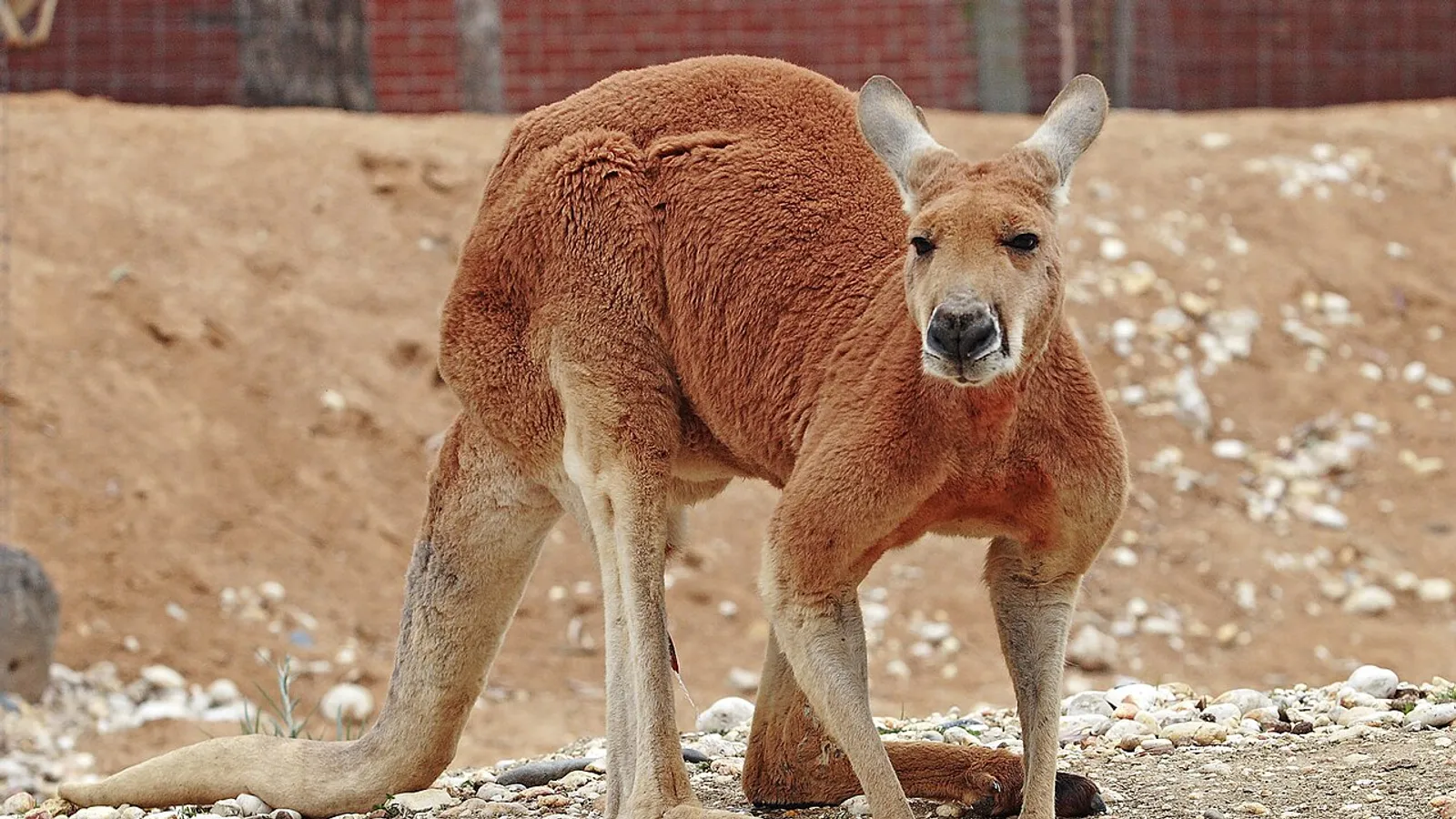
— Where the name comes from
Macropus, from the Greek makrós (large) and poús (foot): the “big foot”. Rufus, red in Latin. The name “kangaroo” comes from gangurru, the word the Guugu Yimithirr people of Queensland used for this species; an officer on James Cook’s expedition wrote it down in 1770. The legend that it meant “I don’t understand” is a much-loved historical fake.
— Facts
- Group
- Mammals · Mammalia
- Order
- Diprotodont marsupials
- Habitat
- Arid grassland and semi-desert of the interior
- Range
- Most of mainland Australia
- Size
- Up to 1.6 m of body plus 1 m of tail; 55–90 kg for the male
- Diet
- Herbivore — grass and shrubs
- Lifespan
- 20–25 years
— Characteristics
- 01
The largest living marsupial and the largest Australian mammal.
- 02
Travels by hopping: at cruising speed it uses less energy than walking would.
- 03
The muscular tail works as a third limb and as a prop when standing still.
— What sets it apart
A female kangaroo can run three offspring at different stages at once: a large one that comes and goes from the pouch, a small one fixed to a teat, and an embryo held in pause in the uterus. She feeds the two young on two different kinds of milk, from two neighbouring teats, each calibrated to the age of the offspring. And if drought bites, she can suspend the embryo’s development until the rain returns: it is called diapause.
