
European hedgehog
Erinaceus europaeus
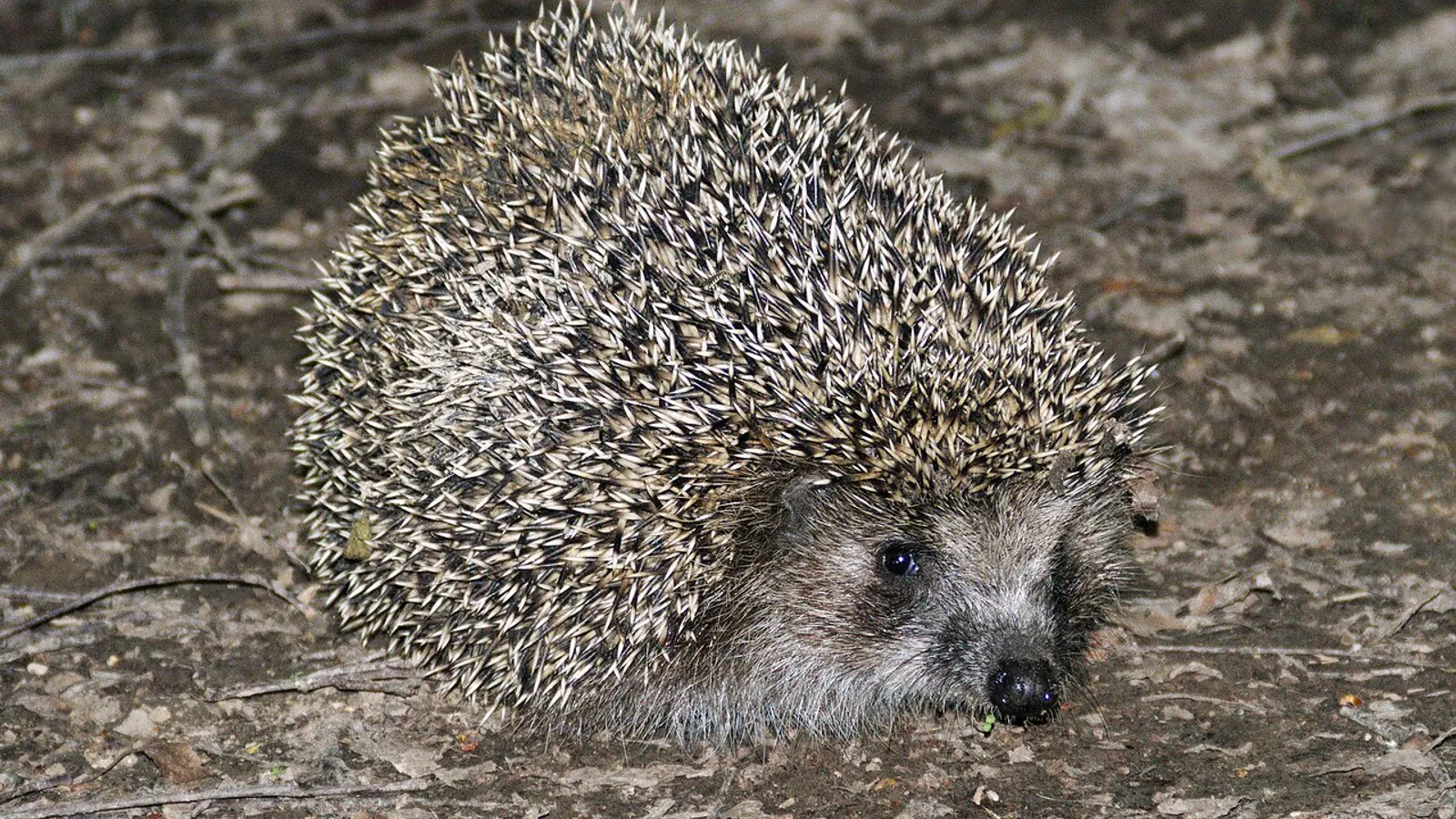
— Where the name comes from
Erinaceus is the Latin name of the hedgehog, and lies behind the Italian riccio through ericius, the same word the Romans used for a defensive barrier bristling with spikes. The animal lent its name to the engine of war, not the other way round: anyone looking at a curled-up hedgehog was already looking at a fortress of spines.
— Facts
- Group
- Mammals · Mammalia
- Order
- Hedgehogs and moles
- Habitat
- Hedgerows, open woodland, gardens and farmland
- Range
- Western and central Europe
- Size
- 20–30 cm, 0.6–1.2 kg
- Diet
- Insectivore — beetles, earthworms, slugs
- Lifespan
- 2–5 years in the wild
— Characteristics
- 01
It has some 5,000–7,000 spines, modified hollow hairs, raised by a ring of muscle.
- 02
Faced with danger it rolls into a ball that shields the soft belly.
- 03
It goes into true hibernation, body temperature and heartbeat cut almost to nothing.
— What sets it apart
Meeting a new or pungent smell, the hedgehog does something nobody has yet fully explained: it nibbles the source, works up a frothy saliva and smears it over its spines, twisting into acrobatic poses. It is called self-anointing. The theories range from olfactory disguise to the deliberate application of toxic or repellent substances to its own points — turning a passive defence into a chemical weapon.
