
Mantled guereza
Colobus guereza
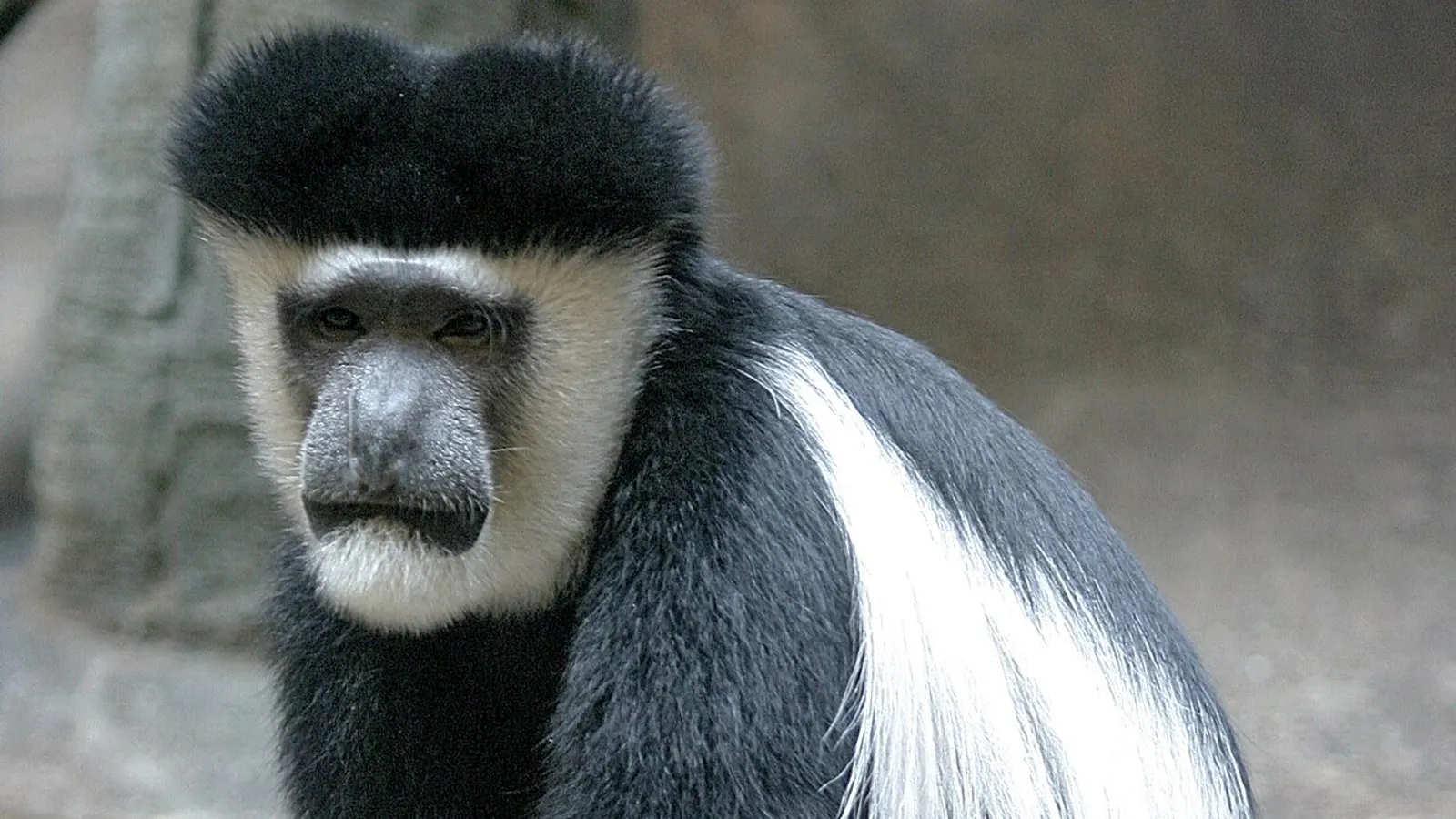
— Where the name comes from
Colobus comes from the Greek kolobós, “maimed”: in the thumb, which in this monkey is reduced to a stump or missing altogether. It is not a defect but an advantage — a hand without a thumb becomes a hook that runs along branches without snagging. Guereza is instead the Amharic name of the animal, one of the few Ethiopian words to enter scientific nomenclature.
— Facts
- Group
- Mammals · Mammalia
- Order
- Primates
- Habitat
- Rainforest and gallery forest, montane woodland up to 3,000 metres
- Range
- Central and eastern Africa, from Cameroon to Ethiopia and Kenya
- Size
- 50–70 cm long plus 70–90 of tail, 7–14 kg
- Diet
- Leaf eater — mature leaves, digested in a multi-chambered stomach
- Lifespan
- 20–25 years
— Characteristics
- 01
It has a chambered stomach with symbiotic bacteria: it ruminates leaves like a small arboreal cow.
- 02
The young are born entirely white and take on the adults’ black and white at three months.
- 03
The mantle of long white hair on the flanks opens like a parachute in leaps between crowns.
— What sets it apart
Its digestion condemns it to a sedentary life: mature leaves hold little energy and much cellulose, and the fermentation takes hours of stillness. A colobus therefore spends over half the day sitting and digesting, and moves little because every movement costs more than the diet yields. It is the exact opposite of the fruit-eating primates, which range widely to find rare, nourishing fruit: here the food is everywhere but barely feeds, and the strategy becomes to do as little as possible.
