
Long-tailed tit
Aegithalos caudatus
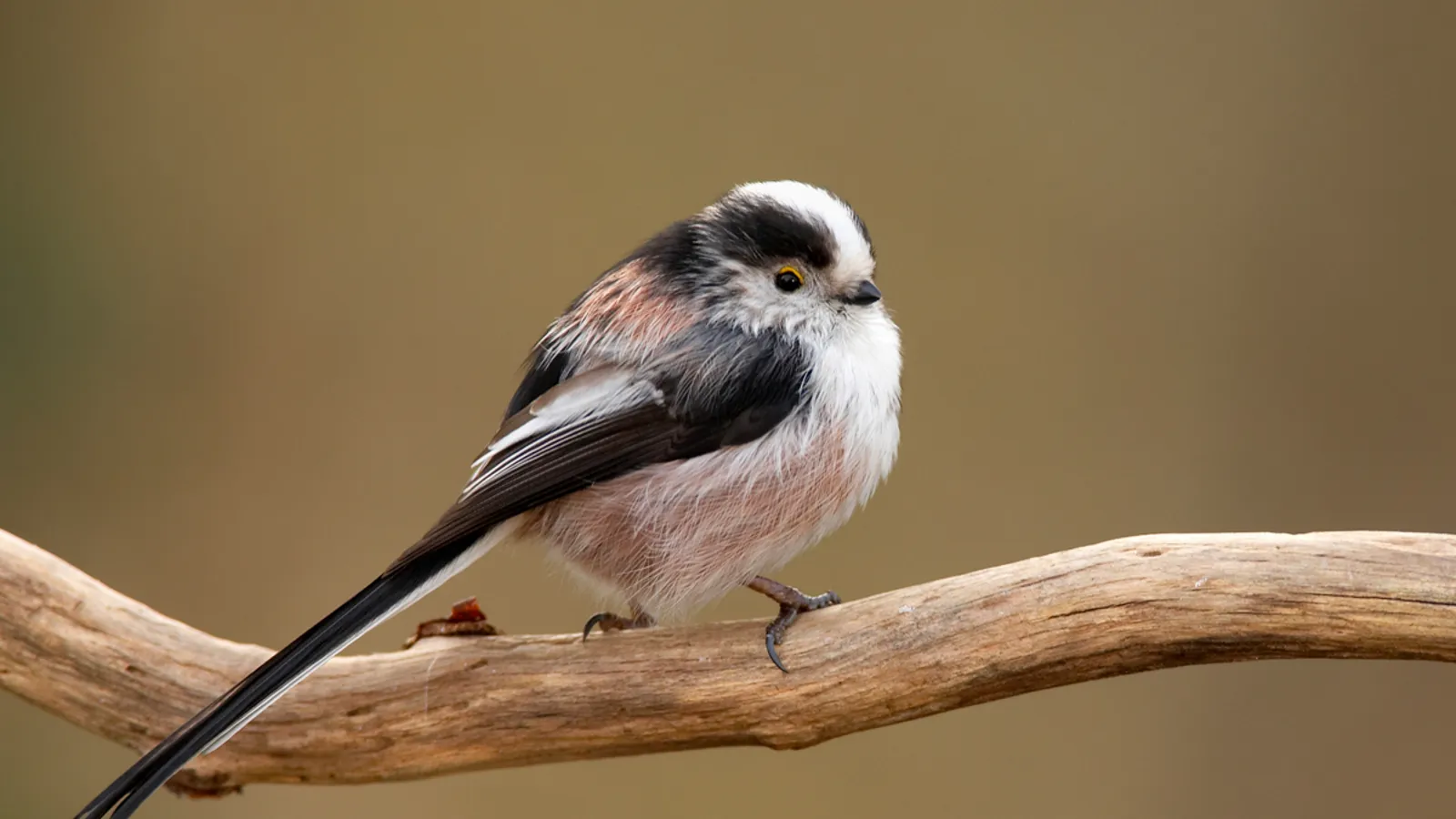
— Where the name comes from
Aigíthalos was the Greek name for the tits, one of those Aristotle lists without describing well enough for us to know which he meant. Caudatus is “tailed”, from cauda, and in this case it means the tail is longer than the bird. The Italian name is a Tuscan dialect word meaning roughly “spindle-tail”: a ball of feathers with a handle.
— Facts
- Group
- Birds · Aves
- Order
- Passerines
- Habitat
- Coppice woodland, hedges, scrub, wooded gardens
- Range
- Europe and temperate Asia as far as Japan
- Size
- 13–15 cm including the tail, wingspan 16–19 cm, 7–9 g
- Diet
- Tiny insects, insect eggs, spiders
- Lifespan
- 2 years in the wild
— Characteristics
- 01
It moves in family parties that cross the wood in single file.
- 02
In winter it sleeps in a row along the same branch, pressed against the others.
- 03
It weighs about as much as two one-cent coins, tail included.
— What sets it apart
The nest is an elastic purse of moss sewn with spider silk, faced outside with lichen so that it vanishes against the bark and lined inside with more than fifteen hundred feathers gathered one by one. It takes three weeks of work. A bird that loses one to a predator does not build another: it goes to help raise a brother’s young, which it recognises from a call learned in the nest as a chick. It is one of the few European birds in which failure turns into an investment in the family.
