
Seven-spot ladybird
Coccinella septempunctata
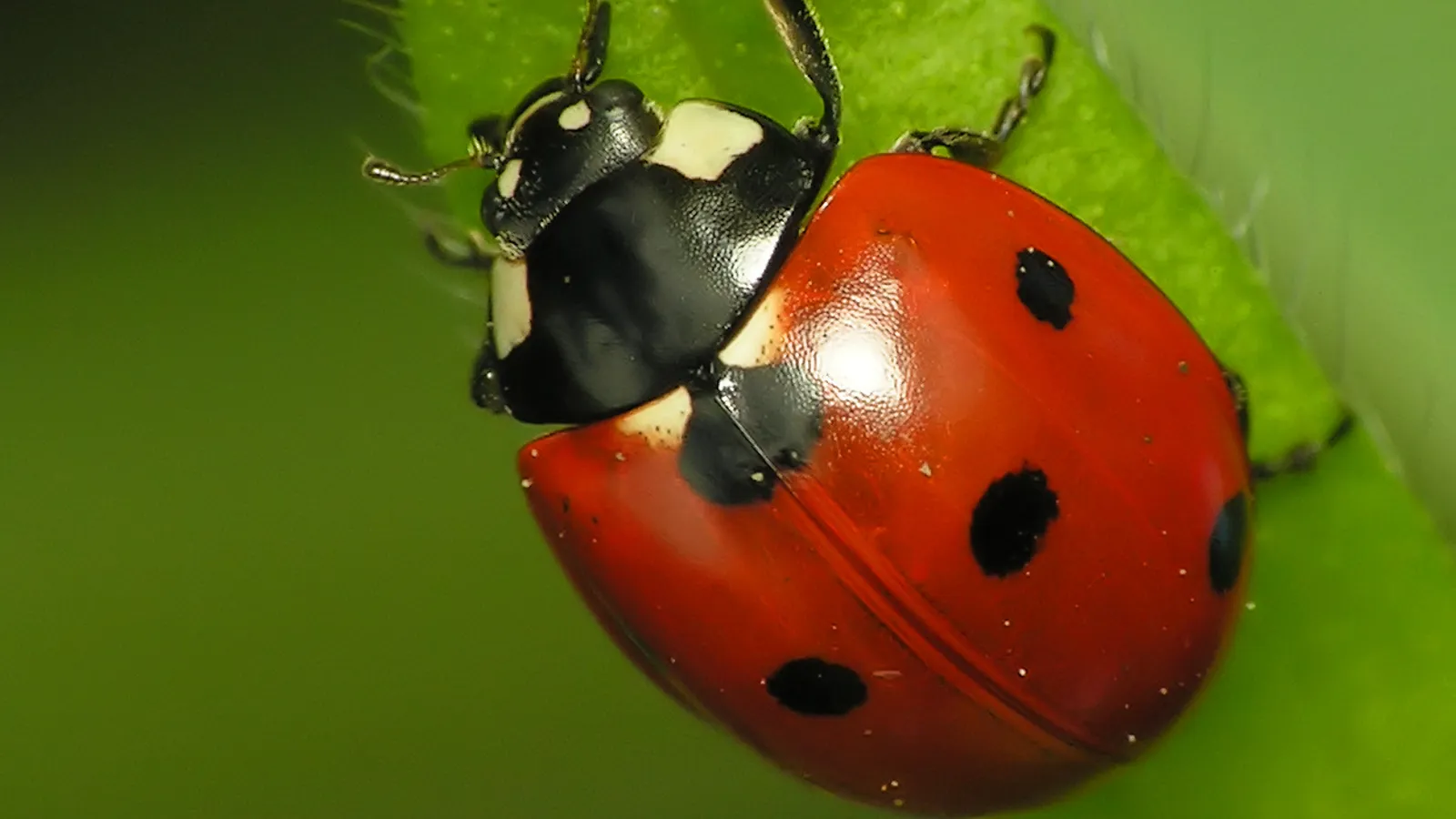
— Where the name comes from
Coccinella is a diminutive of the Latin coccinus, scarlet, itself from the Greek kókkos, the oak berry from which red dye was drawn. Septempunctata, from the seven black spots. In many languages the common name ties it to the Virgin — the English ladybird, the German Marienkäfer — because farmers took it for a Marian gift against the pests of the harvest.
— Facts
- Group
- Insects · Insecta
- Order
- Beetles
- Habitat
- Meadows, fields, gardens, anywhere aphids live
- Range
- Eurasia; introduced to North America
- Size
- 5–8 mm
- Diet
- Predator — aphids and other small insects
- Lifespan
- about 1 year
— Characteristics
- 01
Larva and adult devour aphids by the hundred: a living insecticide, beloved of farmers.
- 02
The bright red is an alarm signal: it announces a disgusting taste.
- 03
Overwinters in large huddles, packed under bark and into crevices.
— What sets it apart
Seized, the ladybird oozes drops of a yellow, acrid, foul-smelling fluid from the joints of its legs: it is its own blood, forced out on command. It is called reflex bleeding. The blazing red of the wing cases is therefore not decoration but a warning label — it tells the predator, before it even tastes, that this prey is bitter and toxic. A colour that is a written threat.
