
Cicada orni
Cicada orni
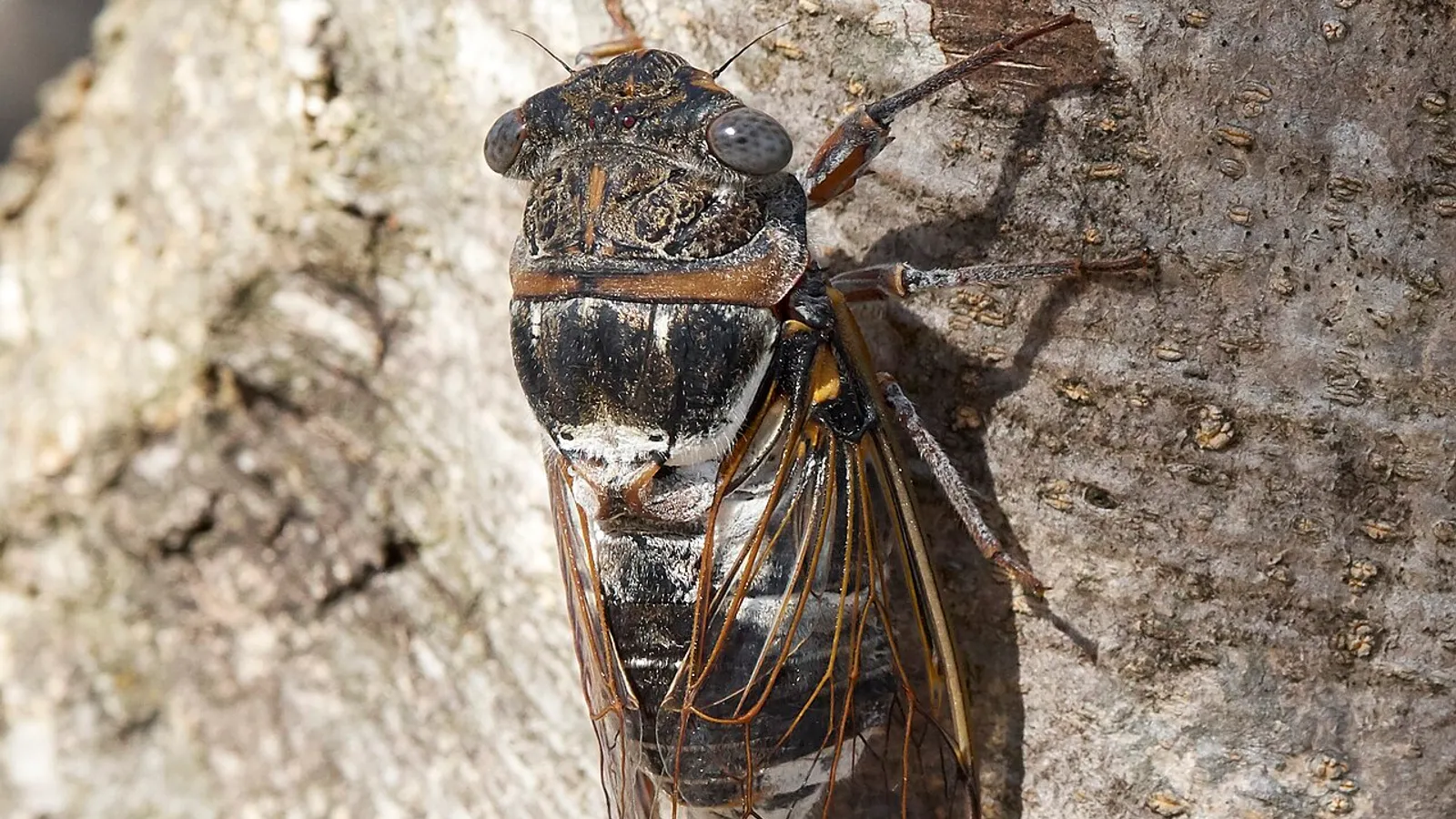
— Where the name comes from
Cicada is the Latin name, probably onomatopoeic, imitating the insect’s ceaseless shrilling. The epithet orni points to the manna ash (Fraxinus ornus), among whose branches it is often found. From cicada come the Italian cicala and the French cigale.
— Facts
- Group
- Insects · Insecta
- Order
- True bugs
- Habitat
- Open woodland, olive groves, Mediterranean scrub
- Range
- Southern Europe and the Mediterranean basin
- Size
- 3.5–5 cm with the wings
- Diet
- Sap, sucked from branches through a pointed rostrum
- Lifespan
- Years underground as a nymph, a few weeks as an adult
— Characteristics
- 01
The song is made by the males with two stiff membranes, the tymbals, buckled by very fast muscles.
- 02
The nymph lives underground sucking sap from roots, for several years at a time.
- 03
It comes out of the soil, climbs, and leaves the empty shell clinging to the bark.
— What sets it apart
Aesop’s fable condemns the cicada as an idler who sings instead of working — but its life is almost all work, underground and in the dark. It spends years as a buried nymph sucking at roots, and surfaces into the light only for a few final weeks: that deafening summer song is the sound of a whole life concentrated into its last, very short act. It is not idleness: it is urgency. Some American species synchronise their emergence on cycles of 13 or 17 years, prime numbers that wrong-foot their predators.
