
Waterbuck
Kobus ellipsiprymnus
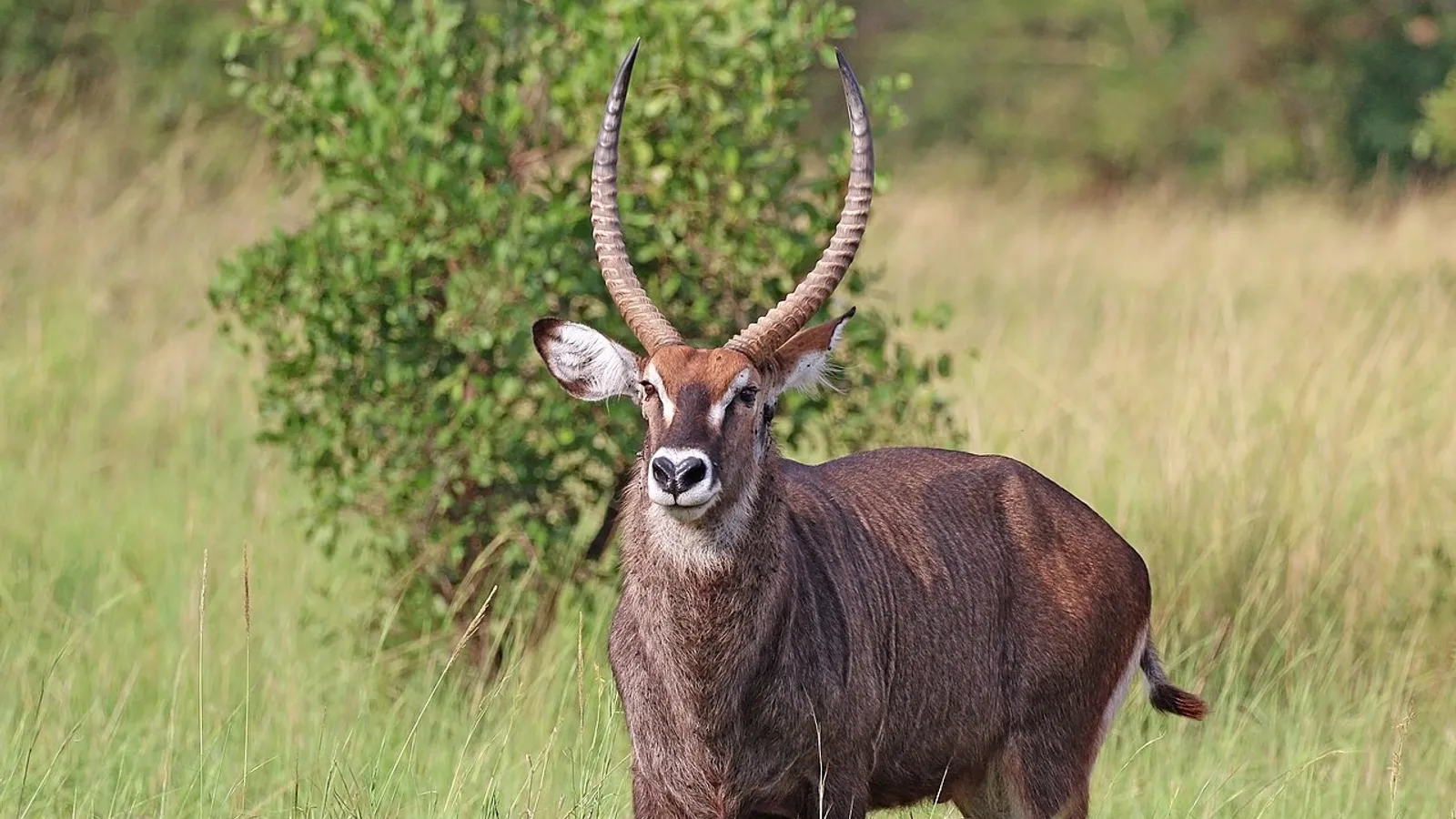
— Where the name comes from
Kobus latinises koba, the name given it by the peoples of West Africa. Ellipsiprymnus is a Greek compound meaning “with an elliptical rump”, from élleipsis and prymnós: on its hindquarters it carries a clean closed white ring, which field guides describe without much poetry as the mark left by a freshly painted lavatory seat.
— Facts
- Group
- Mammals · Mammalia
- Order
- Even-toed ungulates
- Habitat
- Savannah and bushland, always within a few hundred metres of water
- Range
- Sub-Saharan Africa, from Senegal to Ethiopia and down to South Africa
- Size
- 177–235 cm of body, 160–300 kg
- Diet
- Herbivore — almost only grasses, with a high water requirement
- Lifespan
- 18 years in the wild
— Characteristics
- 01
It depends on water more than any other African antelope and never strays from it.
- 02
Only the male carries horns, ringed and up to a metre long.
- 03
The skin secretes an oily, foul-smelling substance that waterproofs the coat.
— What sets it apart
It stinks, and the stink saves its life. Its skin glands produce an oil so unpleasant in smell that the meat is nearly inedible, and the predators know it: lions and hyenas attack the waterbuck far less than its abundance and its slowness would suggest, and human hunters have always avoided it. The oil is there in the first place to waterproof the coat of an animal that is permanently in the wet. The chemical defence came as a side effect.
