
Little owl
Athene noctua
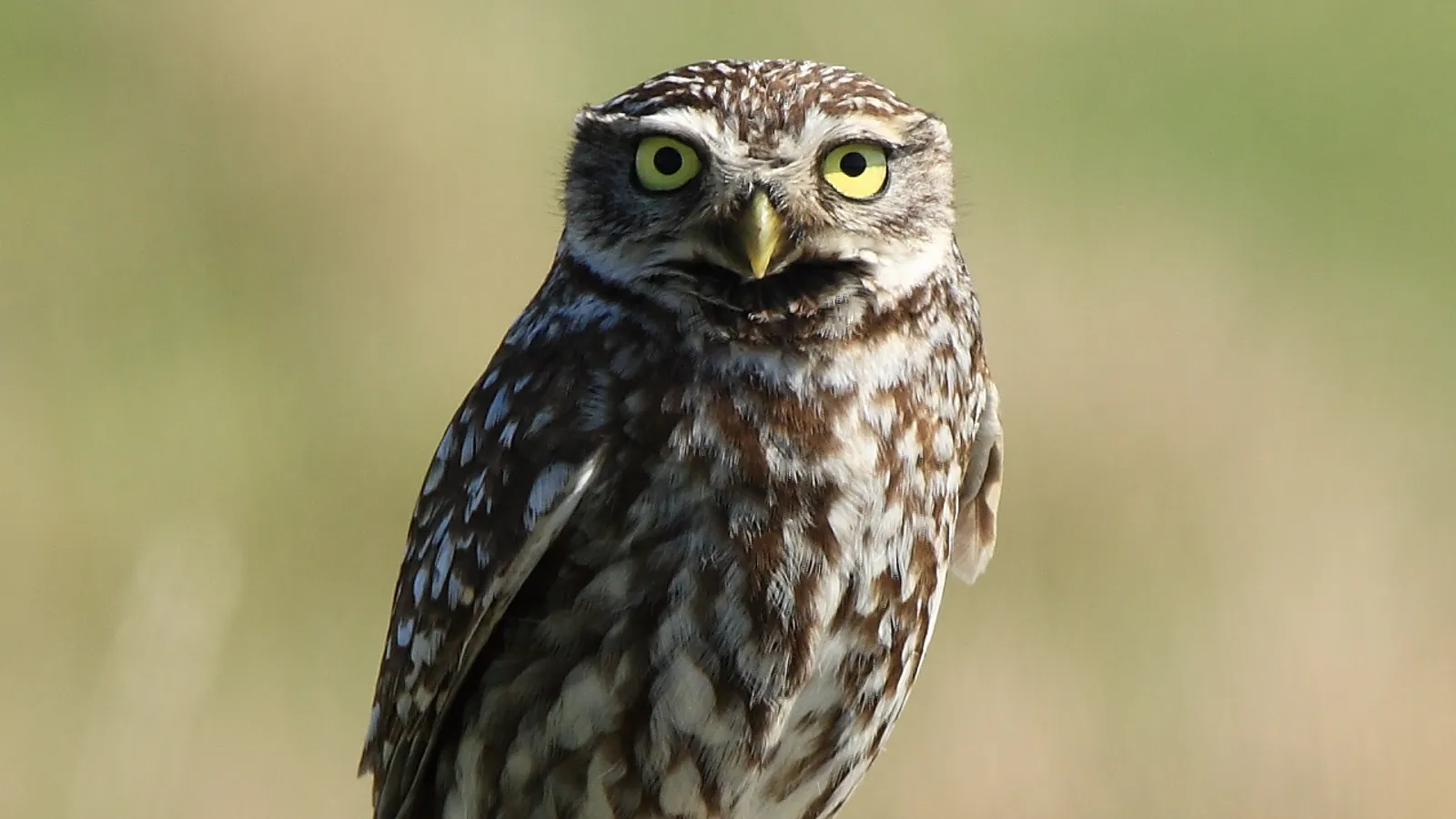
— Where the name comes from
Athene is the goddess Athena, to whom this small raptor was sacred: hence Athens struck coins bearing the owl, and “to carry owls to Athens” meant what “coals to Newcastle” means to us. Noctua is Latin, “night bird”, from nox, night. For three thousand years the little owl has been the very symbol of wisdom.
— Facts
- Group
- Birds · Aves
- Order
- Owls
- Habitat
- Open countryside, olive groves, ruins, dry-stone walls
- Range
- Europe, North Africa, Asia as far as China
- Size
- 22–27 cm, wingspan 50–58 cm
- Diet
- Carnivore — insects, earthworms, small rodents and birds
- Lifespan
- 3–5 years
— Characteristics
- 01
It is active by day as well, often perched on a post or a roof in full sun.
- 02
It nests in cavities: walls, trees, abandoned buildings.
- 03
It bobs its body up and down when curious or alarmed.
— What sets it apart
The tie between the little owl and wisdom begins in Athens, where it was the bird of the goddess Athena and appeared on the city’s coinage: to own one — “an owl”, as the saying went — meant to have money. But the same fixed, human look that made it a symbol of wisdom to the Greeks turned it, in the European countryside, into a bird of ill omen, a portent of death. The same face has inspired opposite feelings for millennia.
