
Snowy owl
Bubo scandiacus
— Where the name comes from
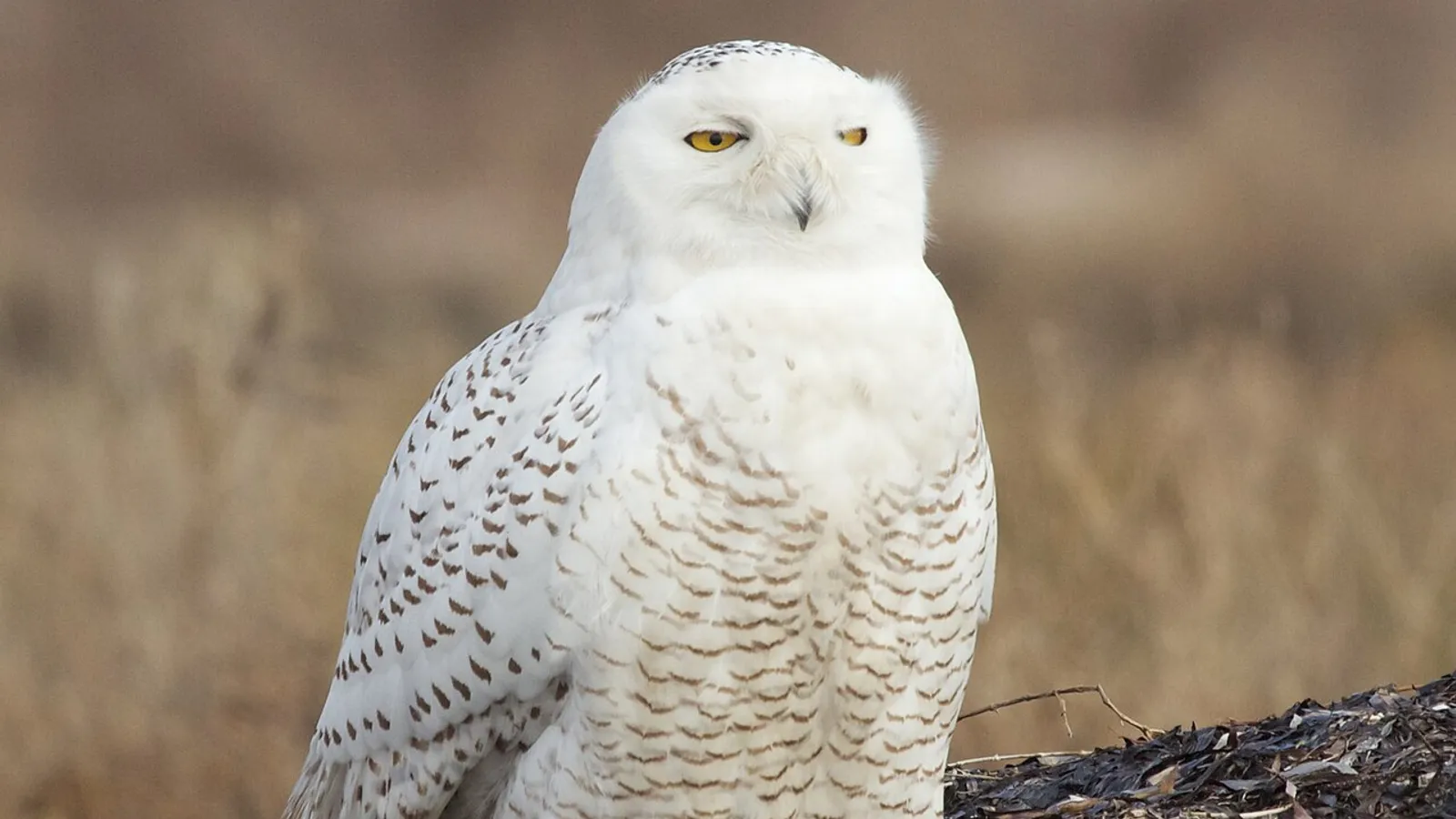
Bubo is the onomatopoeic Latin for owl; scandiacus, “of Scandinavia”, from the northern land where it was described. In English it is the snowy owl. Despite its Italian name it is a large owl, not a little one: the whiteness of the plumage merges it into the snow of the Arctic tundra.
— Facts
- Group
- Birds · Aves
- Order
- Owls
- Habitat
- Open Arctic tundra
- Range
- The Arctic regions of the whole northern hemisphere
- Size
- 52–71 cm, wingspan 125–150 cm
- Diet
- Carnivore — mostly lemmings, with other rodents and birds
- Lifespan
- 10 years
— Characteristics
- 01
It is active by day as well: in the Arctic summer the sun never sets.
- 02
The dense white plumage covers even the feet, against the polar cold.
- 03
Adult males turn almost immaculate; females stay barred with dark markings.
— What sets it apart
The snowy owl ties its life to the lemming, the small tundra rodent whose numbers boom and crash in cycles of a few years. When lemmings are plentiful a pair lays far more eggs; when they are scarce it may not breed at all, and migrates south in search of food, sometimes turning up in cities and airports far from the Arctic. The number of its young is dictated, year by year, by the abundance of a prey animal the size of a fist.
