Black swan
Cygnus atratus
— Where the name comes from
Cygnus comes from the Greek kýknos, swan. Atratus in Latin means “clothed in black”, and also “in mourning”. To the Romans a black swan was the impossible thing par excellence: Juvenal called a perfect wife “a rare bird on earth, very like a black swan”, rara avis in terris nigroque simillima cygno.
— Facts
- Group
- Birds · Aves
- Order
- Waterfowl
- Habitat
- Lakes, lagoons, estuaries and marshes, including brackish water
- Range
- Australia and Tasmania; introduced to New Zealand and Europe
- Size
- 110–142 cm, wingspan 1.6–2 m, 3.7–9 kg
- Diet
- Aquatic plants, algae, grasses
- Lifespan
- 10–20 years in the wild, up to 40 in captivity
— Characteristics
- 01
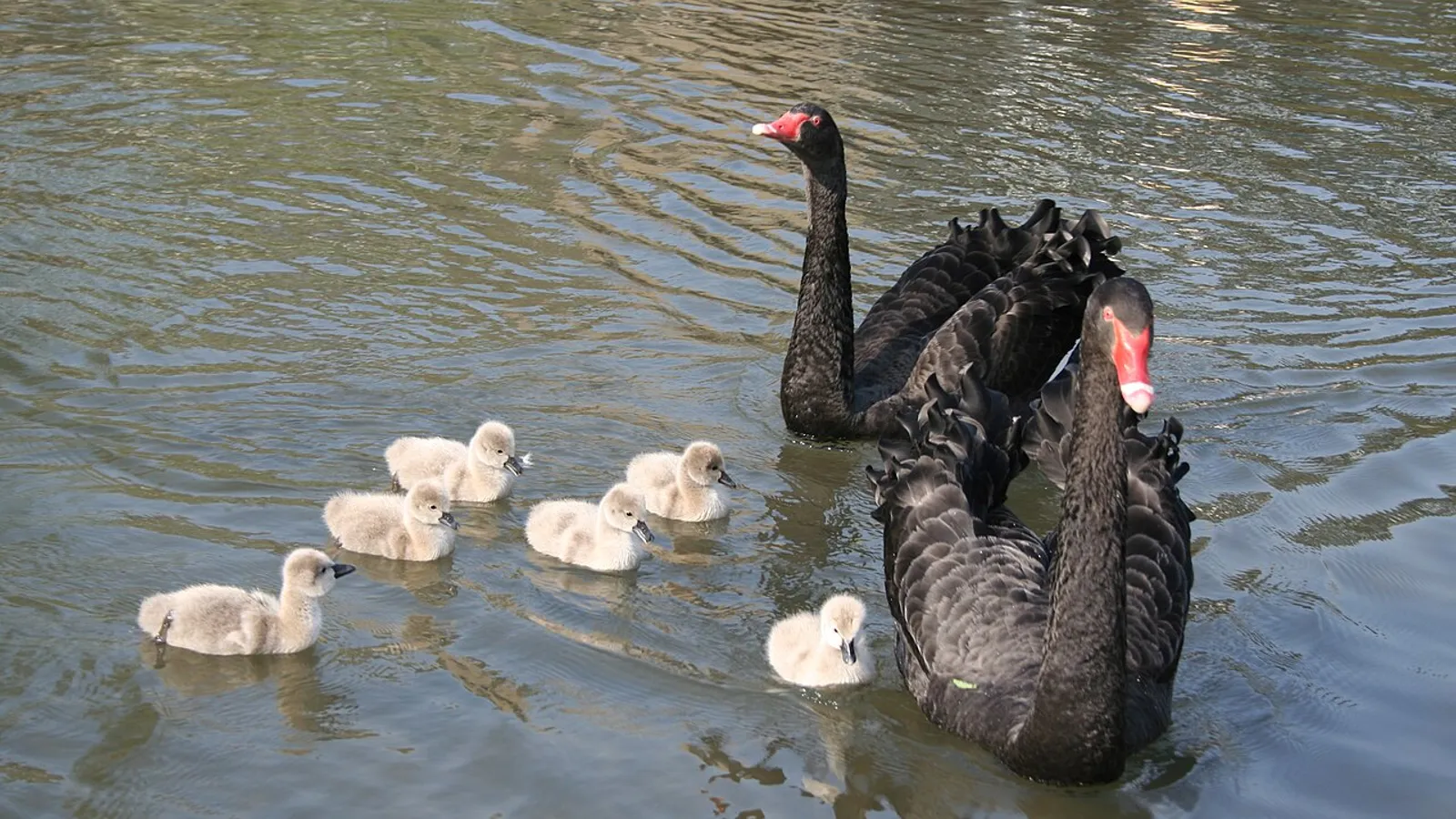
In flight it shows white flight feathers, invisible when it is at rest.
- 02
It has a red bill with a pale band near the tip.
- 03
It does not migrate: it moves about following rain and water.
— What sets it apart
For almost two thousand years it was a proverb, until in 1697 the Dutch explorer Willem de Vlamingh saw hundreds of them on a river in Western Australia, which he duly named Swan River. The impossible existed. The discovery became philosophers’ favourite example of the limits of induction: thousands of white swans observed do not prove that all swans are white, but a single black swan is enough to disprove it. Today it is the emblem of Western Australia, and lends its name to the rare, unpredictable events that change everything.