
Midas cichlid
Amphilophus citrinellus
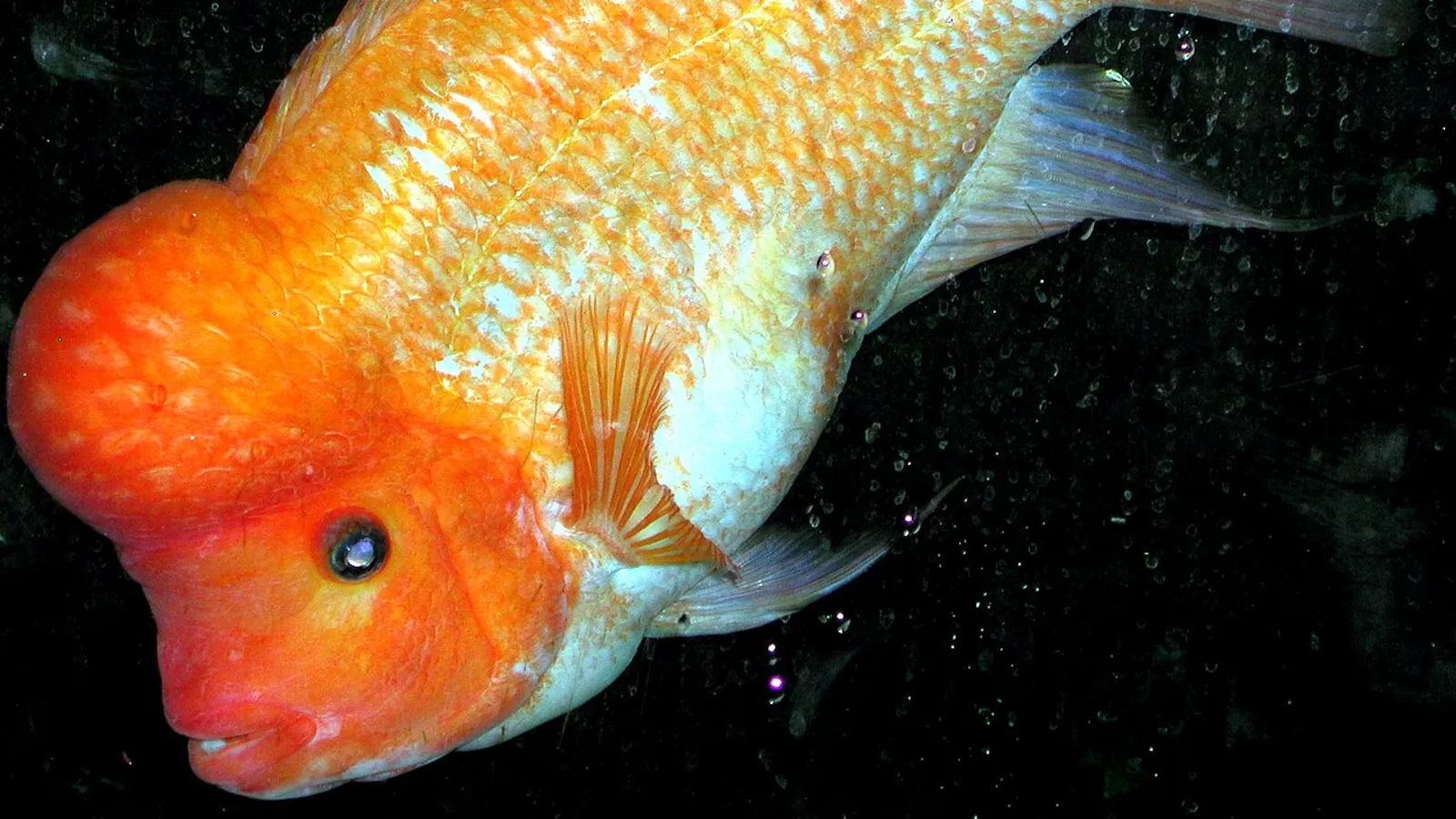
— Where the name comes from
Amphilophus is “double crest”, from amphí and lóphos: adult males develop a fatty hump on the forehead. Citrinellus means “lemon-coloured”, which is what a proportion of individuals become — the rest stay mottled grey all their lives. In English it is the Midas cichlid, for that golden yellow.
— Facts
- Group
- Fish · Actinopterygii · Chondrichthyes
- Order
- Cichlids
- Habitat
- Volcanic crater lakes and rivers of Central America
- Range
- Nicaragua and Costa Rica
- Size
- 20–25 cm, up to 30 cm; 400–900 g
- Diet
- Molluscs, insects, algae, small fish
- Lifespan
- 12 years
— Characteristics
- 01
Both parents defend the eggs and then the fry for weeks.
- 02
The males’ forehead hump grows and shrinks with the season.
- 03
Some populations have fleshy protruding lips, others do not.
— What sets it apart
In the volcanic lakes of Nicaragua the same thing keeps happening. In separate craters, colonised independently from the great lakes, this fish has produced the same two forms every time: a stocky one that grubs the bottom and a slender one that hunts in open water; and in some lakes a third with enormous lips, suited to sucking between rocks. Genetic analysis shows each crater invented its own. It is evolution repeating its answer under the same conditions — as with the Caribbean anoles, but within a few thousand years.
