
Atlantic mudskipper
Periophthalmus barbarus
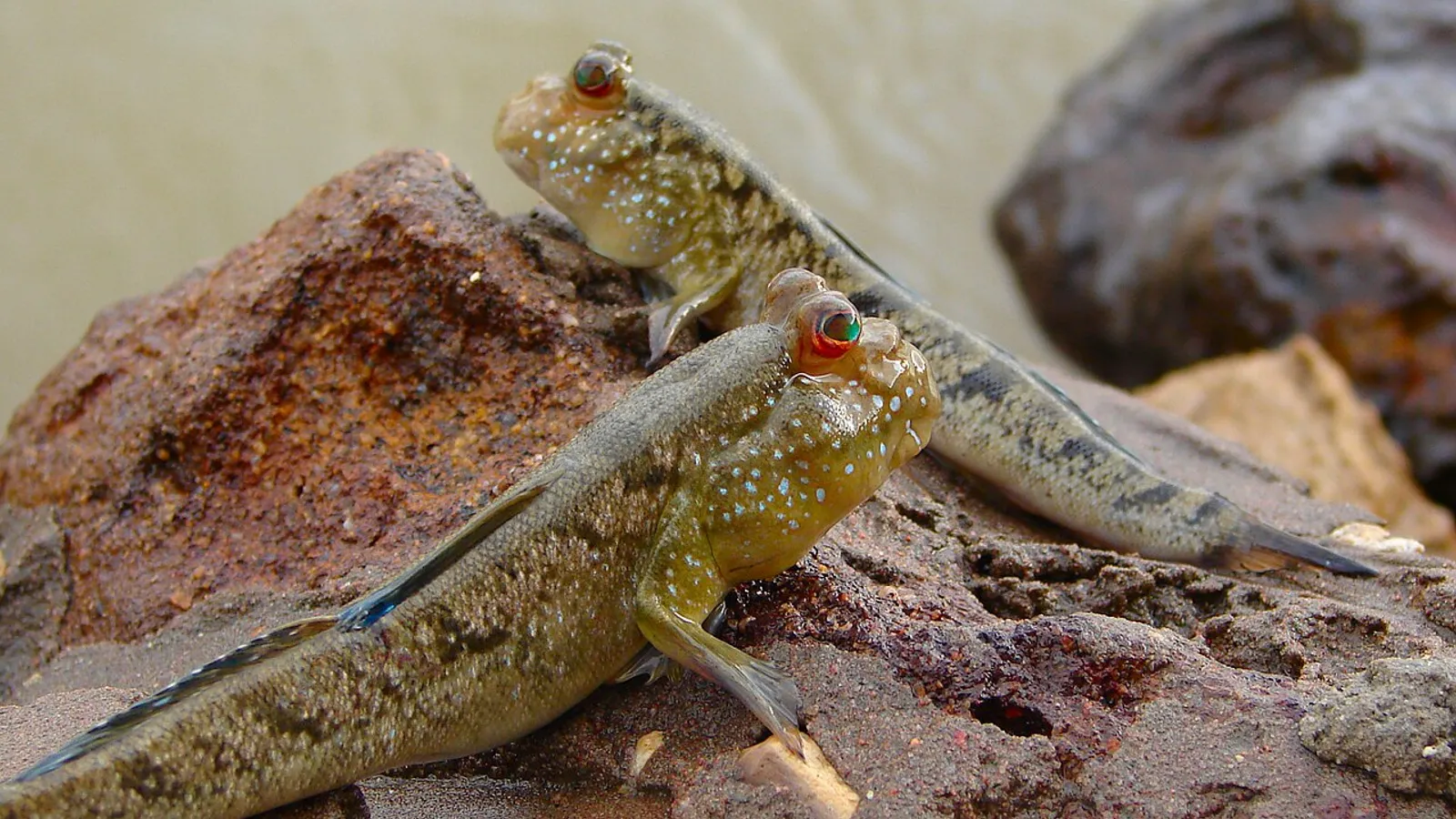
— Where the name comes from
Periophthalmus is “around the eye”, from perí and ophthalmós, and describes its most visible feature: the eyes are mounted on two turrets on top of the head, move independently and can be withdrawn into their sockets to be wetted. Barbarus names the Barbary coast. The common name, in every language, describes what it does.
— Facts
- Group
- Fish · Actinopterygii · Chondrichthyes
- Order
- Gobies and allies
- Habitat
- Mangrove mudflats, exposed at low tide
- Range
- The coasts of West Africa, from Senegal to Angola
- Size
- 15–25 cm, 50–100 g
- Diet
- Crabs, insects, worms, small crustaceans
- Lifespan
- 5 years
— Characteristics
- 01
It spends more time out of the water than in it.
- 02
It walks and skips across the mud propped on muscular pectoral fins.
- 03
It breathes through its skin and the lining of its mouth, kept moist.
— What sets it apart
It digs a burrow in anoxic mud and carries the air down in mouthfuls. The male fills his mouth at the surface, goes down the shaft and releases it into a chamber below the waterline, repeating dozens of times until a stable bubble forms: the female spawns in there, and without that supply the eggs would suffocate in oxygen-free mud. It was documented with endoscopes in 2005, and it shows a fish that builds and maintains an air pocket underground.
