
Periodical cicada
Magicicada septendecim
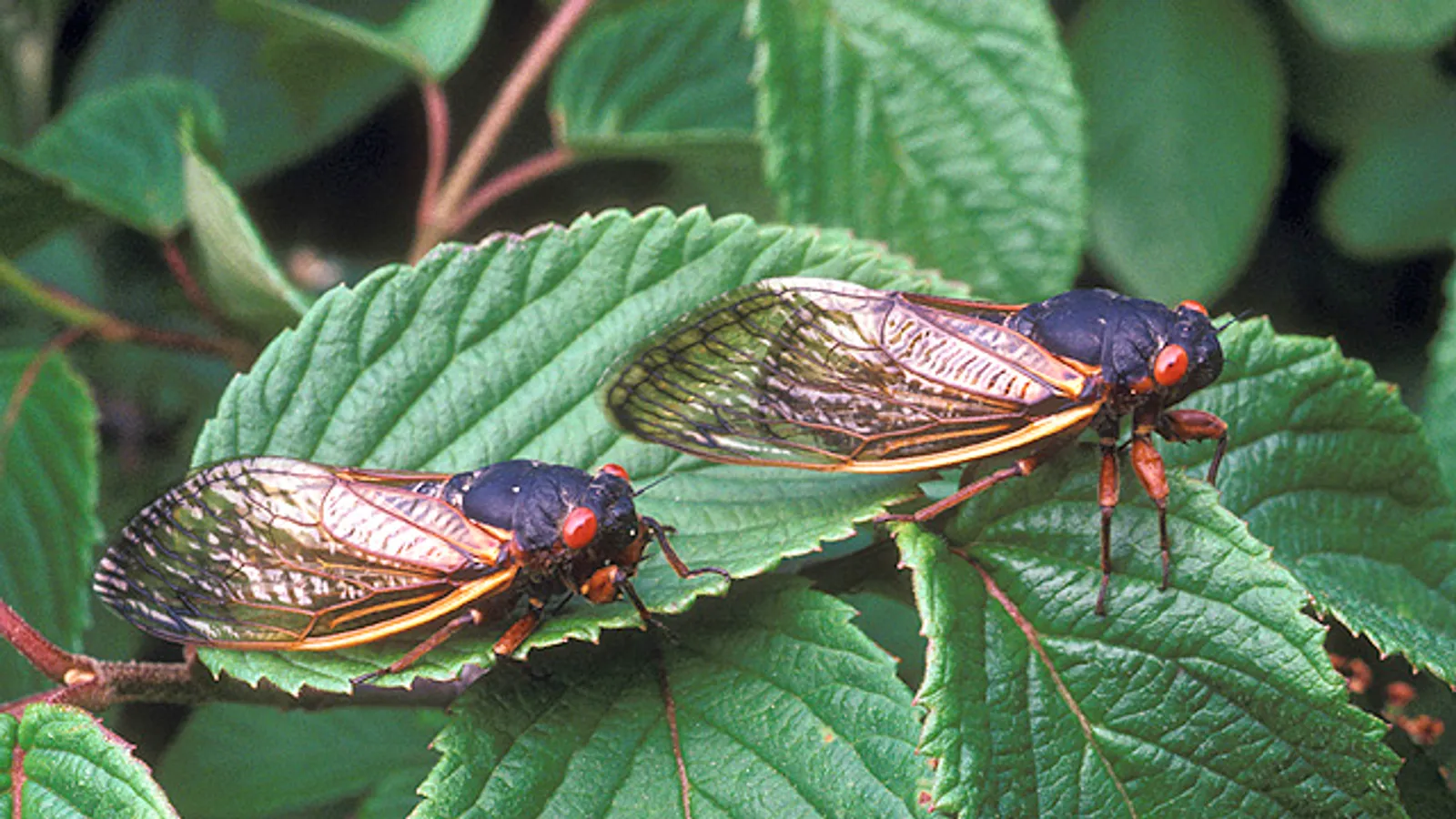
— Where the name comes from
Septendecim is simply “seventeen”, the number of years the insect spends underground before emerging. Magicicada — the “magic cicada” — was coined in 1962, and for once the emphasis is earned: when European settlers saw a whole forest fill with insects out of nowhere, after seventeen years of silence, they thought it a supernatural event and called them locusts, with the word from the Bible.
— Facts
- Group
- Insects · Insecta
- Order
- True bugs
- Habitat
- Broadleaf woodland; the nymphs on tree roots
- Range
- The eastern United States
- Size
- 24–33 mm
- Diet
- Root sap as a nymph; little or nothing as an adult
- Lifespan
- 17 years, of which 4–6 weeks above ground
— Characteristics
- 01
It emerges all at once, up to three million individuals per hectare.
- 02
The chorus of males exceeds a hundred decibels.
- 03
It dies weeks after emerging, and the cycle begins again.
— What sets it apart
Seventeen is a prime number, and that is no accident. A cycle lasting a prime number of years minimises coincidences with the cycles of predators: a predator appearing every two, three or five years meets the emergence once every thirty-four, fifty-one or eighty-five years, whereas with a cycle of fifteen or eighteen years the encounters would be frequent. The second defence is quantity: by coming out all together, in numbers no predator can consume, they guarantee that some will survive regardless. It is a strategy combining number theory and market saturation, adopted by an insect that spends sixteen years and eleven months sucking sap from a root.
