
Giant African land snail
Achatina fulica
— Where the name comes from
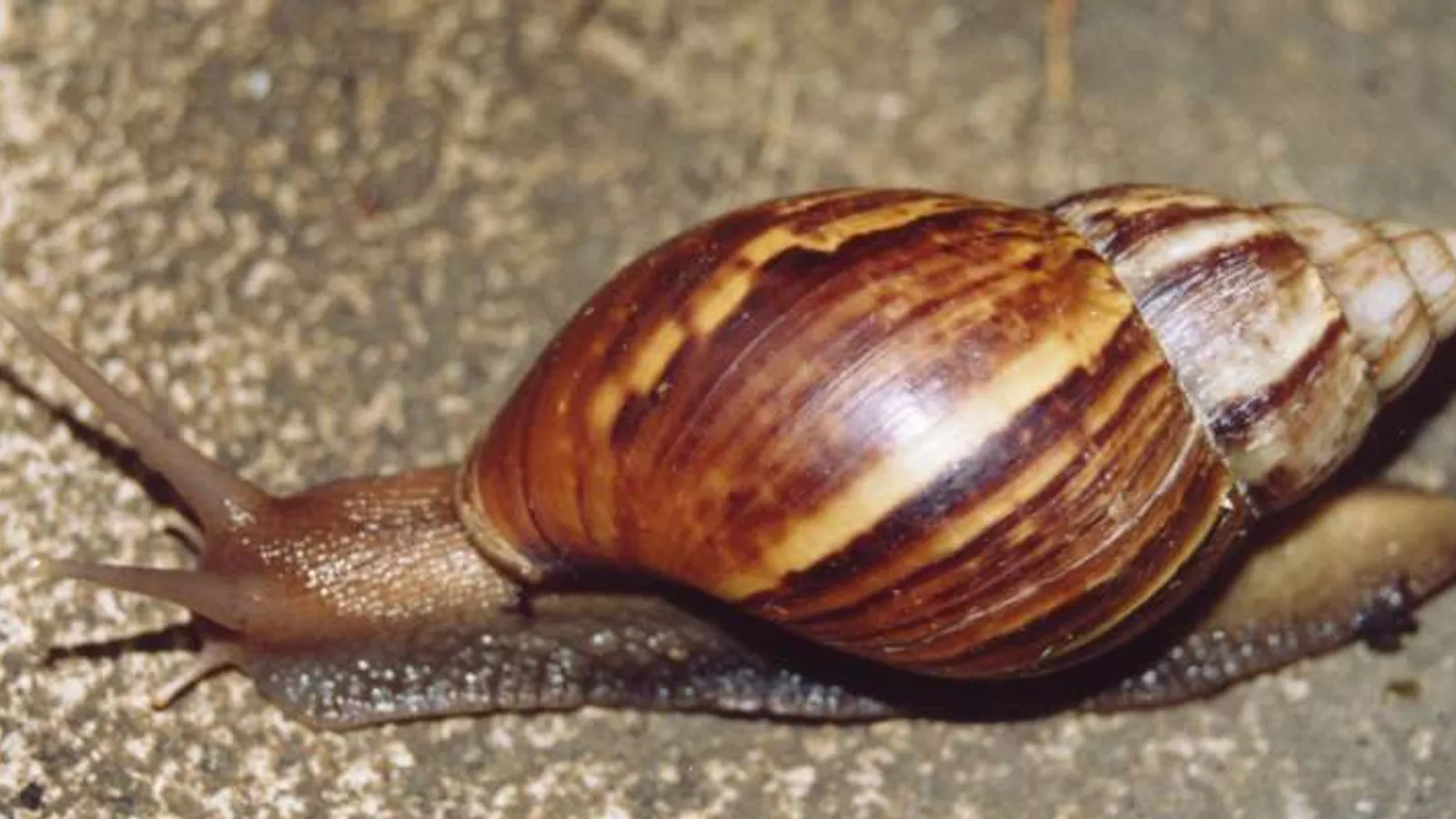
Achatina comes from achátēs, agate: the shell is crossed by alternating brown and pale bands recalling the veining of the stone, and the comparison with a mineral is all the name means to say. It is the kind of christening naturalists reserved for handsome shells, looking at them as collectors before looking as zoologists.
— Facts
- Group
- Molluscs · Mollusca
- Order
- Land snails
- Habitat
- Farmland, gardens and scrub in warm humid climates
- Range
- Native to East Africa; today Asia, the Pacific, the Caribbean, Florida
- Size
- Shell up to 20 cm
- Diet
- Over 500 plant species, and plaster for its calcium
- Lifespan
- 5–7 years
— Characteristics
- 01
It is the largest land snail in the world.
- 02
It lays up to 1,200 eggs a year.
- 03
It gnaws plaster and concrete to obtain calcium for its shell.
— What sets it apart
It is the most cited case of biological control ending in disaster. Introduced across half the world as food and as a curiosity, it became an agricultural scourge; to stop it, predatory snails of the genus Euglandina were released on Pacific islands, but they ignored the giant and turned to the native species. In Hawaii and French Polynesia alone dozens of endemic Partula species — tiny snails on which the first evidence of speciation had been studied — were wiped out, and some survive only in zoos. The giant snail, meanwhile, is still there.
