
Southern screamer
Chauna torquata
— Where the name comes from
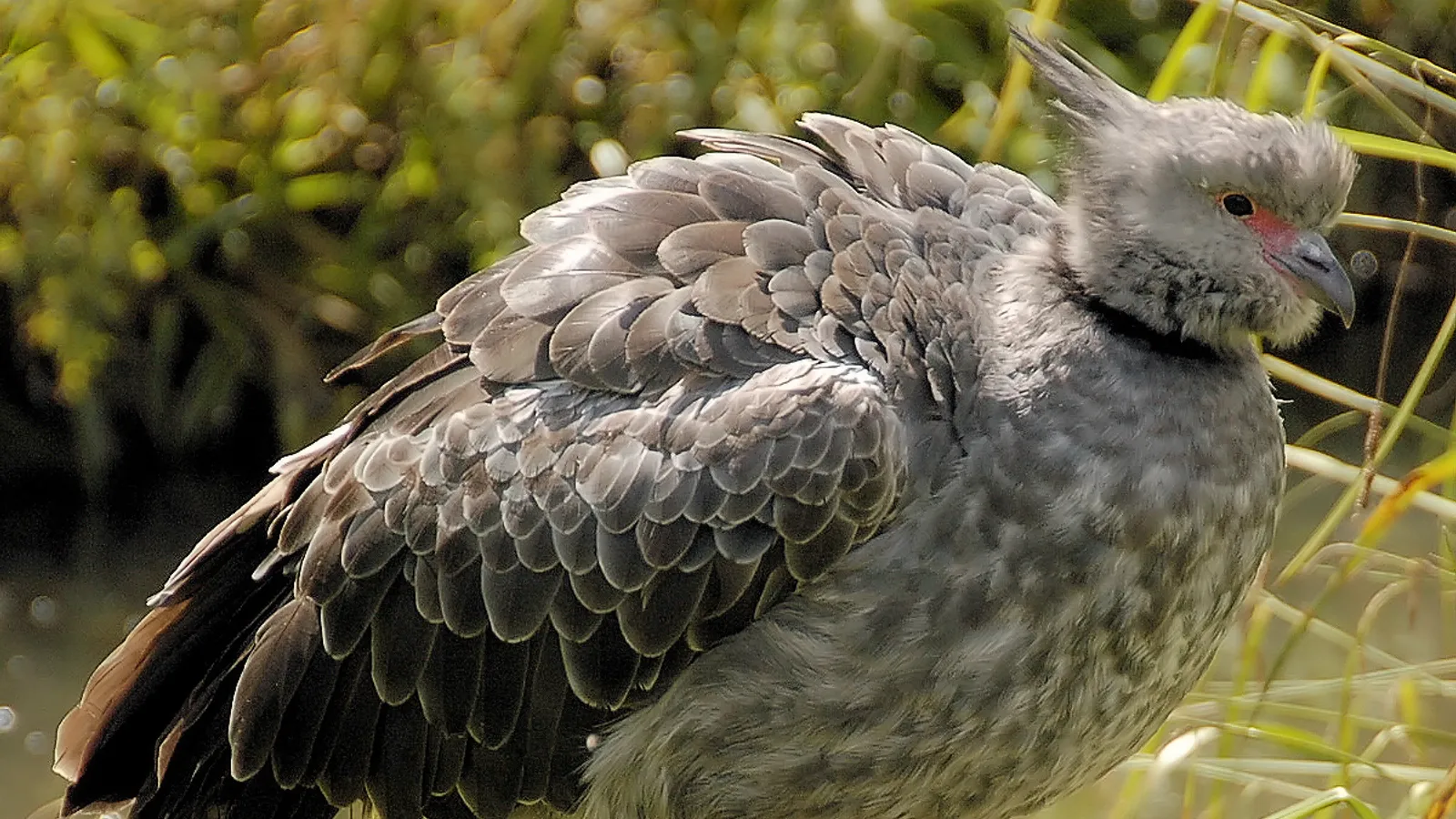
Chauna comes from the Greek chaûnos, “spongy, porous”, for a peculiarity discovered only by touching it: under the skin lies a layer of air bubbles that crackle beneath the fingers. Torquata is “collared”, for the black band at the base of the neck. Chajá is the Guaraní name, and it is a transcription of the call: it carries three kilometres.
— Facts
- Group
- Birds · Aves
- Order
- Screamers
- Habitat
- Marshes, lagoons, flooded meadows, riverbanks
- Range
- Southern Brazil, Bolivia, Paraguay, Uruguay, Argentina
- Size
- 80–95 cm, wingspan 170 cm, 4–5 kg
- Diet
- Water plants, leaves, shoots, seeds
- Lifespan
- 15 years in the wild
— Characteristics
- 01
It has two curved bony spurs on each wing, used in fights.
- 02
Despite its bulk it soars in very high circles, nearly out of sight.
- 03
It looks like a turkey but is related to the ducks and geese.
— What sets it apart
On Argentine farms it is kept with the chickens, and not for its looks: the moment it sees a fox, a dog or a stranger it starts shouting and does not stop, and no predator works with that noise going. The wing spurs are used in fights between males and break frequently, growing back after the moult. Beneath the skin, the air-filled tissue that gives the genus its name makes it lighter than its size suggests, and is probably why a five-kilo animal can circle for hours.
