
Great tinamou
Tinamus major
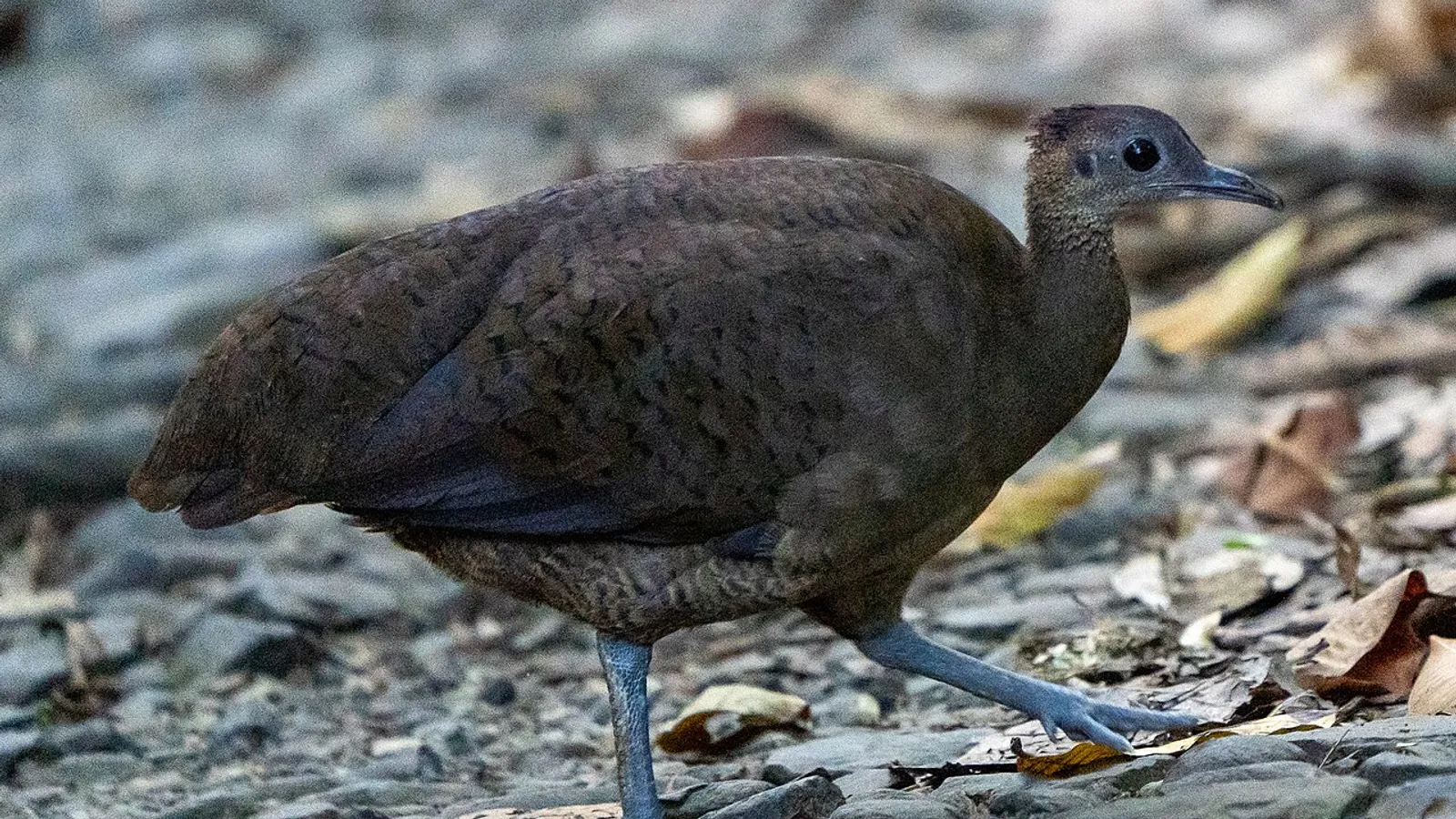
— Where the name comes from
Tinamus is a Latinisation of tinamu, the bird’s name in the language of the Galibi of Guiana: one of the many Caribbean terms that entered zoology through French naturalists. Major distinguishes it by size from many similar species. It looks like a partridge but is not one: its closest relatives are the ostriches, rheas, cassowaries and kiwis.
— Facts
- Group
- Birds · Aves
- Order
- Tinamous
- Habitat
- Primary and mature secondary rainforest
- Range
- From southern Mexico to Bolivia and Brazil
- Size
- 40–46 cm, 700–1,150 g
- Diet
- Fallen fruit, seeds, insects, small vertebrates
- Lifespan
- 10 years in the wild
— Characteristics
- 01
It walks the forest floor and flies only to escape, noisily.
- 02
The song is a tremulous flute-like whistle that carries at dusk.
- 03
The male incubates the eggs of several females and raises the chicks alone.
— What sets it apart
It lays the most beautiful eggs in the animal kingdom: shells of deep turquoise or green, glossy as glazed porcelain, laid among dead leaves without so much as a nest. Why a ground-nesting bird in a forest full of predators should do anything so conspicuous nobody is certain; the best guess is that the gloss reflects the surrounding leaves and makes them less recognisable than they seem. And there is more: tinamous are the only branch of the ostrich group that can still fly, which means that losing flight was something all the others did, each on its own.
