
Père David's deer
Elaphurus davidianus
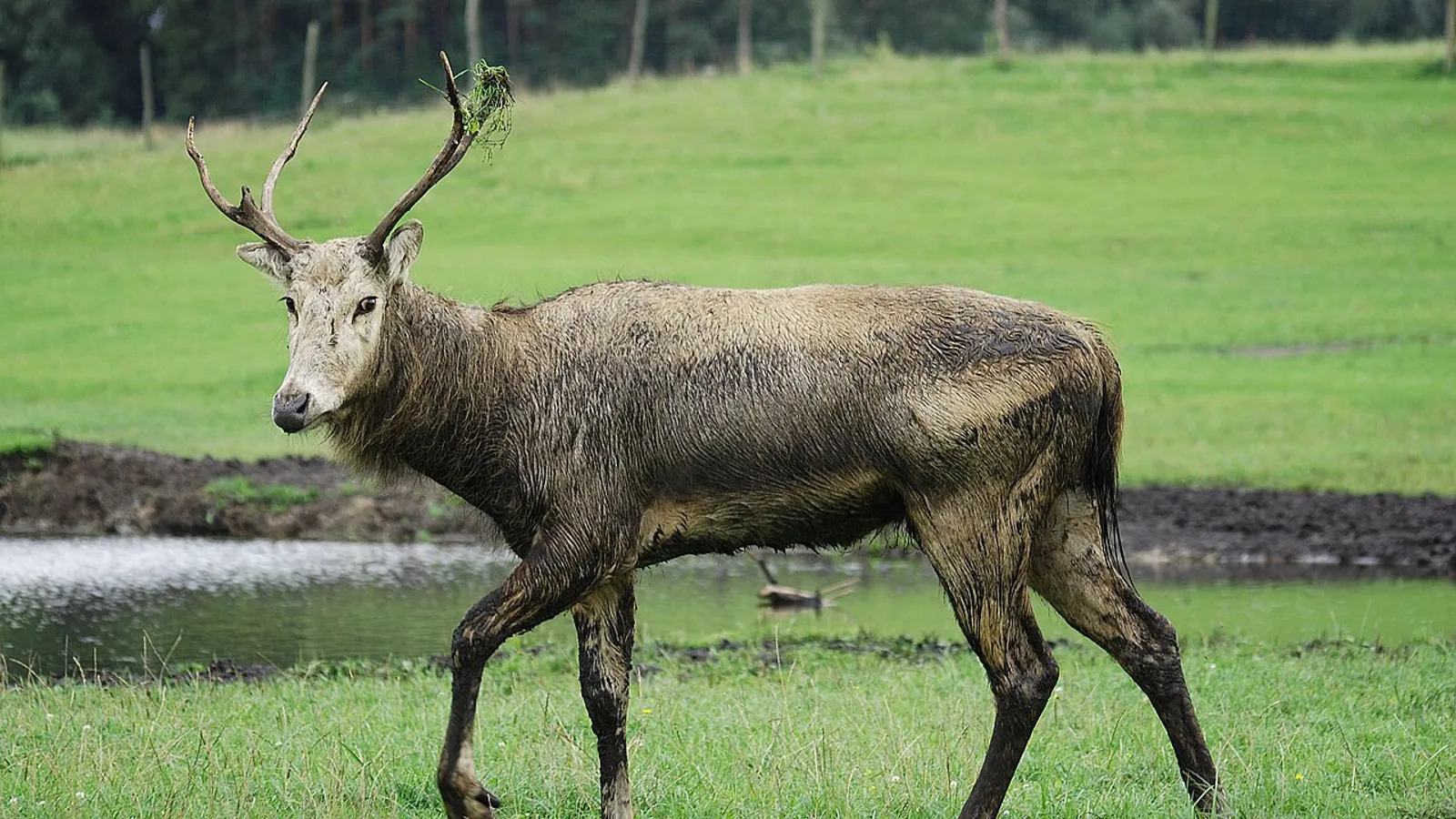
— Where the name comes from
Elaphurus is “tailed deer”, from the Greek élaphos and ourá, for the very long tail, unusual in a deer. Davidianus recalls Armand David, the French Lazarist missionary and naturalist who in 1866 saw it by peering over the wall of the imperial park in Peking — the only place in the world where it still existed. In Chinese it is 四不像, sìbùxiàng, “the four unlikes”: ox hooves, camel neck, deer antlers, donkey tail, and it is none of the four.
— Facts
- Group
- Mammals · Mammalia
- Order
- Even-toed ungulates
- Habitat
- Marshes and floodplains; extinct in the wild, today in fenced reserves
- Range
- China; every living animal descends from a single European nucleus
- Size
- 190–216 cm of body, 135–200 kg
- Diet
- Herbivore — grass, water plants, reeds
- Lifespan
- 18–23 years
— Characteristics
- 01
Its antlers point backwards, unique among deer.
- 02
It has broad splayed feet: it is a marsh deer, and swims very well.
- 03
It was extinct in the wild for over a thousand years before science ever described it.
— What sets it apart
It survived by a hair, and in England. When in 1900 the flooding of the Hun He and then the Boxer Rebellion destroyed the imperial herd in Peking, none were left in China; but a few animals had reached European zoos in the preceding years, and the eleventh Duke of Bedford gathered them all at his estate at Woburn Abbey. Eighteen animals, in an English park, were the entire species. From those eighteen descend today’s thousands, returned to China from 1985 onwards — where they live in reserves, and where the IUCN still classes them as extinct in the wild.
