
Bactrian camel
Camelus bactrianus
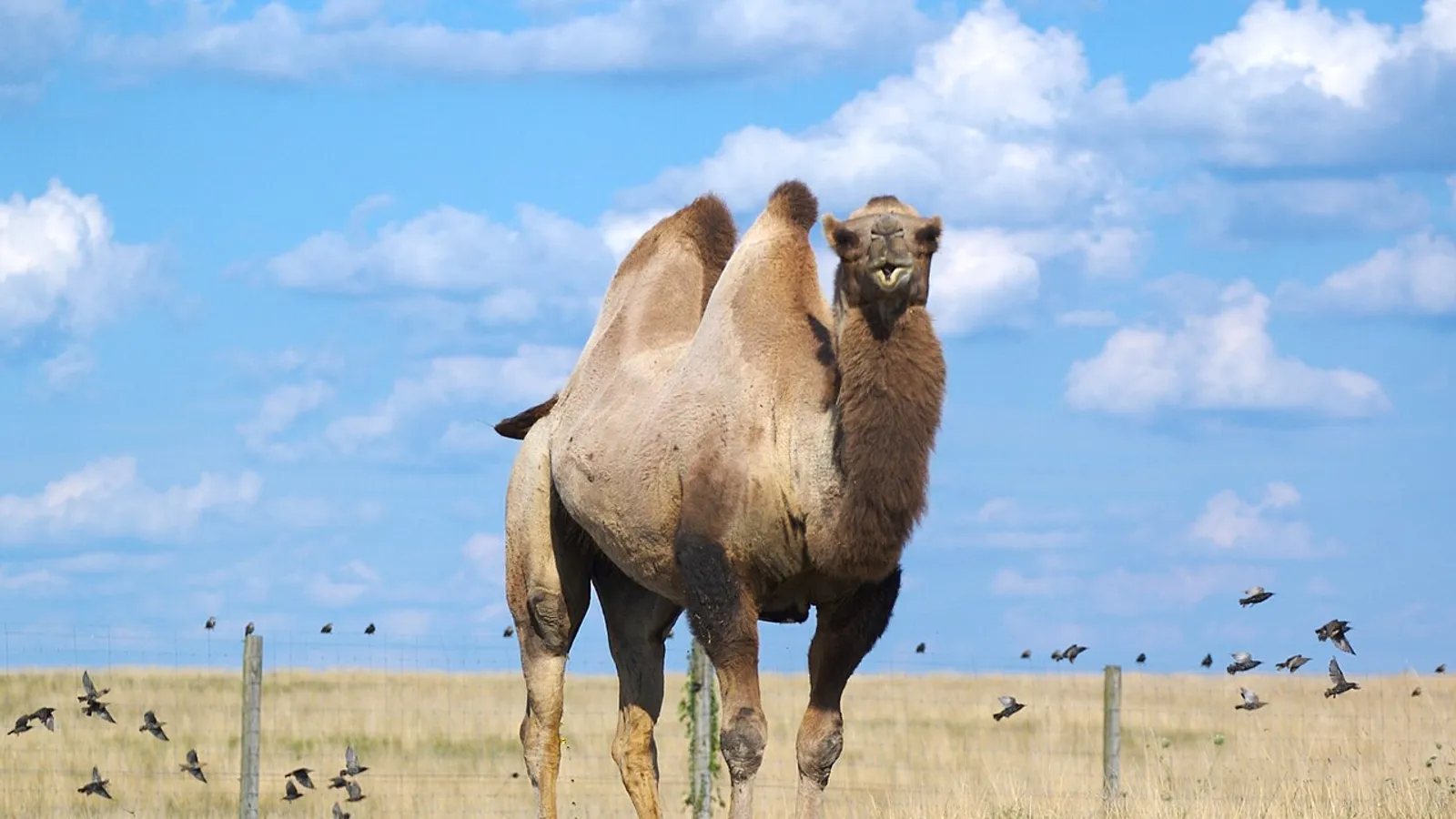
— Where the name comes from
Camelus comes from the Greek kámēlos, a loan from a Semitic language — the Hebrew gāmāl, the Arabic jamal. Bactrianus points to Bactria, the region of present-day northern Afghanistan and Uzbekistan that Alexander’s Greeks knew and from which the animal reached the West. The two humps against the dromedary’s one are remembered by an old typographic trick: a B laid on its side has two humps, a D only one.
— Facts
- Group
- Mammals · Mammalia
- Order
- Even-toed ungulates
- Habitat
- Cold steppe, continental desert with winters below −30 °C
- Range
- Central Asia, from Turkey to Mongolia and China; domestic
- Size
- 225–350 cm of body, 300–1,000 kg
- Diet
- Herbivore — thorny plants, salt-tolerant plants, practically anything fibrous
- Lifespan
- 20–40 years
— Characteristics
- 01
It drinks up to 110 litres in ten minutes without its red cells bursting.
- 02
Its red cells are oval, not round: they pass through capillaries even when the blood thickens.
- 03
It endures annual swings of over seventy degrees, from summer heat to winter frost.
— What sets it apart
The humps do not hold water, they hold fat, and it is a difference that changes everything: fat is an energy store, and the animal manages its water elsewhere — in blood, in tissues, and above all by saving it. It lets its body temperature rise six degrees during the day so as not to sweat, produces urine as thick as syrup and nearly dry droppings, and its oval red cells withstand a dehydration that would kill a person three times over. Then, when it finds water, it drinks a hundred litres in minutes without harm — which no other mammal can do.
