
Kinkajou
Potos flavus
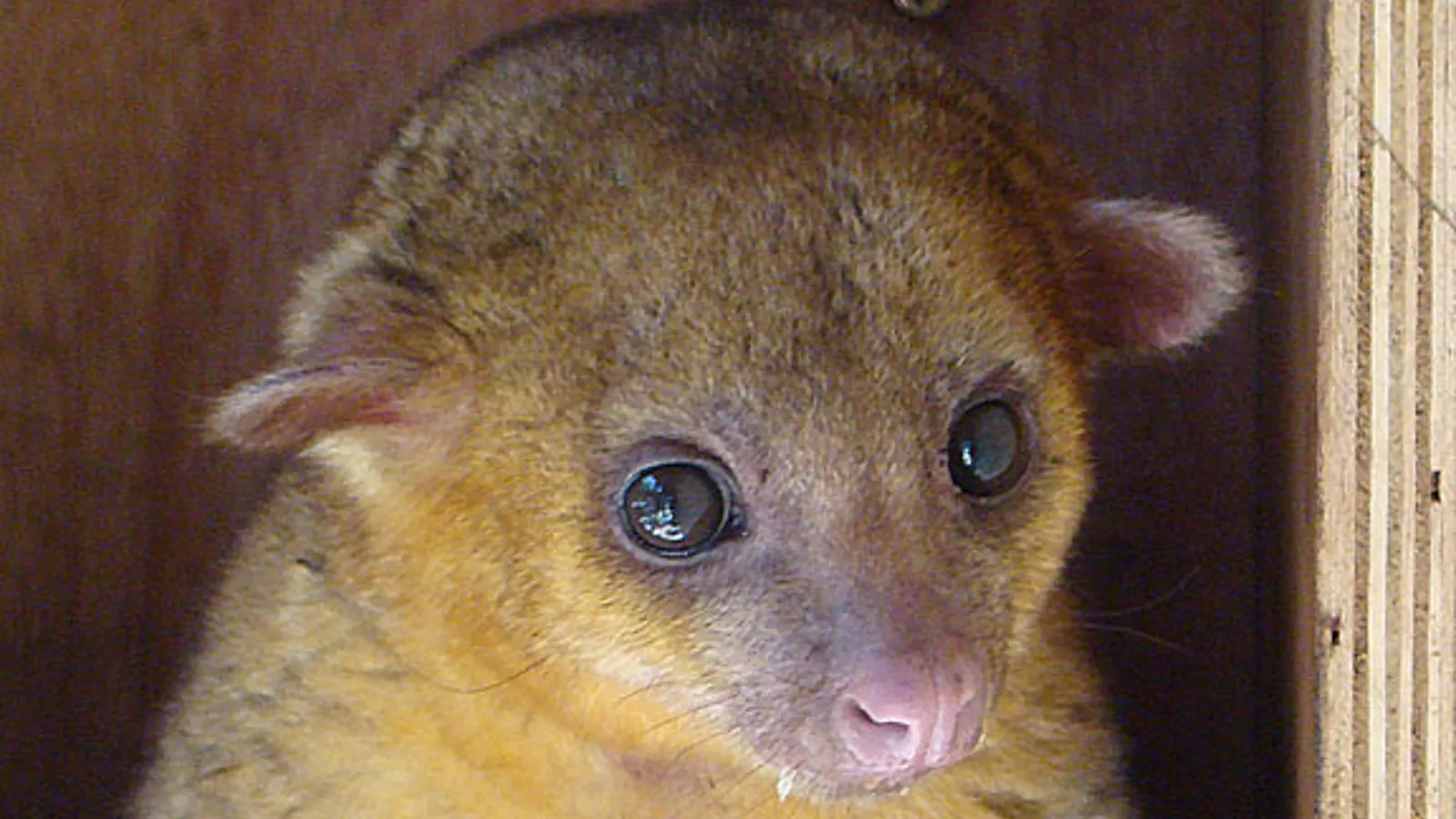
— Where the name comes from
Flavus is “golden yellow”, and describes the coat. Potos is of obscure origin, perhaps an adaptation of an indigenous name. But the English name, kinkajou, is a pure mistake: it comes from the French quincajou, which rendered an Algonquian word for the wolverine — an animal of the taiga, seven thousand kilometres away. Somebody confused the two beasts and the word stayed attached to the wrong one.
— Facts
- Group
- Mammals · Mammalia
- Order
- Carnivores
- Habitat
- The rainforest canopy, rarely below twenty metres
- Range
- From southern Mexico to Brazil and Bolivia
- Size
- 40–60 cm of body plus 40–55 cm of tail, 1.4–4.6 kg
- Diet
- Frugivore — mostly ripe fruit, plus nectar and insects
- Lifespan
- 23 years in captivity
— Characteristics
- 01
It has a prehensile tail, unique among carnivores along with one other procyonid.
- 02
Its tongue is up to thirteen centimetres long and reaches nectar at the bottom of flowers.
- 03
It too rotates its ankles backwards to come down head first.
— What sets it apart
It is a carnivore that has taken up pollinating. It belongs to the order Carnivora — the raccoon family — but lives on fruit and nectar, and when it pushes its face into balsa flowers to lick the nectar with that outsized tongue it comes away with the fur of its muzzle loaded with pollen, which it carries to the next flower. Few tropical plants depend on a predatory mammal to reproduce, and this is one of the very few documented cases.
