
North American river otter
Lontra canadensis
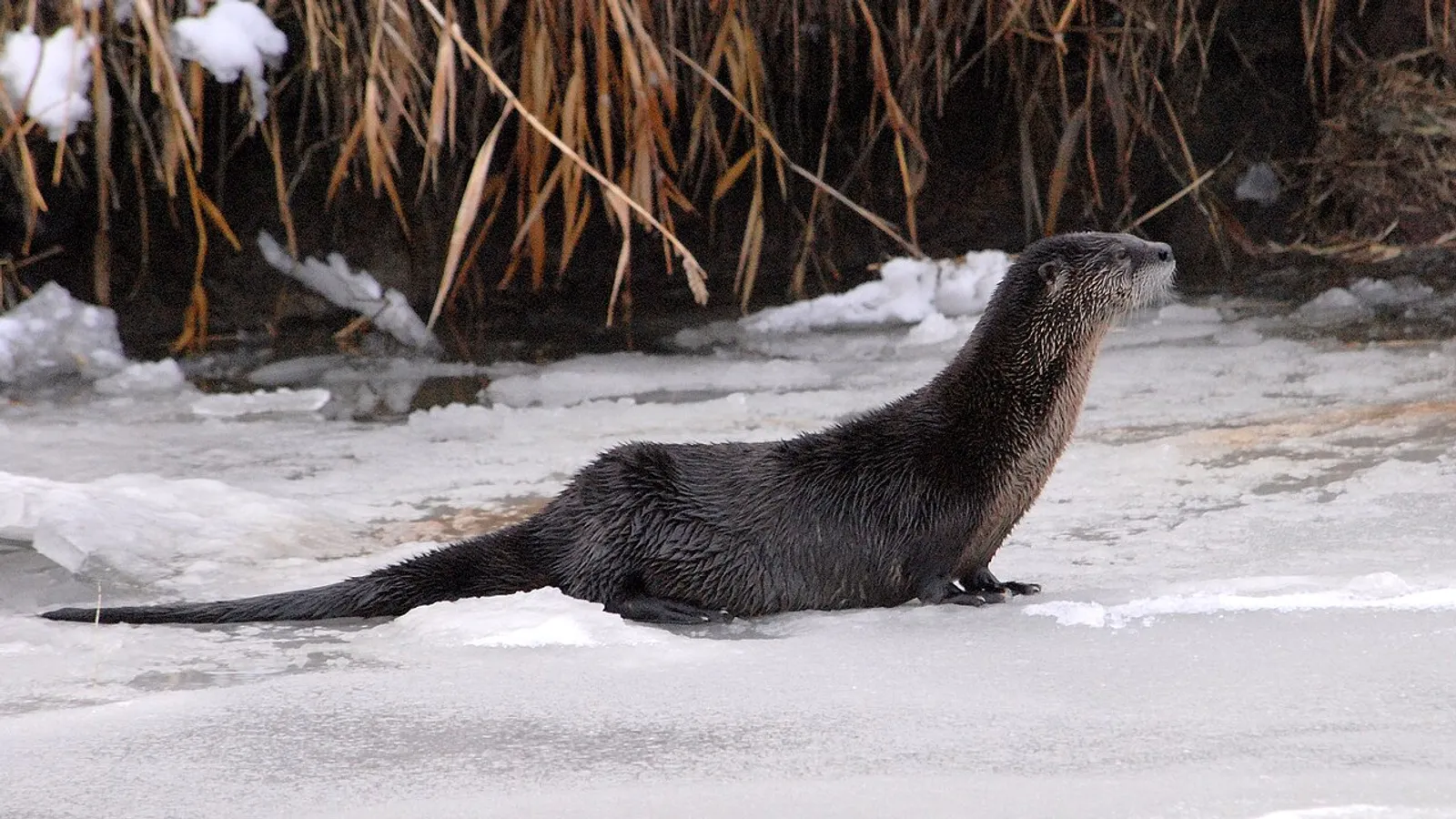
— Where the name comes from
Lontra is the latinised form of the Italian and Spanish words, both from the Latin lutra; that goes back to an Indo-European root *udrós, “creature of the water”, related to the Greek hýdōr and so to hydraulic. The hydra of myth and the otter share an origin: both are, literally, “the water thing”.
— Facts
- Group
- Mammals · Mammalia
- Order
- Carnivores
- Habitat
- Rivers, lakes, marshes, estuaries and coasts, wherever the water is clean
- Range
- North America, from Alaska to the Gulf of Mexico
- Size
- 66–107 cm of body, 5–14 kg
- Diet
- Carnivore — fish above all, then crayfish, amphibians, small mammals
- Lifespan
- 8–9 years in the wild, up to 21 in captivity
— Characteristics
- 01
It has about 350,000 hairs per square centimetre: it never gets wet to the skin.
- 02
It closes nostrils and ears underwater and stays submerged for up to eight minutes.
- 03
It builds slides of mud or snow and uses them again and again, apparently for play.
— What sets it apart
It has no layer of blubber as seals do: to keep from dying of cold in icy water it relies solely on air trapped in its fur, which is dense enough to stay dry underneath. It is a costly wager — it must eat up to fifteen per cent of its own weight a day to fuel that metabolism, and the coat has to be cleaned and oiled constantly or it stops working. Much of the time it seems to spend playing is in fact spent maintaining its own insulation.
