
West Indian Ocean coelacanth
Latimeria chalumnae
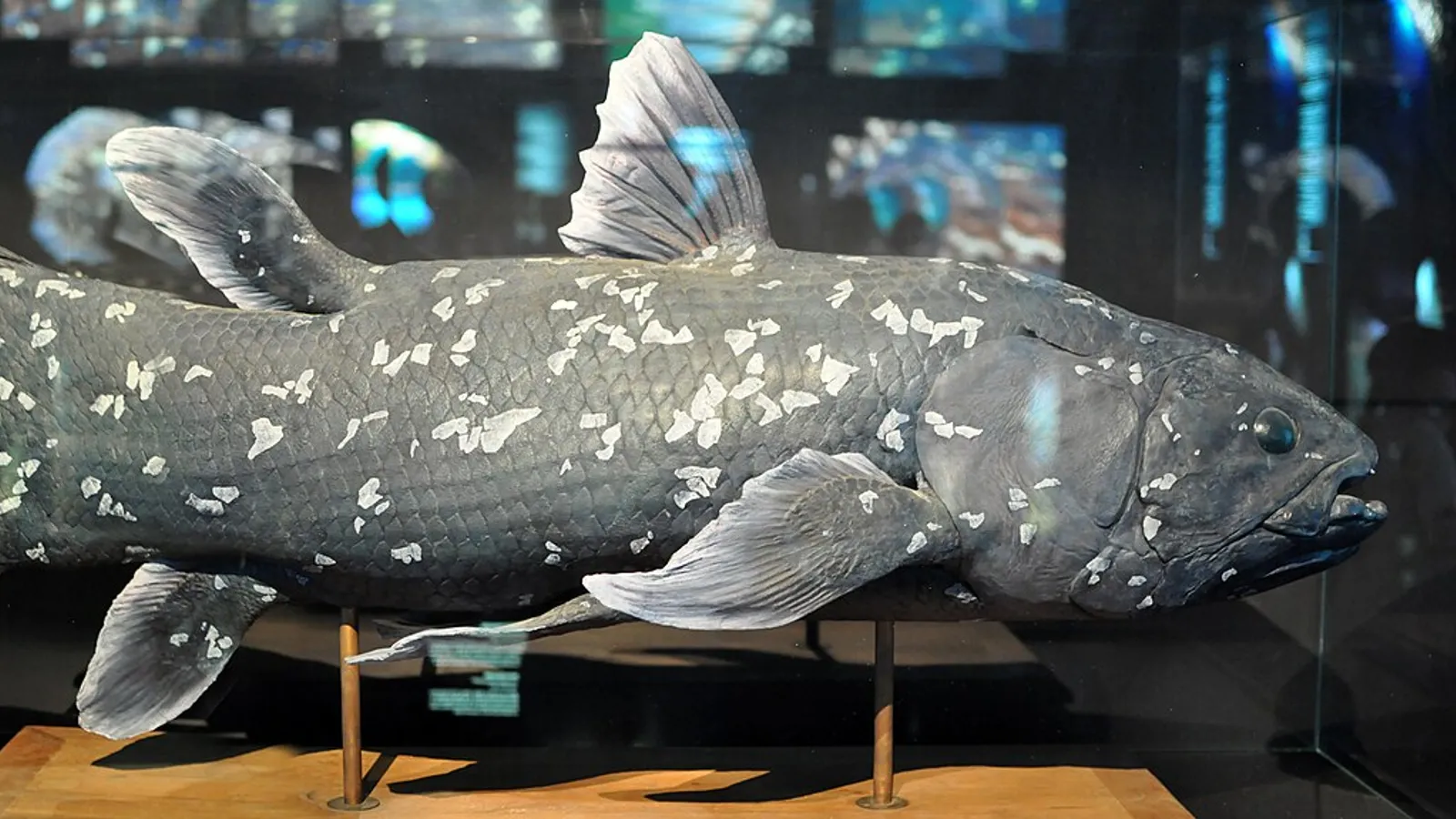
— Where the name comes from
Coelacanth comes from the Greek koîlos, “hollow”, and ákantha, “spine”: the fin rays are empty tubes. The genus Latimeria carries the name of Marjorie Courtenay-Latimer, the museum curator who in 1938 recognised the animal on a fishmonger’s bench in South Africa.
— Facts
- Group
- Fish · Actinopterygii · Chondrichthyes
- Order
- Coelacanths
- Habitat
- Undersea caves between 150 and 700 m
- Range
- The Mozambique Channel and the Comoros
- Size
- 1.5–2 m, up to 90 kg
- Diet
- Carnivore — fish, cephalopods
- Lifespan
- Up to a century
— Characteristics
- 01
The paired fins are lobed and move in alternation, like limbs.
- 02
It has an electrosensitive rostral organ in the snout.
- 03
The notochord persists in the adult in place of an ossified backbone.
— What sets it apart
The coelacanth was known only from fossils 66 million years old and was thought to have died out with the dinosaurs, until a living one turned up in a trawler’s net. It is the most famous case of a Lazarus taxon. The most recent studies credit it with a gestation of about five years and sexual maturity around fifty: a species living on an almost geological timescale, and one that for that reason cannot absorb being caught by accident.
