
Guinea pig
Cavia porcellus
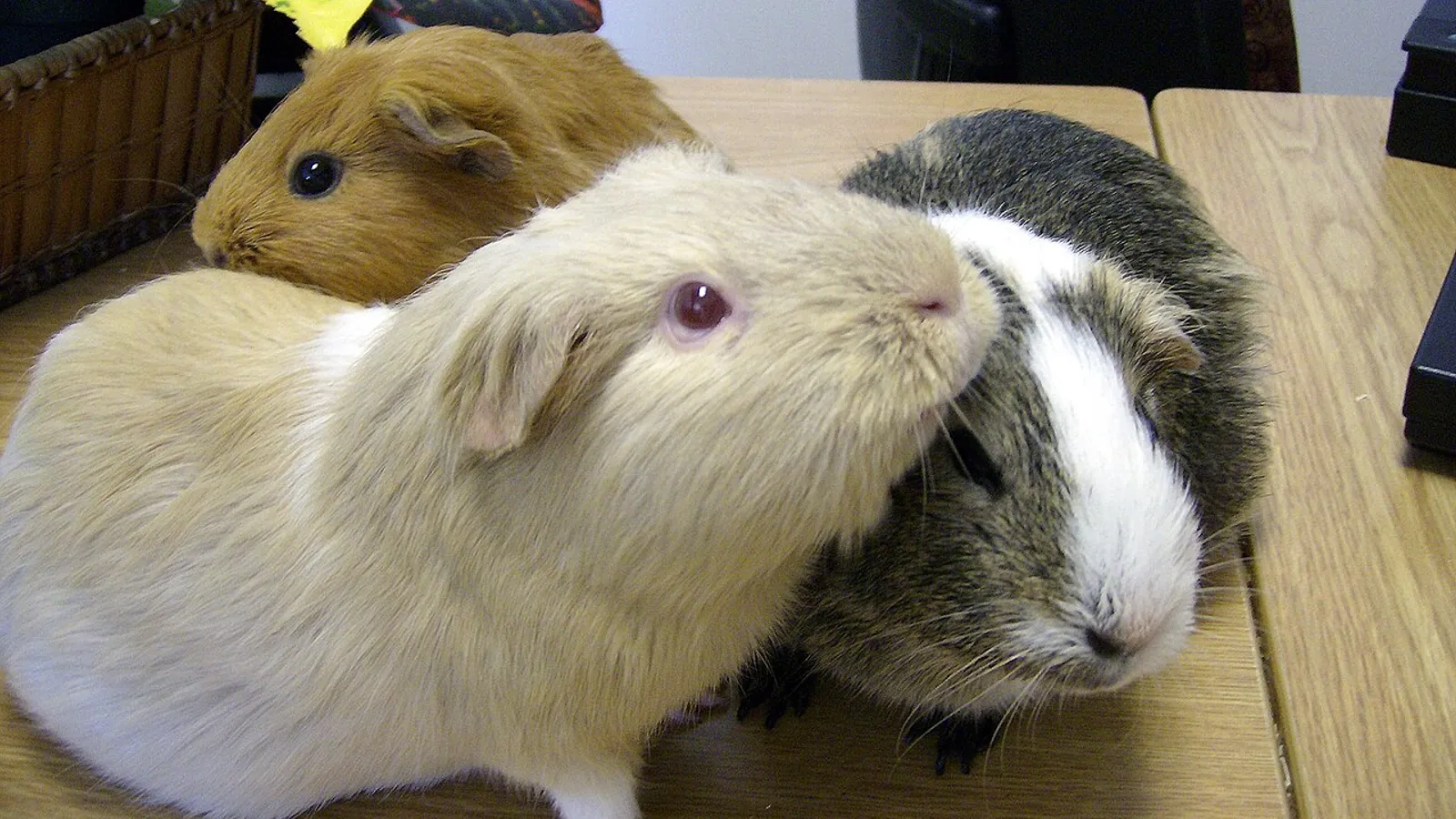
— Where the name comes from
Cavia comes from cabiai, the name in a Caribbean language; porcellus is Latin, “piglet”, for the call and the stocky shape. The English guinea pig is wrong twice over — it comes from neither Guinea nor pigs — while the German Meerschweinchen, “little sea pig”, at least records that it arrived by ship. In Italian the animal then lent its name to the experiment: to “act as a cavia” is to be a guinea pig.
— Facts
- Group
- Mammals · Mammalia
- Order
- Rodents
- Habitat
- Domestic; the related wild forms live in Andean grassland and grassy slopes
- Range
- Native to the Andes; today cosmopolitan as a domestic animal
- Size
- 20–25 cm long, 700–1,200 g
- Diet
- Herbivore — hay, grass, fresh vegetables
- Lifespan
- 5–7 years
— Characteristics
- 01
Like us it has lost the gene for making vitamin C and must take it in with food.
- 02
The young are born furred, open-eyed and with teeth, and graze grass from the first day.
- 03
It is extremely vocal: it has distinct calls for food, for alarm and for contact.
— What sets it apart
That very dependence on vitamin C — shared with us and with very few other mammals — made it decisive: it was on guinea pigs that scurvy was isolated and understood in the 1930s, and earlier still guinea pigs served to demonstrate germ theory and in the first studies of tuberculosis. The phrase “to be a guinea pig” comes from there, from an Andean rodent bred for meat that found itself, through a genetic gap identical to ours, the body on which we learnt medicine.
