
Water buffalo
Bubalus bubalis
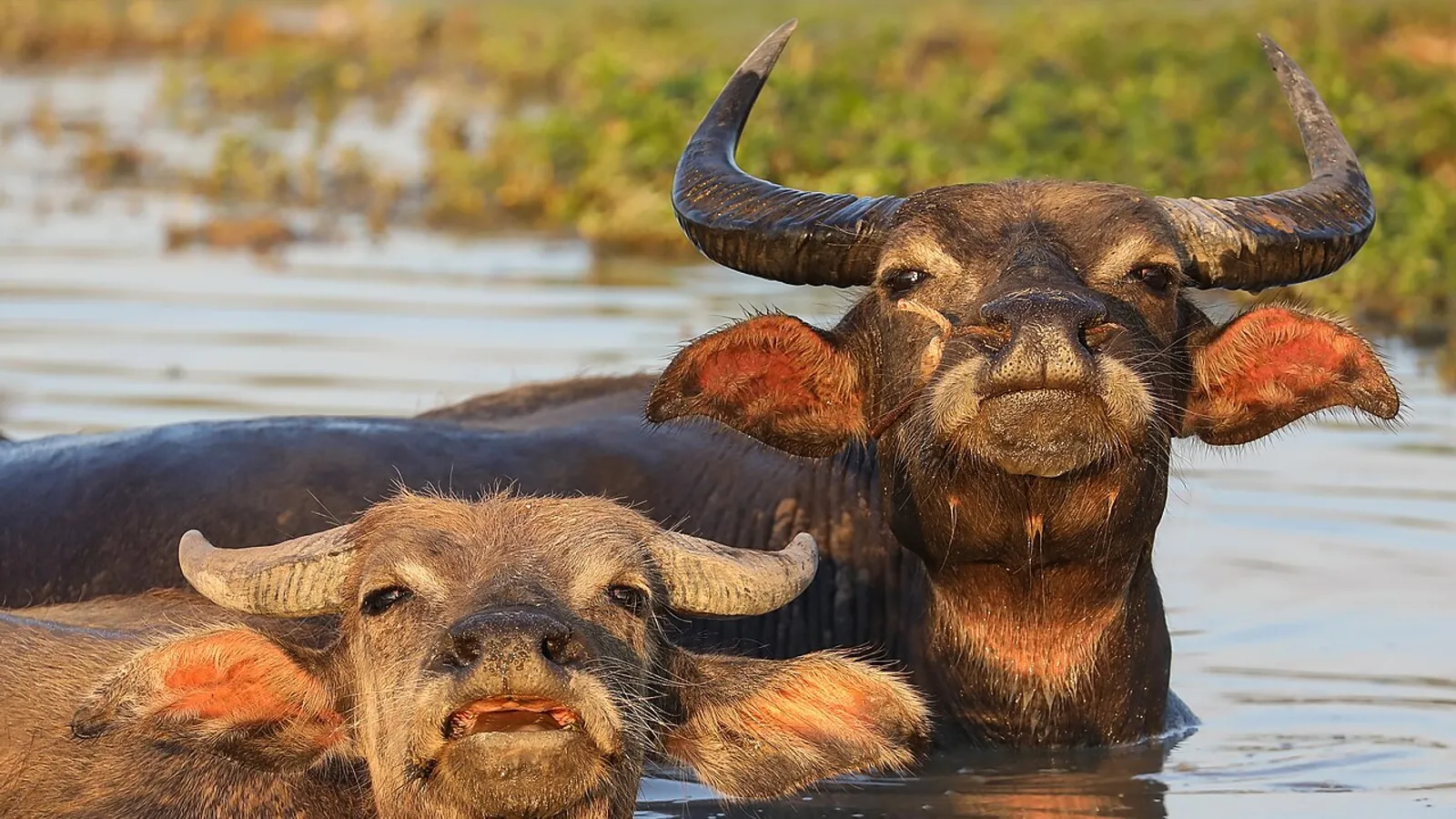
— Where the name comes from
Bubalus comes from the Greek boúbalos, which originally named an African antelope: the name slid onto the Asian buffalo when the two animals entered the same trading world. From it comes the Italian bufalo — and also bufala in the sense of a hoax, from buffalo meat passed off in the market as beef. A word that has changed animal twice and then become a synonym for deception.
— Facts
- Group
- Mammals · Mammalia
- Order
- Even-toed ungulates
- Habitat
- Rice paddies, marshes, slow rivers, wet pasture
- Range
- South and South-East Asia; in Italy in Campania and southern Lazio
- Size
- 240–300 cm long, 300–1,200 kg
- Diet
- Ruminant herbivore — marsh grasses, reeds, coarse fodder
- Lifespan
- About 25 years
— Characteristics
- 01
The hooves splay widely and carry it over mud where cattle would sink.
- 02
It has very few sweat glands and must immerse itself daily to keep from overheating.
- 03
Its milk holds almost twice the fat of cow’s milk: it is the reason for mozzarella.
— What sets it apart
In Italy it is often said that the Normans or the Arabs brought it, but the sources are uncertain and buffalo mozzarella appears in documents only from the 16th century, in the registers of Campanian monasteries. What is certain is the paradox: the animal prospered in the malarial marshes of the Volturno and the Sele, land no other livestock could bear and which people avoided. Campanian buffalo farming was born of an environment considered unliveable — the draining of those lands came centuries after the cheese.
