
Horse
Equus caballus
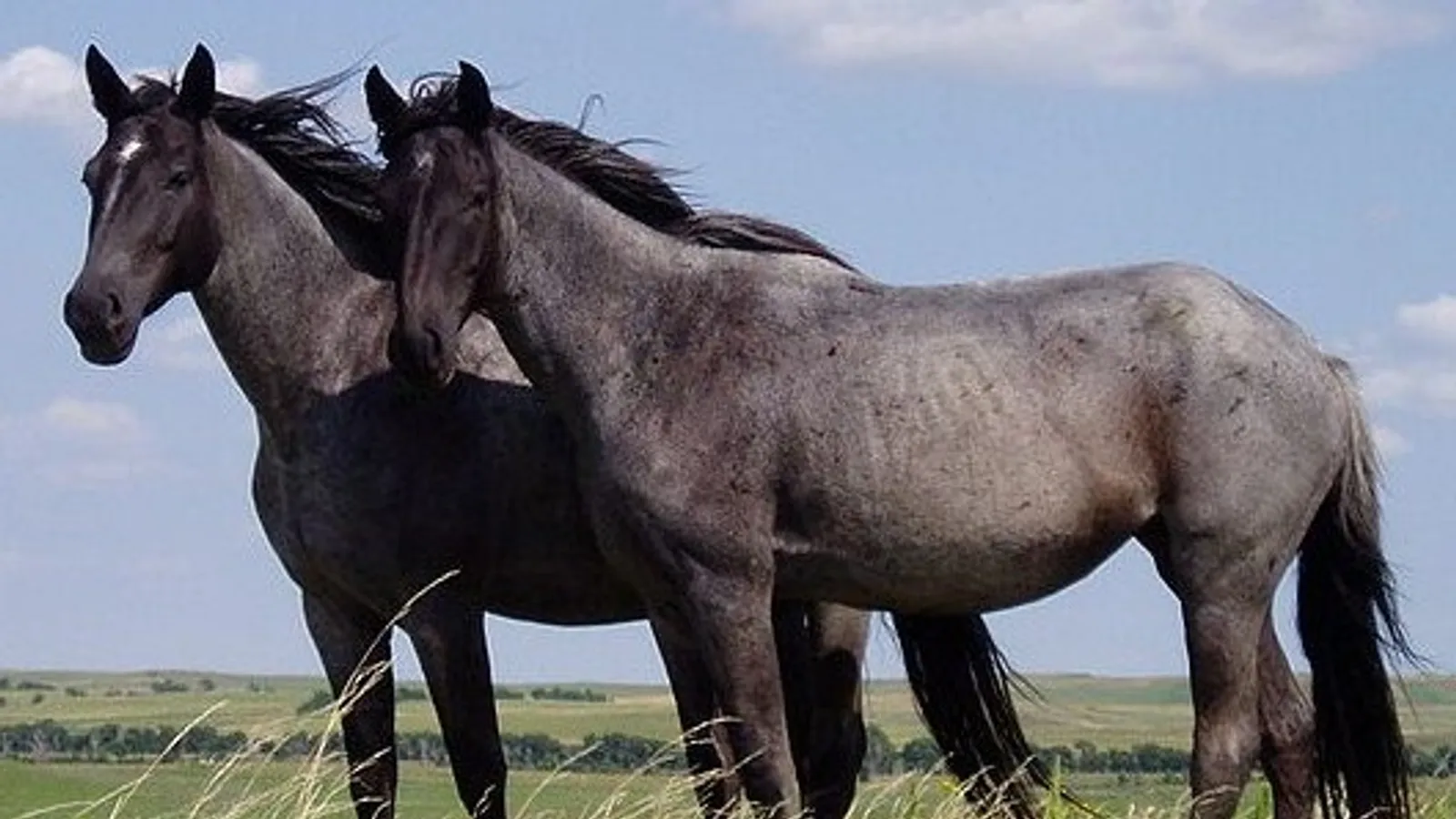
— Where the name comes from
Latin had equus, a noble and very ancient word, from the Indo-European root *h₁éḱwos that gives the Greek híppos and the Sanskrit áśva. But in everyday speech there also circulated caballus, a disparaging term for the drudge horse, perhaps taken from a Balkan language. That was the one that won: cavallo, cheval, caballo all come from the workhorse, not the charger. Equus survives only in the language of science, like a title of nobility with no lands left.
— Facts
- Group
- Mammals · Mammalia
- Order
- Odd-toed ungulates
- Habitat
- Grassland, pasture, stables; feral populations in steppe and desert
- Range
- Cosmopolitan in our wake; free-living populations in the Americas, Australia, the Camargue
- Size
- 140–180 cm at the withers, 380–1,000 kg
- Diet
- Herbivore — grass and hay, in small continuous amounts
- Lifespan
- 25–30 years
— Characteristics
- 01
It cannot vomit: the valve between stomach and oesophagus is one-way, which is why colic can kill it.
- 02
It sleeps standing thanks to a system of ligaments that locks the joints without muscular effort.
- 03
It has the largest eye of any land mammal and a field of view of nearly 350 degrees.
— What sets it apart
It was domesticated on the Pontic-Caspian steppe about four thousand two hundred years ago, and within a few centuries that population replaced every other horse lineage in Europe and Asia. The reason lies in two mutations: one that strengthens the back, the other that lowers anxiety. A more docile and more load-bearing animal multiplied at a stroke the distance a person could cover in a day — and with it the reach of armies, of trade and of languages. Half the Indo-European vocabulary travelled on horseback.
