
Cattle
Bos taurus
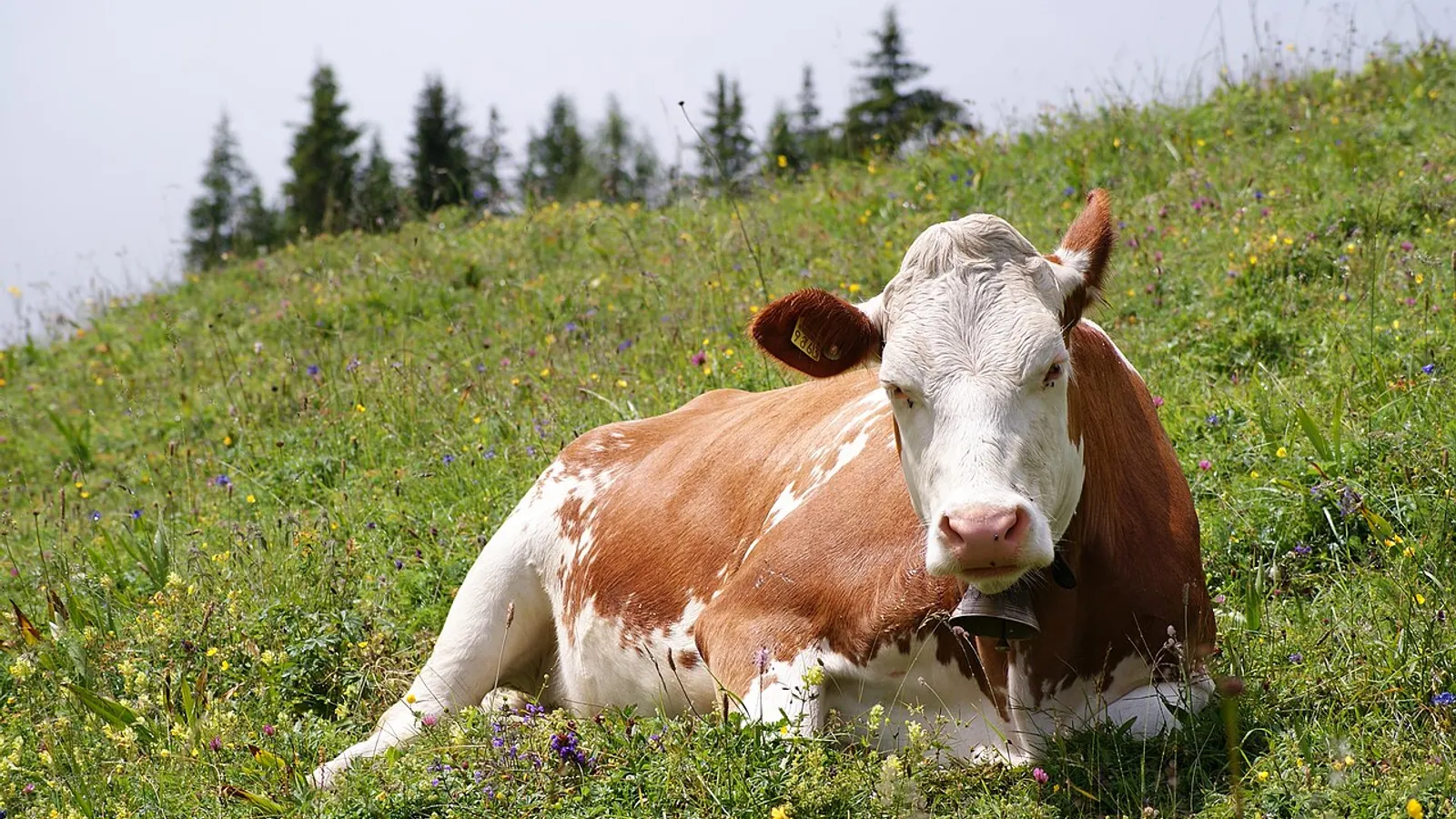
— Where the name comes from
Bos comes from the Indo-European root *gʷṓws, which gave the Greek boûs, the Sanskrit gáus and the English cow: a word old enough to predate stock-keeping itself. Taurus, “bull”, is probably a Semitic loan — compare the Akkadian šūru and the Hebrew šōr — which reached the Greek taûros and then Latin. And our first letter comes from here: the Phoenician aleph was the head of an ox, turned upside down over time until it became the A.
— Facts
- Group
- Mammals · Mammalia
- Order
- Even-toed ungulates
- Habitat
- Pasture, byres, sown grassland
- Range
- Cosmopolitan; over one and a half billion head worldwide
- Size
- 150–180 cm at the withers, 400–1,100 kg
- Diet
- Ruminant herbivore — grass, hay, fodder
- Lifespan
- 18–22 years, far less in farming
— Characteristics
- 01
The stomach has four chambers and houses micro-organisms that digest cellulose on its behalf.
- 02
It ruminates six to eight hours a day, chewing over food already swallowed.
- 03
It has almost panoramic vision but sees red poorly: the bullfighter’s cape counts for its movement, not its colour.
— What sets it apart
It descends from the aurochs, Bos primigenius, an ox nearly two metres tall that died out in Poland in 1627: the last female died in the forest of Jaktorów, and hers was one of the first extinctions Europe kept a record of. DNA indicates that every taurine cow in the world descends from an initial group of about eighty females domesticated in the Near East ten thousand years ago. A billion and a half animals alive today go back to a herd that could have been counted in an afternoon.
