
Eurasian beaver
Castor fiber
— Where the name comes from
Castor is the Greek kástōr; fiber is the Latin word for the same animal, related to the German Biber and to a very old Indo-European adjective meaning “brown”. The binomial therefore says “beaver” twice, in two languages. Isidore of Seville then invented the false etymology that made its fortune: castor from castrare, because a hunted beaver was believed to bite off its own testicles to hand the hunters what they wanted — an idea born of the fact that castoreum, the scented secretion, came from glands nearby.
— Facts
- Group
- Mammals · Mammalia
- Order
- Rodents
- Habitat
- Slow rivers, canals, lakes with wooded banks
- Range
- Europe and western Asia, expanding fast after centuries of near-extinction
- Size
- 80–100 cm of body, tail 30–40 cm, 13–35 kg
- Diet
- Bark, twigs, water plants, grasses
- Lifespan
- 15 years in the wild
— Characteristics
- 01
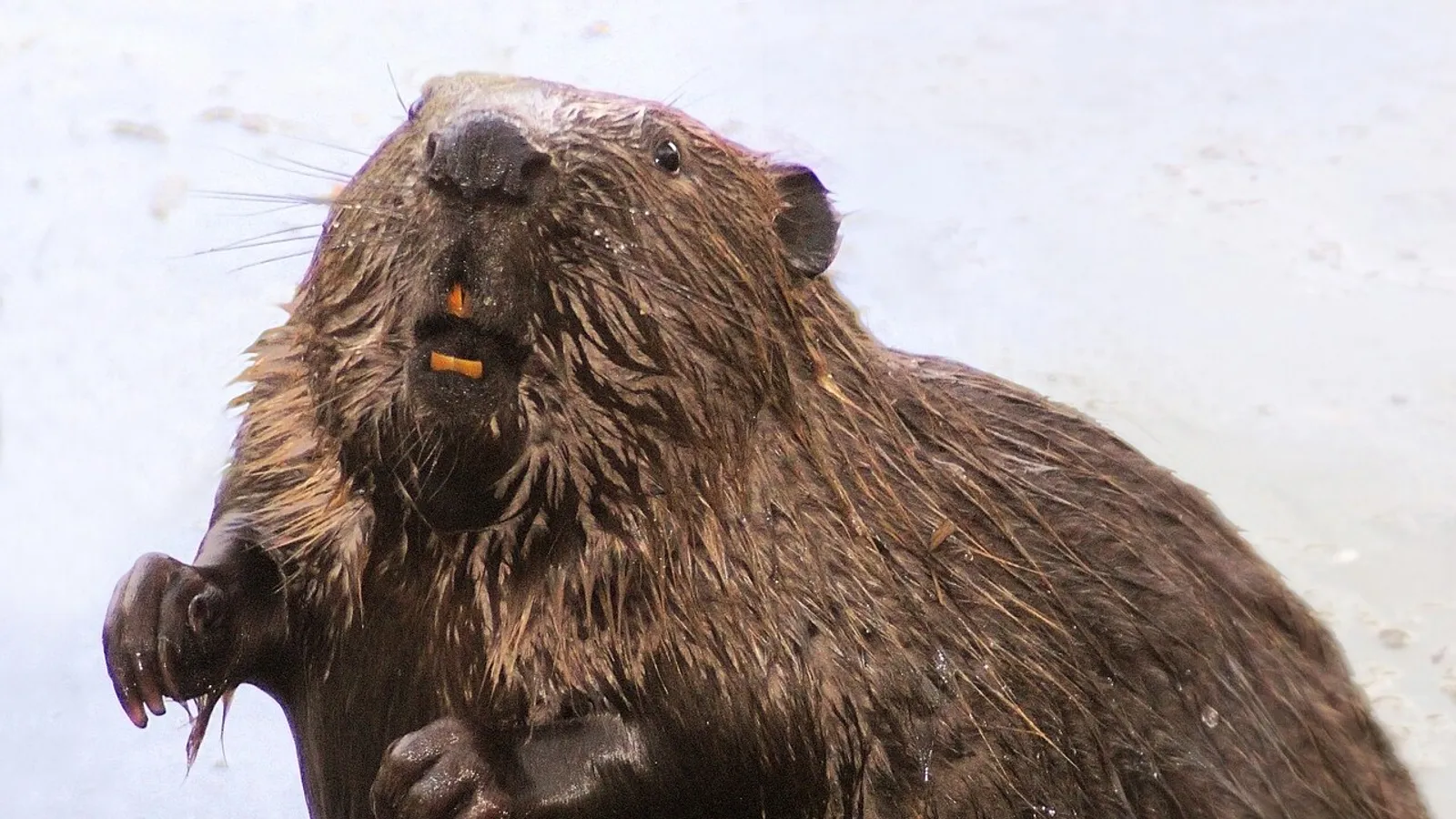
It fells trees by gnawing the trunk into an hourglass, and uses them for dams and lodges.
- 02
It has transparent eyelids that serve as a mask underwater.
- 03
It slaps its flat tail on the water as an alarm, audible hundreds of metres away.
— What sets it apart
At the start of the 20th century about twelve hundred were left in Europe, in eight isolated populations: the Rhône, the Elbe, southern Norway, the Dnieper, the Don, Voronezh, the Urals, the Ob. Every European beaver alive today — hundreds of thousands of animals from Spain to Mongolia, back in Italy since 2018 after five hundred years — descends from those few survivors. It is the greatest return of a mammal ever achieved on the continent, and it has brought a side effect people are learning to appreciate: its dams hold back floods and recreate wetlands no engineering project could build at the same price.
