
Hazel dormouse
Muscardinus avellanarius
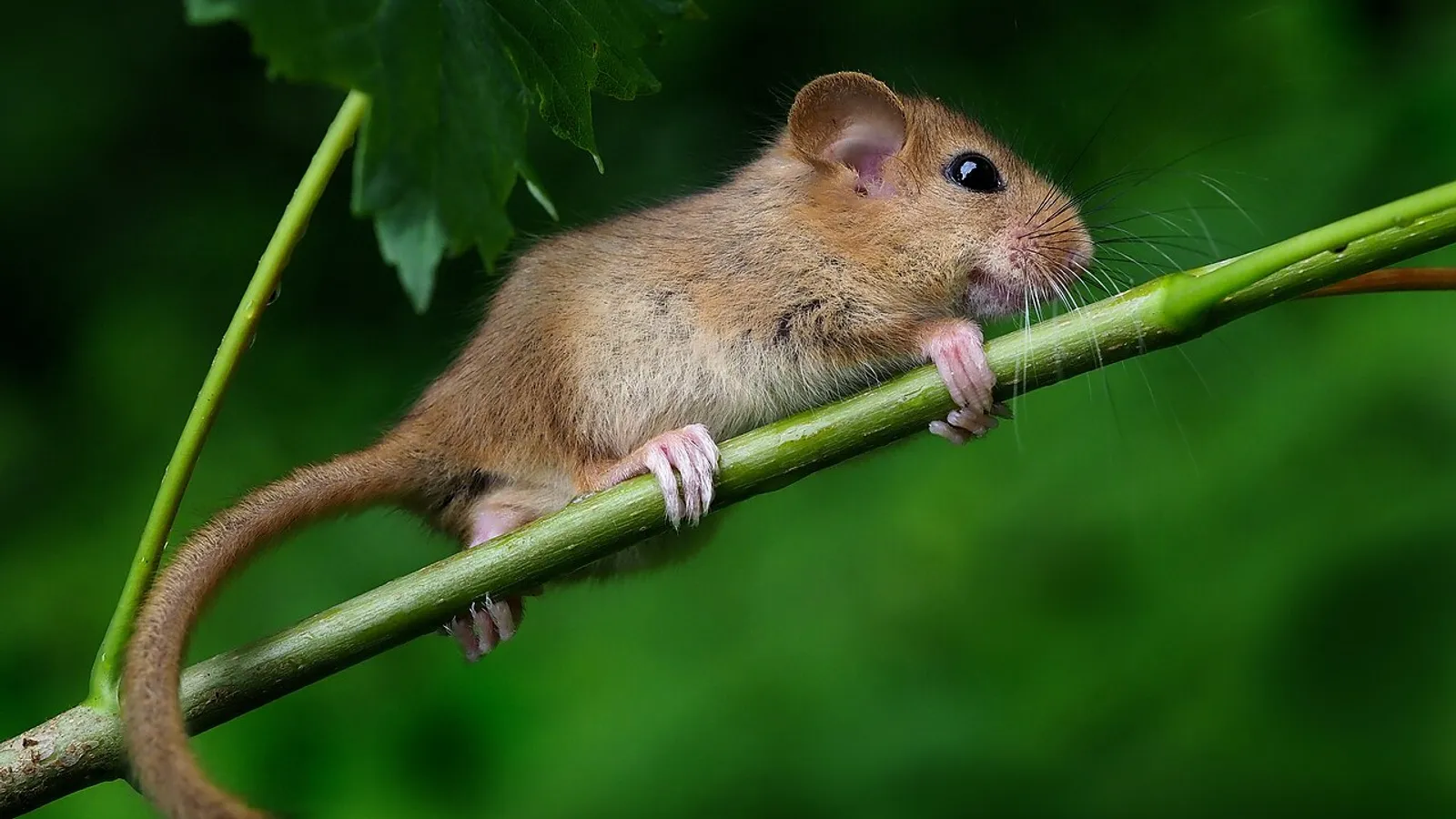
— Where the name comes from
Avellanarius is “of the hazelnuts”, from the nux avellana, the nut of Avella, a Campanian town famous in antiquity for its hazel groves — the name of an Italian village that ended up inside the nomenclature of half of Europe. Muscardinus comes instead from the French muscardin, alluding to the animal’s musky smell. The English dormouse has nothing to do with mice: it contains the French dormir.
— Facts
- Group
- Mammals · Mammalia
- Order
- Rodents
- Habitat
- Coppiced woodland with hazel, thick hedgerows, continuous understorey
- Range
- Europe, from southern England to the Balkans and Anatolia
- Size
- 6–9 cm of body, tail nearly as long, 15–40 g
- Diet
- Hazelnuts, blackberries, flowers, pollen, insects, buds
- Lifespan
- 5 years, a great deal for a rodent of that weight
— Characteristics
- 01
It sleeps seven months a year, curled in a nest of leaves on the ground.
- 02
It hardly ever comes down when awake: it moves from branch to branch.
- 03
It weaves spherical summer nests from strips of honeysuckle bark.
— What sets it apart
Its passage is recognised by the hazelnuts. The dormouse opens the shell by making a round hole with a smooth rim bevelled inwards, different from the ragged one of the wood mouse and the splintered one of the squirrel; English surveys are done by collecting shells under hazel bushes and turning them to the light. An animal that sleeps half the year and is never seen is counted by looking at its rubbish.
