
Roe deer
Capreolus capreolus
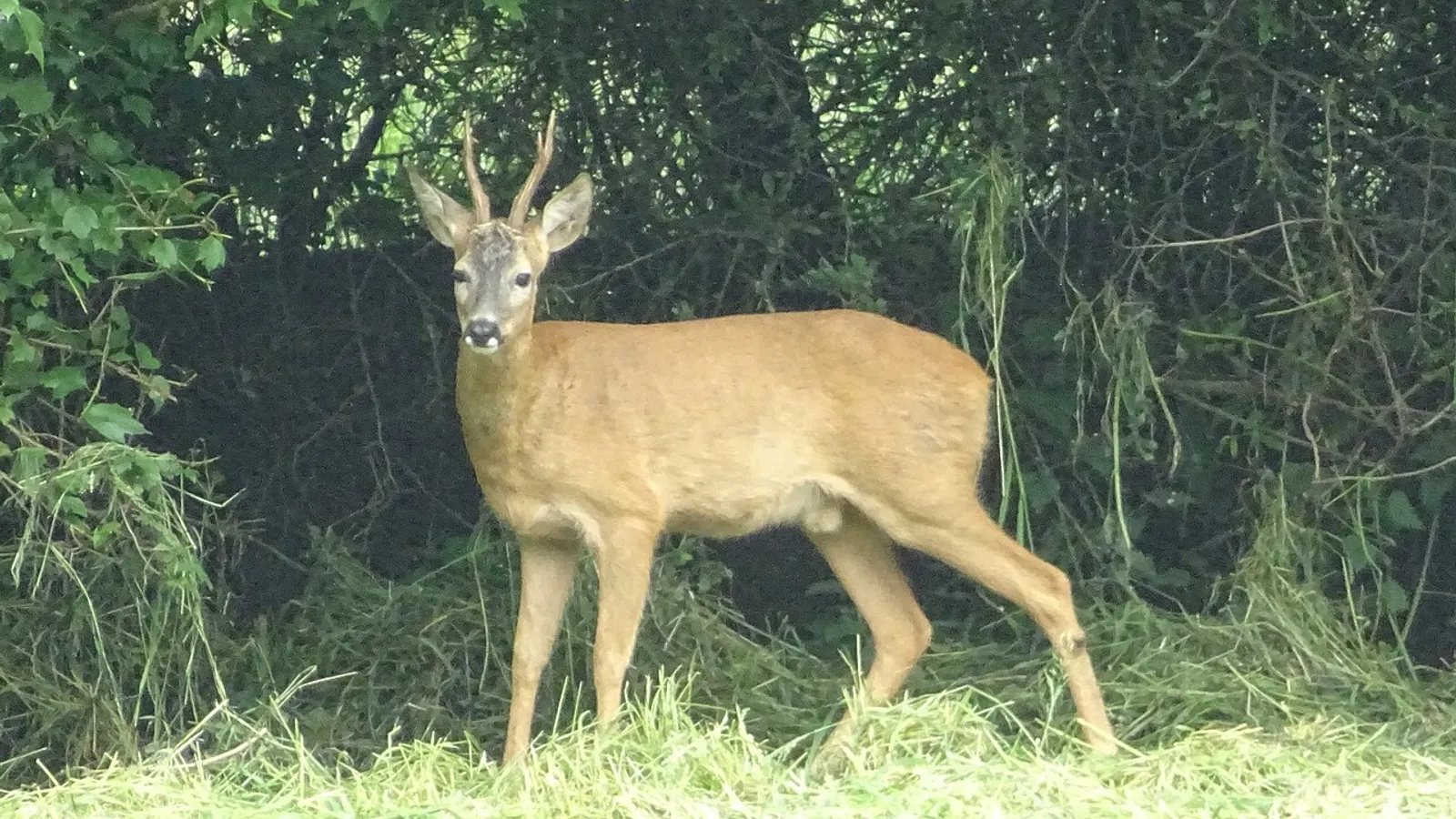
— Where the name comes from
Capreolus is the Latin diminutive of caper, the he-goat: literally “little goat”. The same word in Latin also meant the tendril of a vine and the forked prop of a carpenter, anything that divides into two points — and the roe deer’s antler, short and branching into two or three tines, is precisely a small fork. The Italian name descends directly from the same word, and the repetition Capreolus capreolus is one of those tautonyms that nomenclature preserves when the popular and the scientific name end up coinciding.
— Facts
- Group
- Mammals · Mammalia
- Order
- Even-toed ungulates
- Habitat
- Broadleaf woodland broken by clearings, scrub and farmland
- Range
- Continental Europe and the British Isles, as far as Anatolia, the Caucasus and northern Iran
- Size
- 95–135 cm long, 65–75 cm at the shoulder, 15–35 kg
- Diet
- Herbivore — shoots, tender leaves, herbs, buds, fruit and fungi
- Lifespan
- 8–12 years in the wild, up to 17 in protected conditions
— Characteristics
- 01
The antler, small and two- or three-pointed, drops in autumn and regrows in midwinter: unique among European deer.
- 02
The white rump patch fans out in an alarmed animal, signalling danger to the rest of the group.
- 03
The alarm call is a hoarse repeated bark, startlingly like a dog’s.
- 04
It is a selective browser: it picks the most digestible mouthfuls rather than grazing indiscriminately.
— What sets it apart
The roe deer mates in July and August, but the embryo, after a few cell divisions, stops: it hangs suspended in the uterus for four or five months without implanting, and only resumes developing around Christmas. It is the only ungulate in the world to practise embryonic diapause, a mechanism otherwise known in bears, mustelids and seals. The advantage is arithmetical: the buck can court when he is in condition, in summer, and the fawns are still born in May, when the woods offer the most food. The apparent gestation lasts ten months; the real one, five.
