
Sperm whale
Physeter macrocephalus
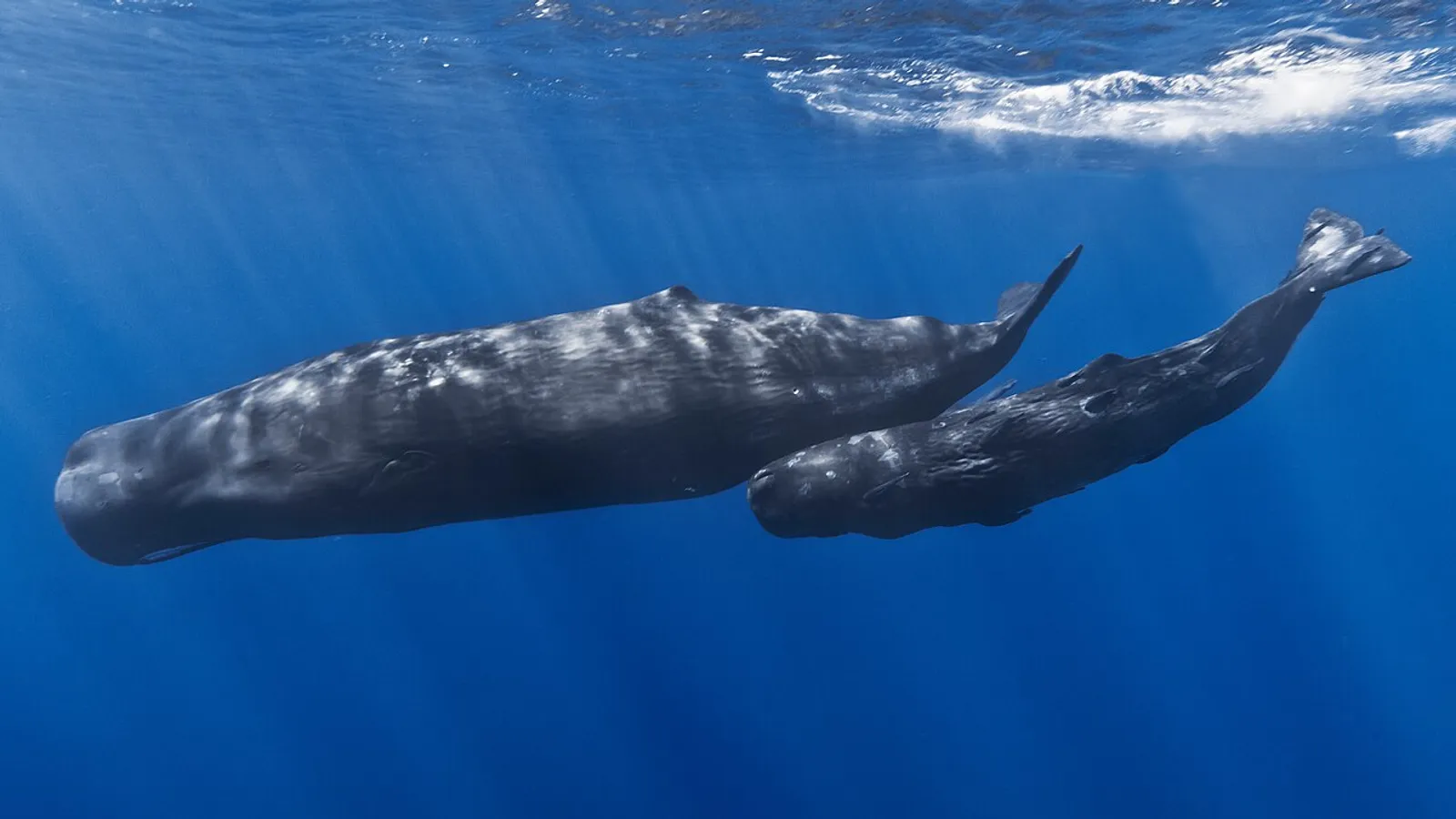
— Where the name comes from
The Italian capodoglio comes from capo d’oglio, oil head: the huge skull holds spermaceti, a liquid wax once mistaken for semen — hence the English sperm whale. Physeter is Greek for “blower”, from physáō, to blow; macrocephalus, “big-headed”. It is the largest toothed predator that has ever lived.
— Facts
- Group
- Mammals · Mammalia
- Order
- Cetaceans
- Habitat
- Deep open sea, beyond the continental slope
- Range
- Every ocean in the world
- Size
- 11–18 m, 15,000–45,000 kg for the male
- Diet
- Carnivore — deep-water squid, the giant squid included
- Lifespan
- 60–70 years
— Characteristics
- 01
It has the largest brain ever to have existed on this planet, about 8 kg.
- 02
It dives past 2,000 metres and holds its breath for as much as an hour and a half.
- 03
It makes the loudest sounds any animal produces: clicks over 230 decibels.
— What sets it apart
The sperm whale hunts in total darkness by sound: its spermaceti organ focuses tremendously powerful clicks that bounce off prey hundreds of metres down, a biological sonar of great precision. Some researchers suspect it may even stun squid with the sheer intensity of its pulses. And every clan has a different “dialect” of clicks, handed down culturally: two sperm whales recognise each other as kin by the rhythm in which they speak.
