
Capybara
Hydrochoerus hydrochaeris
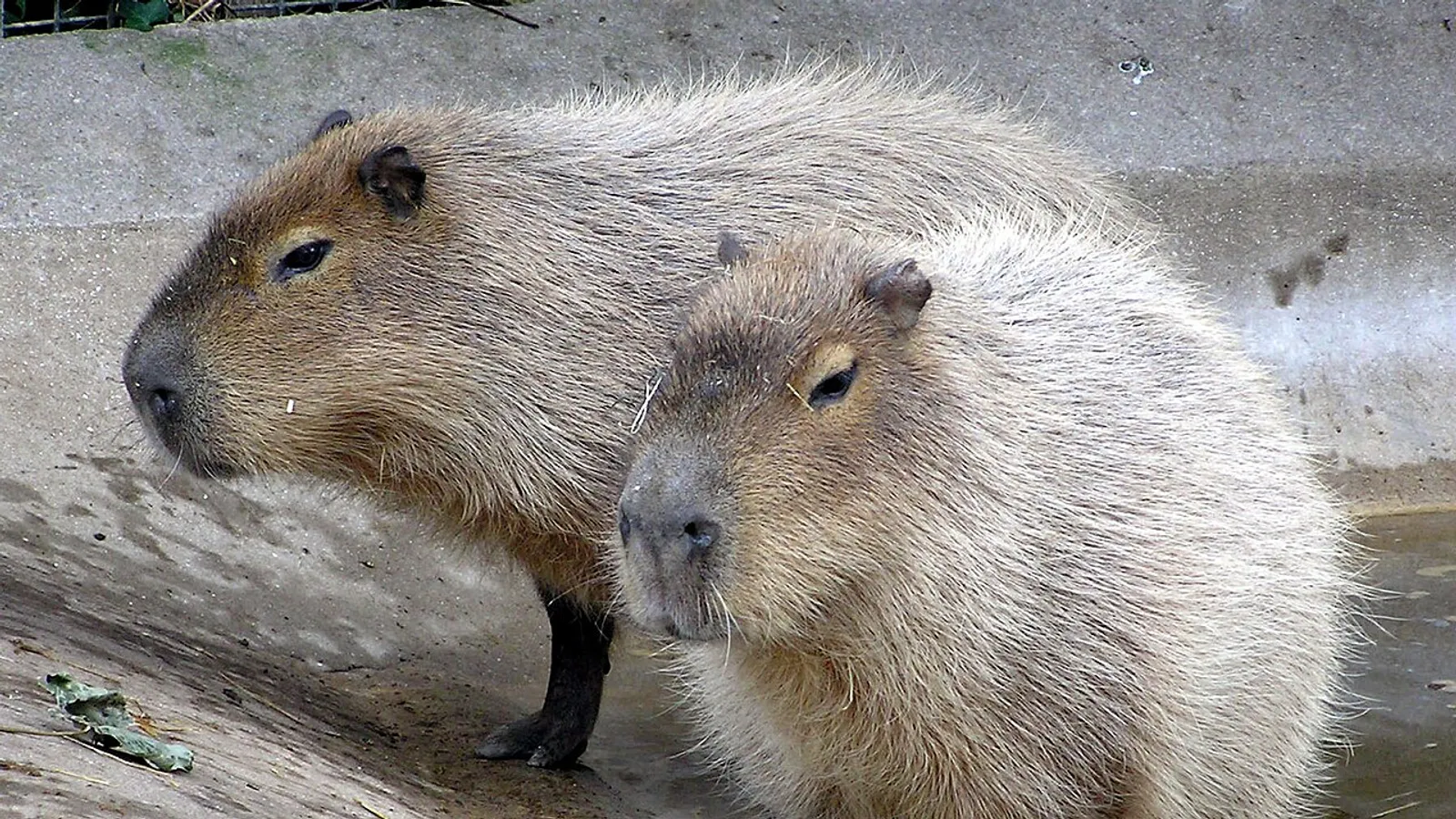
— Where the name comes from
Hydrochoerus hydrochaeris repeats the same Greek image twice, in genus and epithet: hýdōr, “water”, and choîros, “pig” — the water pig the first Europeans thought they recognised on the banks of the Orinoco. The common name comes instead from the Tupi kapiûara, usually read as “eater of slender grass”, a description far more exact than the naturalists’. Between the two linguistic traditions, the indigenous one had understood the animal; the European one had only seen its outline.
— Facts
- Group
- Mammals · Mammalia
- Order
- Rodents
- Habitat
- Flooded grassland and densely vegetated river banks
- Range
- South America east of the Andes, from Venezuela and Colombia to southern Brazil, Uruguay and northern Argentina
- Size
- 106–134 cm long, 50–62 cm at the shoulder, 35–66 kg
- Diet
- Herbivore — grasses and water plants, bark and fallen fruit
- Lifespan
- 8–10 years in the wild, up to 12 in captivity
— Characteristics
- 01
Eyes, ears and nostrils are set in line along the top of the head, so they stay above water with the body submerged.
- 02
The toes are partly webbed and the animal can stay under for up to five minutes.
- 03
It lives in stable groups of ten or twenty, which in the dry season merge into gatherings of over a hundred.
— What sets it apart
In Venezuela the capybara is traditionally eaten during Lent, when meat would be forbidden. The story handed down is that the colonists asked Rome for a ruling on the animal and that, described as a scaly beast of aquatic habits, it was classed with fish: no papal bull has ever been traced, but the custom is documented from at least the 18th century and has never lapsed. Even today, in the weeks before Easter, salted chigüire sells at prices above beef. The largest rodent in the world owes its gastronomic fortune to a taxonomic misunderstanding never cleared up.
