
Common raccoon dog
Nyctereutes procyonoides
— Where the name comes from
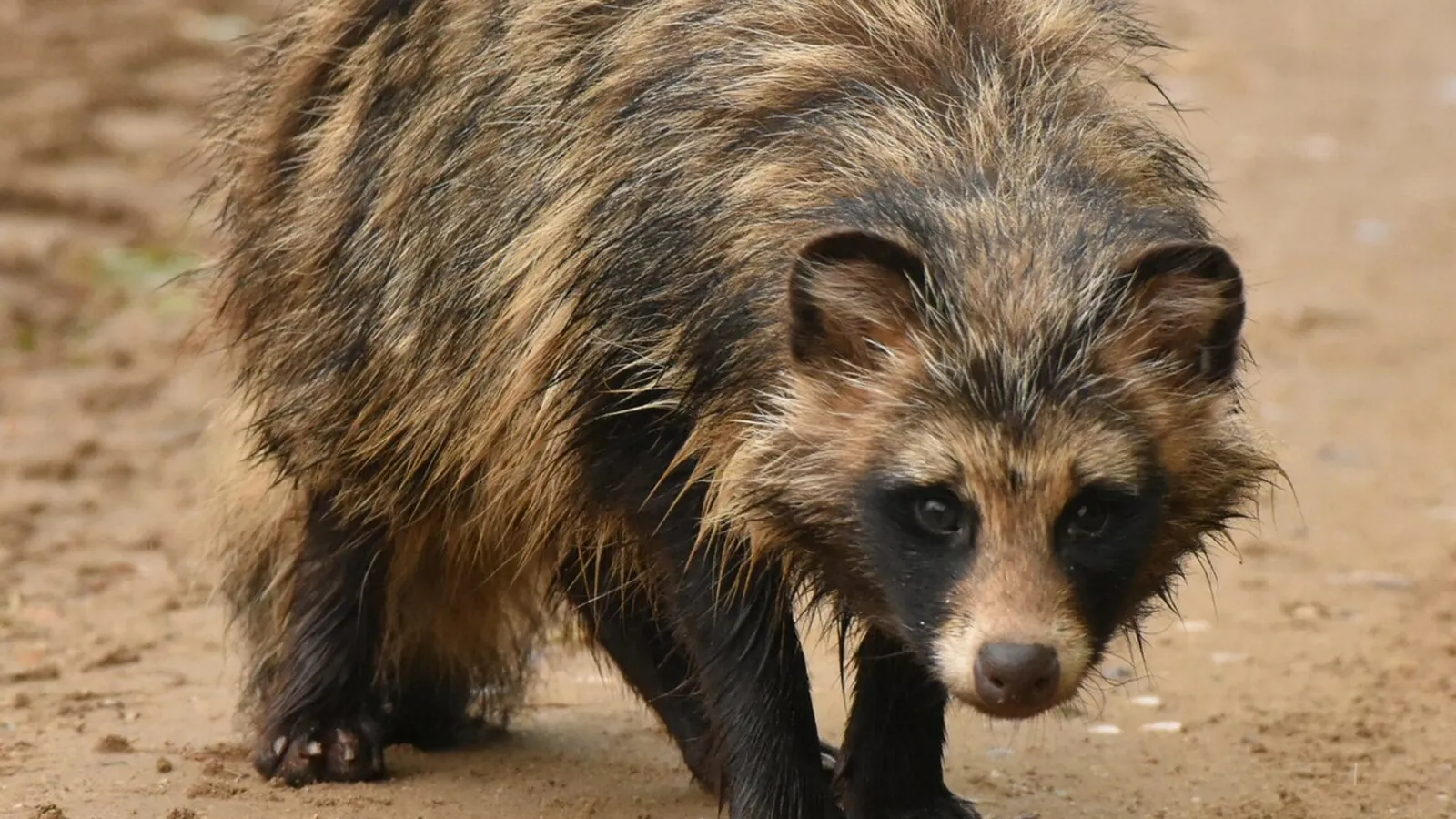
Nyctereutes is Greek and means “night hunter”, from nýx, “night”, and ereutḗs, “one who searches”. Procyonoides means “raccoon-like”, for the dark mask over the eyes: a canid bearing the name of an American carnivore it is not related to. In Japan it is the tanuki, a folklore figure able to shape-shift, and its terracotta statues stand outside houses to bring luck.
— Facts
- Group
- Mammals · Mammalia
- Order
- Carnivores
- Habitat
- Damp woodland, reedbeds, river and lake shores
- Range
- East Asia; introduced to eastern Europe and now spread as far as France and northern Italy
- Size
- 50–70 cm long, 4–10 kg
- Diet
- Omnivore — amphibians, rodents, insects, fruit, carrion
- Lifespan
- 7–8 years
— Characteristics
- 01
It is the only canid in the world that hibernates, or rather enters winter torpor.
- 02
It neither barks nor howls: it gives out whimpers and mews, and so goes almost unnoticed.
- 03
In autumn it lays down fat until it has doubled its own weight.
— What sets it apart
It did not reach Europe by itself: between the 1920s and the 1950s the Soviet Union released over nine thousand animals in the European part of the country, to create a fur resource to be hunted in the wild. The operation succeeded all too well — the animal has spread west across half a continent, and is now on the European list of invasive species of Union concern. It is the rare case in which the year, the number and the exact motive of a biological invasion are known: it is all in the archives.
