
Ethiopian wolf
Canis simensis
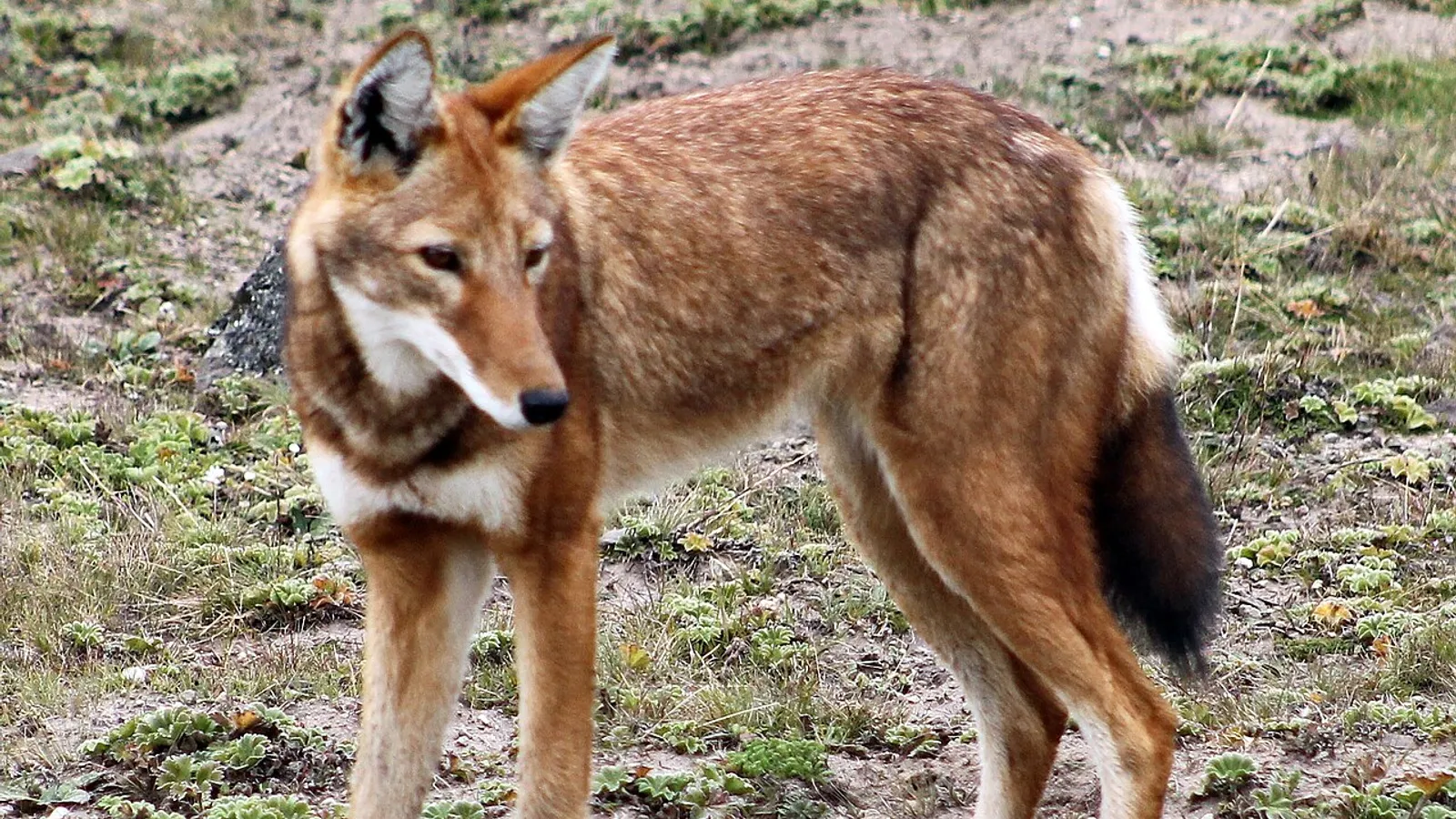
— Where the name comes from
Simensis comes from the Simien mountains, the Ethiopian highland where it was first described. The common name wavered for two centuries — Simien jackal, Abyssinian fox, Ethiopian wolf — because nobody knew what it was: the slender muzzle and the reddish coat said fox, the size and the behaviour said wolf. DNA settled it in the wolf’s favour, and it is more closely related to grey wolves than to any African canid.
— Facts
- Group
- Mammals · Mammalia
- Order
- Carnivores
- Habitat
- Afroalpine grassland above 3,000 metres, expanses of heather and giant lobelia
- Range
- Seven isolated populations on the Ethiopian highlands
- Size
- 85–100 cm long, 11–19 kg
- Diet
- Carnivore — almost exclusively mole rats and other highland rodents
- Lifespan
- 8–10 years
— Characteristics
- 01
It is the rarest canid in the world: fewer than five hundred adults remain.
- 02
It lives in socially bonded packs but hunts alone, because the prey is tiny.
- 03
Over ninety per cent of the diet is rodents dug out of their burrows.
— What sets it apart
The gravest threat is neither the gun nor habitat loss: it is the domestic dog. The shepherds’ dogs that come up to the high pastures carry rabies and distemper, and an epidemic can wipe out half a population in weeks — it has happened repeatedly over the last thirty years. In 2011 a campaign of oral vaccination of wild wolves began, the first in the world for a threatened carnivore. The species survives thanks to vaccine baits scattered on a plateau at four thousand metres.
