
Black-tailed prairie dog
Cynomys ludovicianus
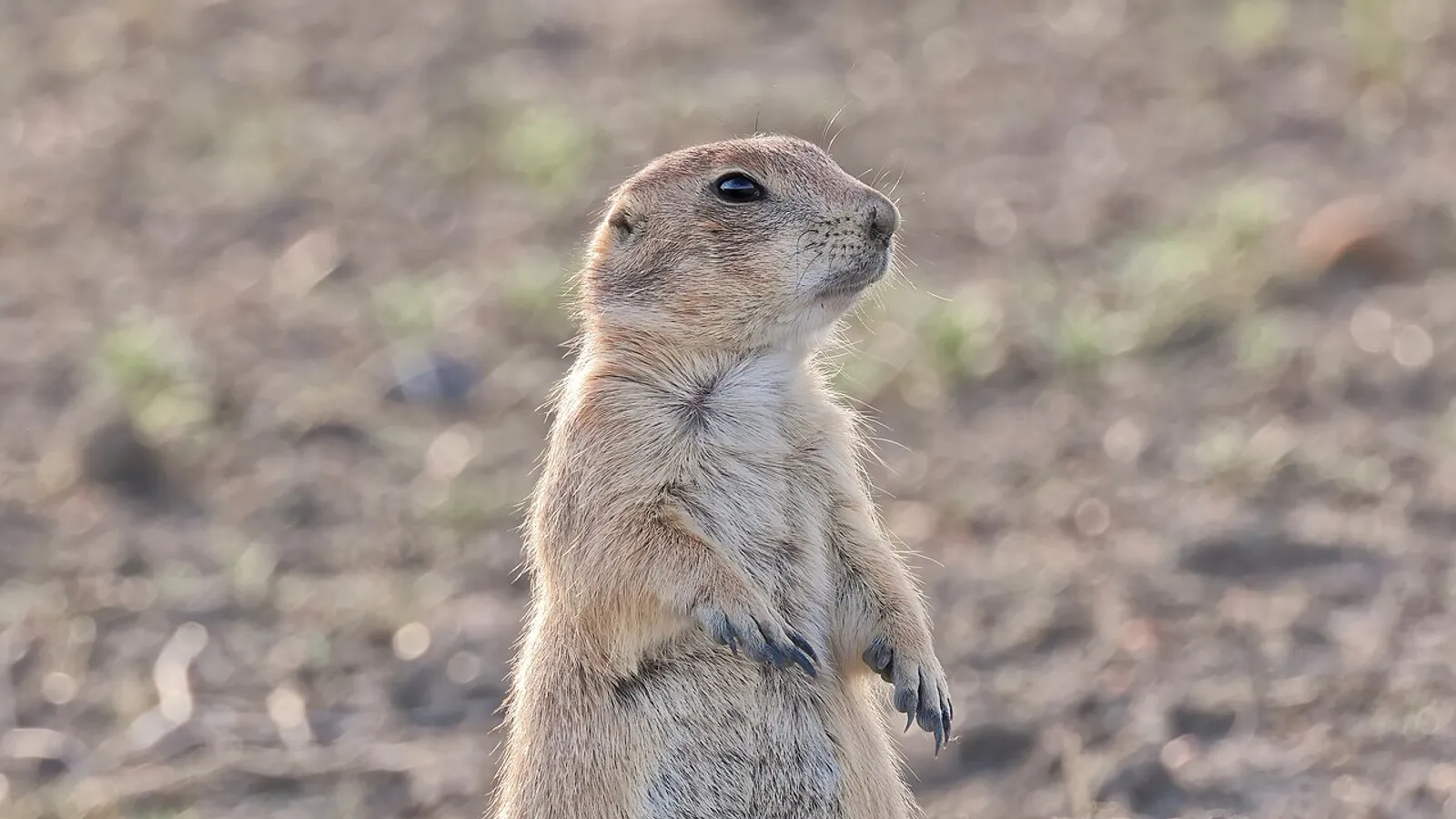
— Where the name comes from
Cynomys is “dog-mouse”, from the Greek kýōn and mŷs, and it records the misunderstanding that gave it its common name: the men of the Lewis and Clark expedition heard the alarm call and took it for barking. It is a ground squirrel. Ludovicianus means “of Louisiana”, meaning the immense territory the United States had just bought from France.
— Facts
- Group
- Mammals · Mammalia
- Order
- Rodents
- Habitat
- Short-grass prairie, open plains with deep soil
- Range
- The North American Great Plains, from southern Canada to Mexico
- Size
- 35–43 cm, 0.6–1.4 kg
- Diet
- Herbivore — grasses, herbs, occasionally insects
- Lifespan
- 3–5 years in the wild
— Characteristics
- 01
The colonies are divided into wards and into family groups called coteries.
- 02
It cuts down tall shrubs around the colony so as not to lose the view of predators.
- 03
The alarm call distinguishes the kind of predator, its size and its speed.
— What sets it apart
Its alarm is the closest thing to descriptive language ever documented in a non-human animal. Analyses by the zoologist Con Slobodchikoff have shown that the call does not merely say “danger”: it carries distinct information about the predator’s species, its size, its shape and the colour of what it is wearing, so much so that the animals react differently to the same researcher in differently coloured shirts. There are even calls for new things never seen before.
