
Dog
Canis familiaris
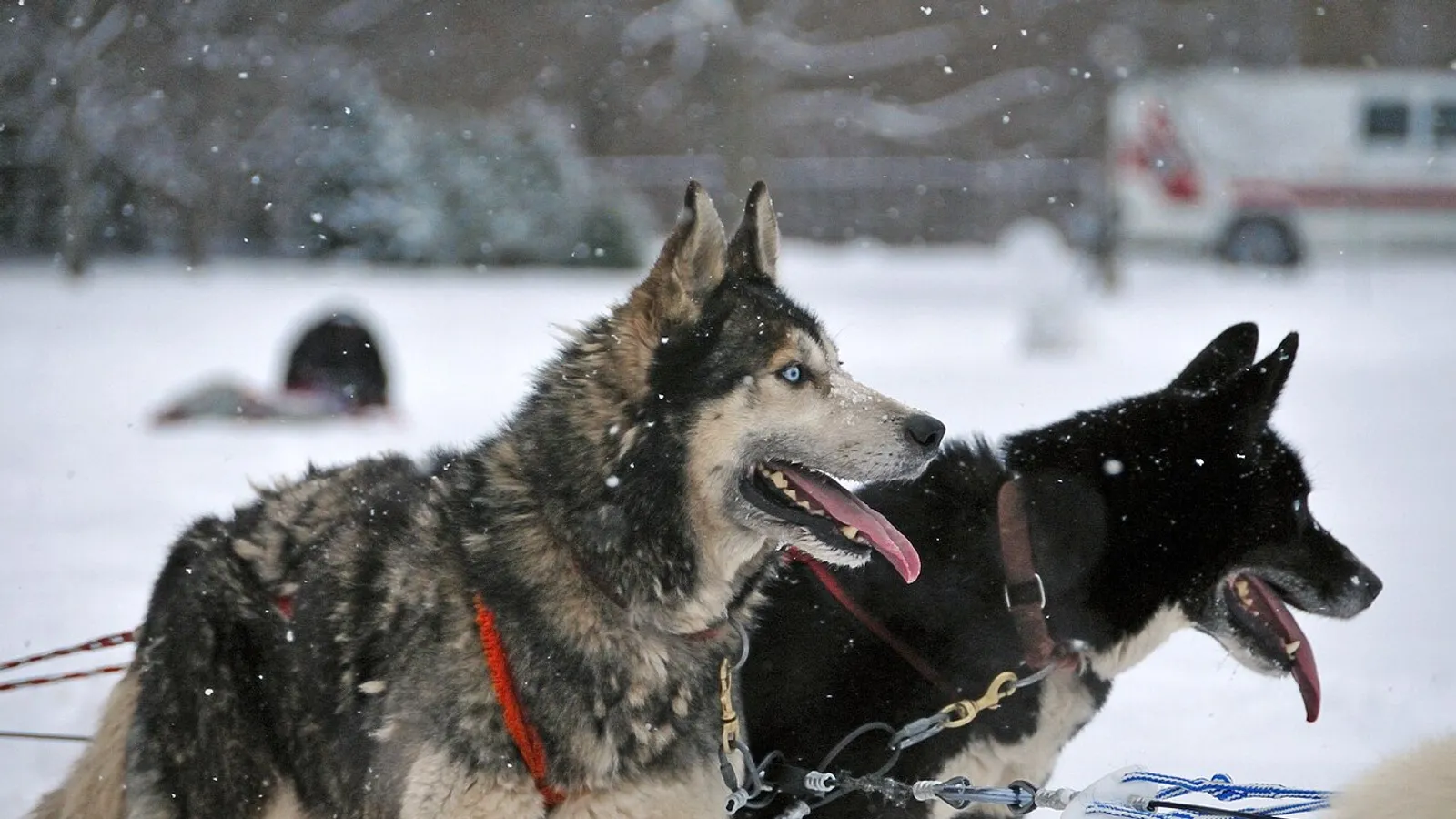
— Where the name comes from
Canis is Latin and goes back to the Indo-European root *ḱwṓ, the same as the Greek kýōn, the Sanskrit śvan and the English hound: one of the oldest words we possess, a sign that the animal was with us before those languages parted. The epithet familiaris describes not a body but a relationship — “of the family”, of the house. It is the only species whose scientific name says where it lives: with us.
— Facts
- Group
- Mammals · Mammalia
- Order
- Carnivores
- Habitat
- Wherever people live, from the polar circle to the deserts
- Range
- Cosmopolitan
- Size
- From the chihuahua’s 15 cm and 1 kg to the mastiff’s 80 cm and 90 kg
- Diet
- Omnivore with a strong carnivorous component
- Lifespan
- 10–15 years, longer in small breeds
— Characteristics
- 01
It has some 220 million scent receptors against our 5 million, and a brain region for smell forty times larger.
- 02
It is the only species that spontaneously follows a human pointing finger, which chimpanzees do not.
- 03
No other domestic species shows such variety of form: between breeds the weight varies ninety-fold.
— What sets it apart
The domestication of the dog precedes agriculture, pottery and cities: the oldest accepted remains go back fifteen to forty thousand years, when we were still hunter-gatherers. We did not tame it to a plan — it was probably the least wary wolves that came in to our camps for scraps, and selection did the rest. Looking into our eyes, a dog raises oxytocin in both of us, the same hormonal circuit that binds a mother to her child: no other animal triggers that mechanism in us.
