
Atlantic canary
Serinus canaria
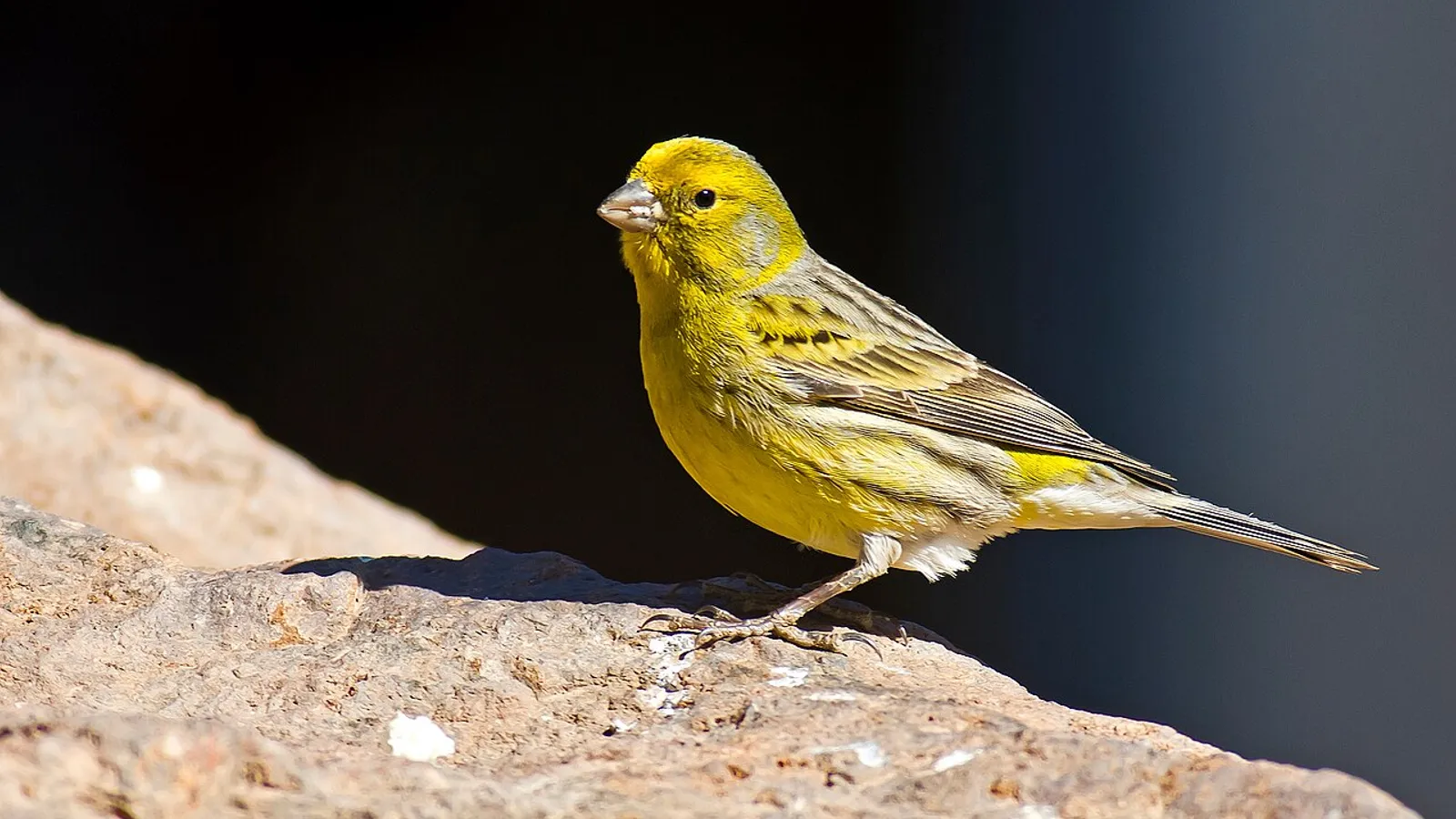
— Where the name comes from
The canary takes its name from the Canary Islands, and the Canaries take theirs from dogs: Pliny relates that the largest island was called Canaria for the enormous dogs found there. The most domestic bird in Europe therefore carries, by way of an archipelago, the name of a pack of mastiffs. Serinus comes from the French serin, of uncertain origin.
— Facts
- Group
- Birds · Aves
- Order
- Passerines
- Habitat
- Scrub, gardens and cultivation on the Atlantic islands
- Range
- The Canaries, Azores and Madeira; everywhere as a cage bird
- Size
- 12–13 cm, 15–20 g
- Diet
- Seeds, shoots, fruit, the occasional insect
- Lifespan
- 10 years in captivity
— Characteristics
- 01
The wild canary is streaked greenish yellow: pure yellow is a bred mutation.
- 02
The male sings nearly all year and stops only during the moult.
- 03
It has been kept in Europe since the sixteenth century, brought back by Spanish sailors.
— What sets it apart
It dismantled one of the firmest dogmas in neurology. Until the 1980s it was taught that the adult brain makes no new neurons; then it was found that every autumn male canaries rebuild part of the brain devoted to song, adding thousands of new cells in order to learn the next season’s tunes. All the research on adult neurogenesis, including the human work, started there. Earlier still it had saved thousands of miners: in British collieries caged canaries served as carbon monoxide detectors until 1986.
