
Chamois
Rupicapra rupicapra
— Where the name comes from
Rupicapra joins rupes, the crag, and capra, goat: “goat of the rocks”, a name that is already a description of the animal’s ecology. The Italian camoscio comes instead from the late Latin camox, attested in the 5th century and itself taken from a pre-Roman Alpine language: the same root behind the German Gams and the French chamois. It is one of the few words of Alpine substrate to survive almost intact. From this animal’s tanned hide a soft cloth later took its name, chamois leather, so that the name of the beast has ended up in drawers across half the world.
— Facts
- Group
- Mammals · Mammalia
- Order
- Even-toed ungulates
- Habitat
- High-altitude grassland, scree and rock faces around the treeline
- Range
- The Alps, Carpathians, Tatras, Balkans, northern Apennines, Anatolia and the Caucasus
- Size
- 110–130 cm long, 70–80 cm at the shoulder, 25–50 kg
- Diet
- Herbivore — alpine grasses, shoots, lichens and conifer needles in winter
- Lifespan
- 15–17 years in the wild, exceptionally up to 22
— Characteristics
- 01
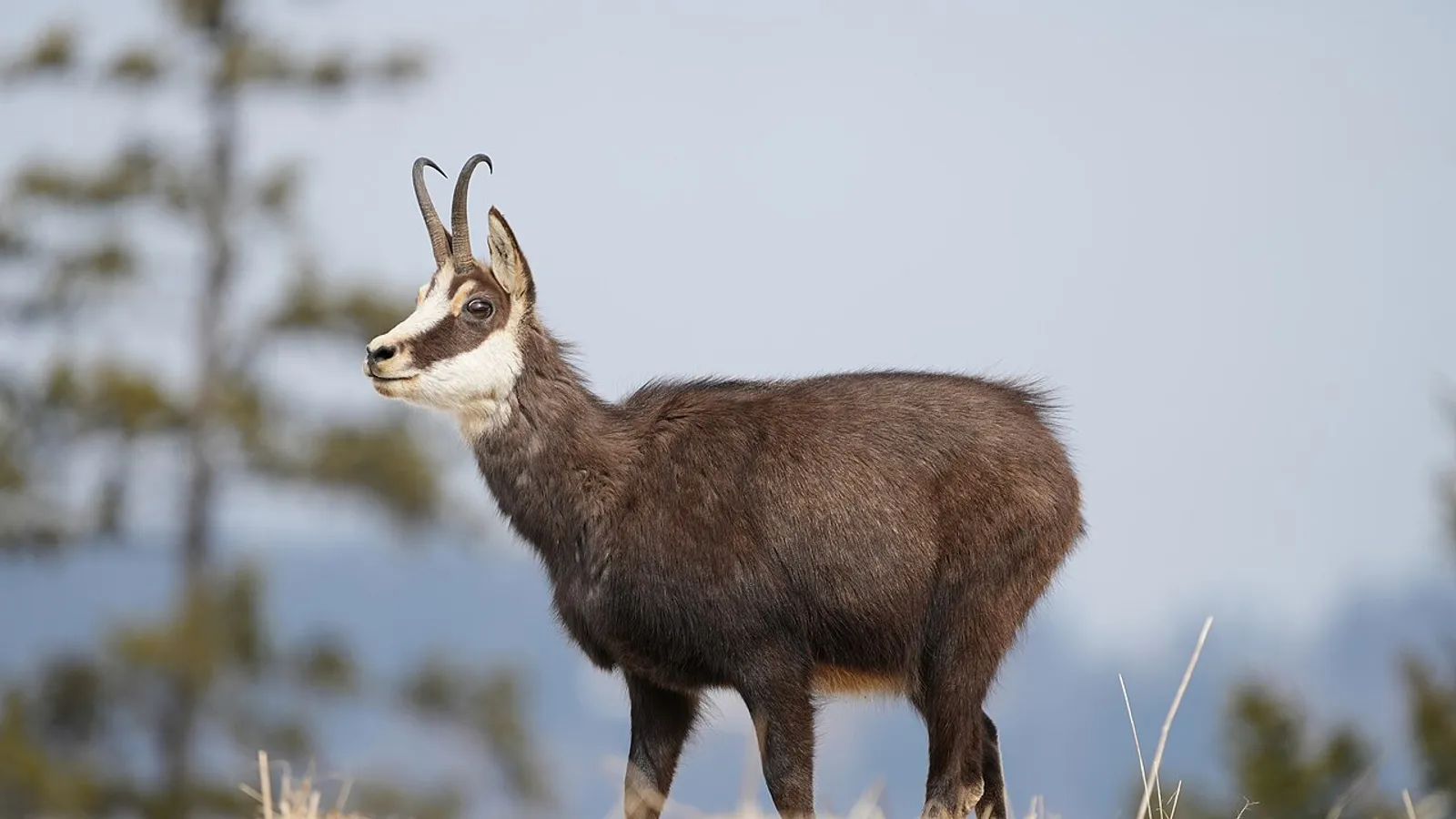
The horns, carried by both sexes, are permanent and hook backwards at the tip.
- 02
The hooves have a hard, sharp outer rim and a soft elastic inner sole, which grips rock like rubber.
- 03
The coat turns from summer tawny to near-black in winter, with a pale face mask crossed by two dark bands over the eyes.
— What sets it apart
Behind the base of the horns the males carry two glands that stay invisible for eleven months of the year. In autumn they swell into obvious lumps and secrete a dark, acrid oil, which the animal smears on branches and shrubs to mark its courtship ground. The rut falls between November and December, in the heart of the Alpine winter: the males go through it almost without feeding, chasing and challenging each other in fresh snow. Many reach spring so worn down that they do not survive it. The chamois pays for the right to breed with the worst season of the year.
