
Cuvier's dwarf caiman
Paleosuchus palpebrosus
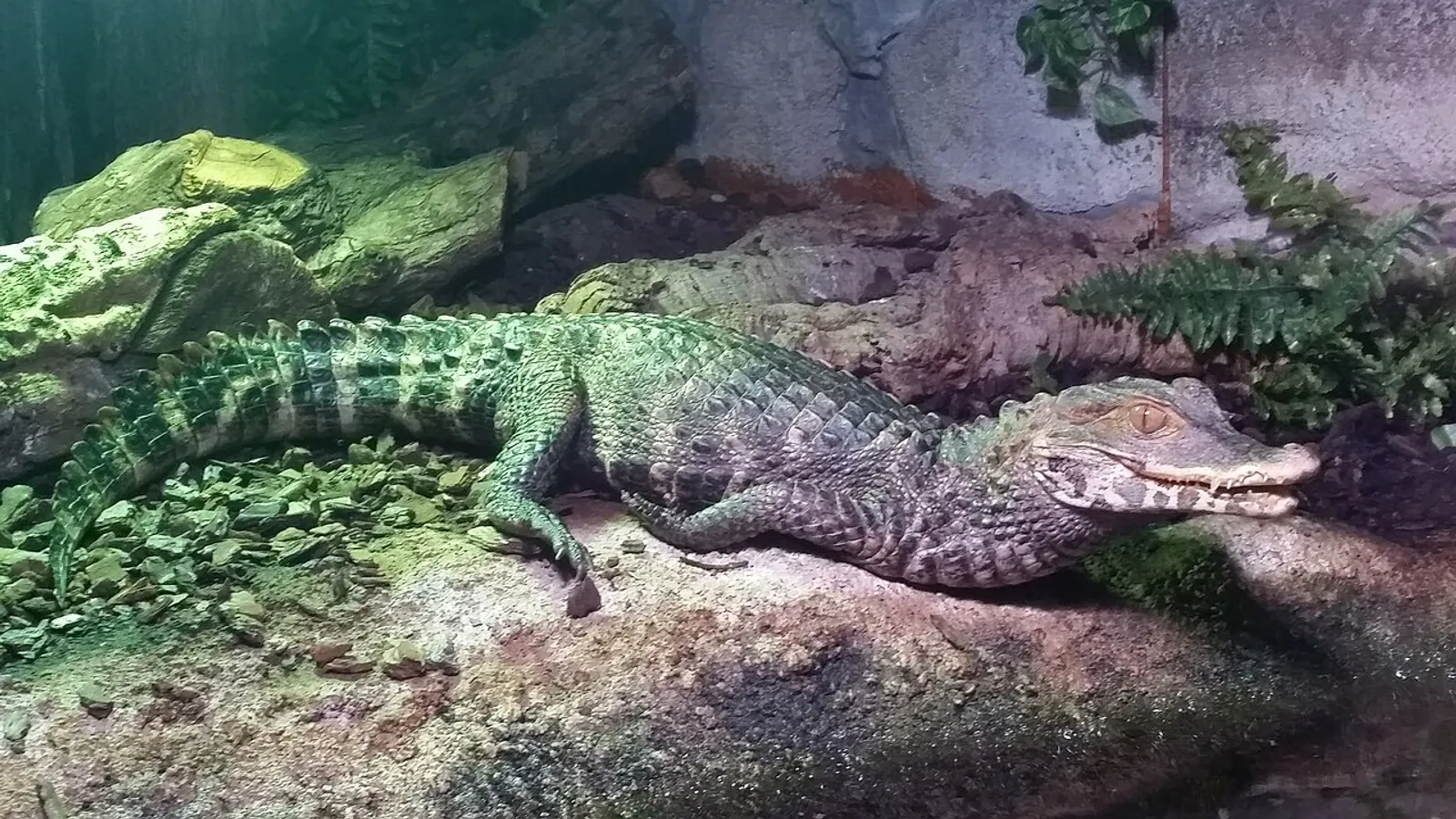
— Where the name comes from
Paleosuchus is “ancient crocodile”, from palaiós and soûchos, chosen because the skull seemed to preserve archaic features. Palpebrosus refers to the eyelids, which in this species contain a bony plate: the animal closes its eyes behind two shields. Cuvier is the French naturalist who founded comparative anatomy.
— Facts
- Group
- Reptiles · Reptilia
- Order
- Crocodilians
- Habitat
- Clear forest streams, rock pools, wooded banks
- Range
- The Amazon and Orinoco basins, central Brazil
- Size
- 1.2–1.6 m, 6–7 kg
- Diet
- Crabs, shrimp, fish, insects, frogs
- Lifespan
- 40 years
— Characteristics
- 01
It is the smallest crocodilian in the world.
- 02
Its body is armoured with dense bony plates, on the belly as well.
- 03
At night it walks far from water, hundreds of metres into the forest.
— What sets it apart
It lives in cold, food-poor streams where a large crocodilian would starve, and its answer has been to shrink and armour up: the bony casing is so dense that the skins have never had commercial value — they cannot be tanned soft. This species owes to its own hardness the fact that it was never hunted on any scale, while every one of its relatives was being decimated.
