
Brown-throated sloth
Bradypus variegatus
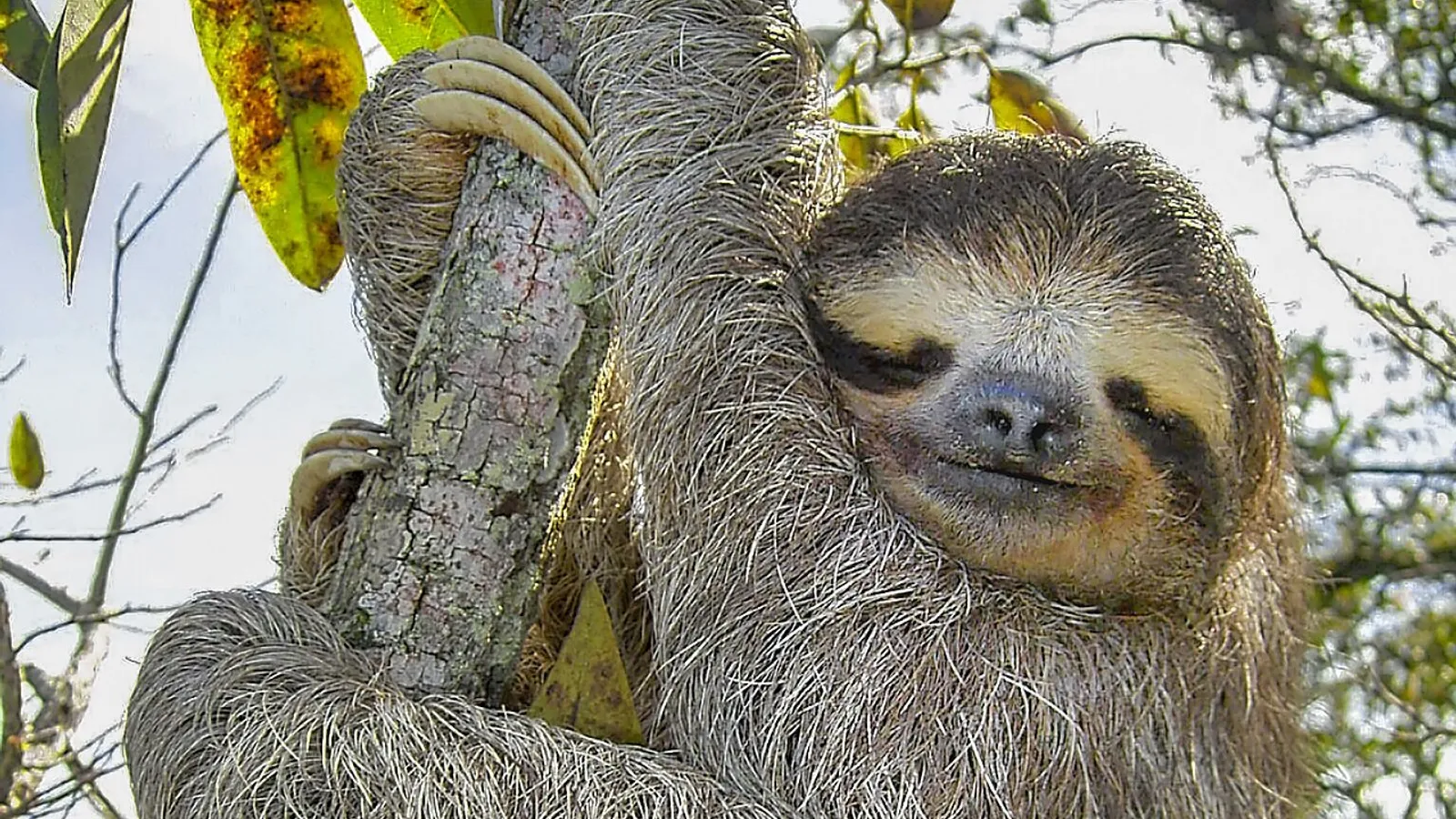
— Where the name comes from
From the Greek bradýpous, “slow of foot” (bradýs, slow + poús, foot). The name is a diagnosis. Variegatus, in Latin, describes the mottled coat.
— Facts
- Group
- Mammals · Mammalia
- Order
- Sloths and anteaters
- Habitat
- The rainforest canopy
- Range
- Central and South America
- Size
- 42–80 cm, 2.2–6.3 kg
- Diet
- Herbivore — leaves, shoots
- Lifespan
- 20–30 years
— Characteristics
- 01
Its metabolism runs at about half the rate expected for its body mass.
- 02
Comes down to the ground roughly once a week, and only to defecate.
- 03
Turns its head almost 270°, thanks to extra cervical vertebrae.
— What sets it apart
The sloth’s hair is grooved to collect rainwater and hosts green algae, which hide it among the leaves. Specialised moths live in those algae. When the sloth climbs down to defecate — the one moment it is genuinely vulnerable — the moths lay their eggs in the dung. It is a weekly risk that keeps an entire portable ecosystem going.
