
American cockroach
Periplaneta americana
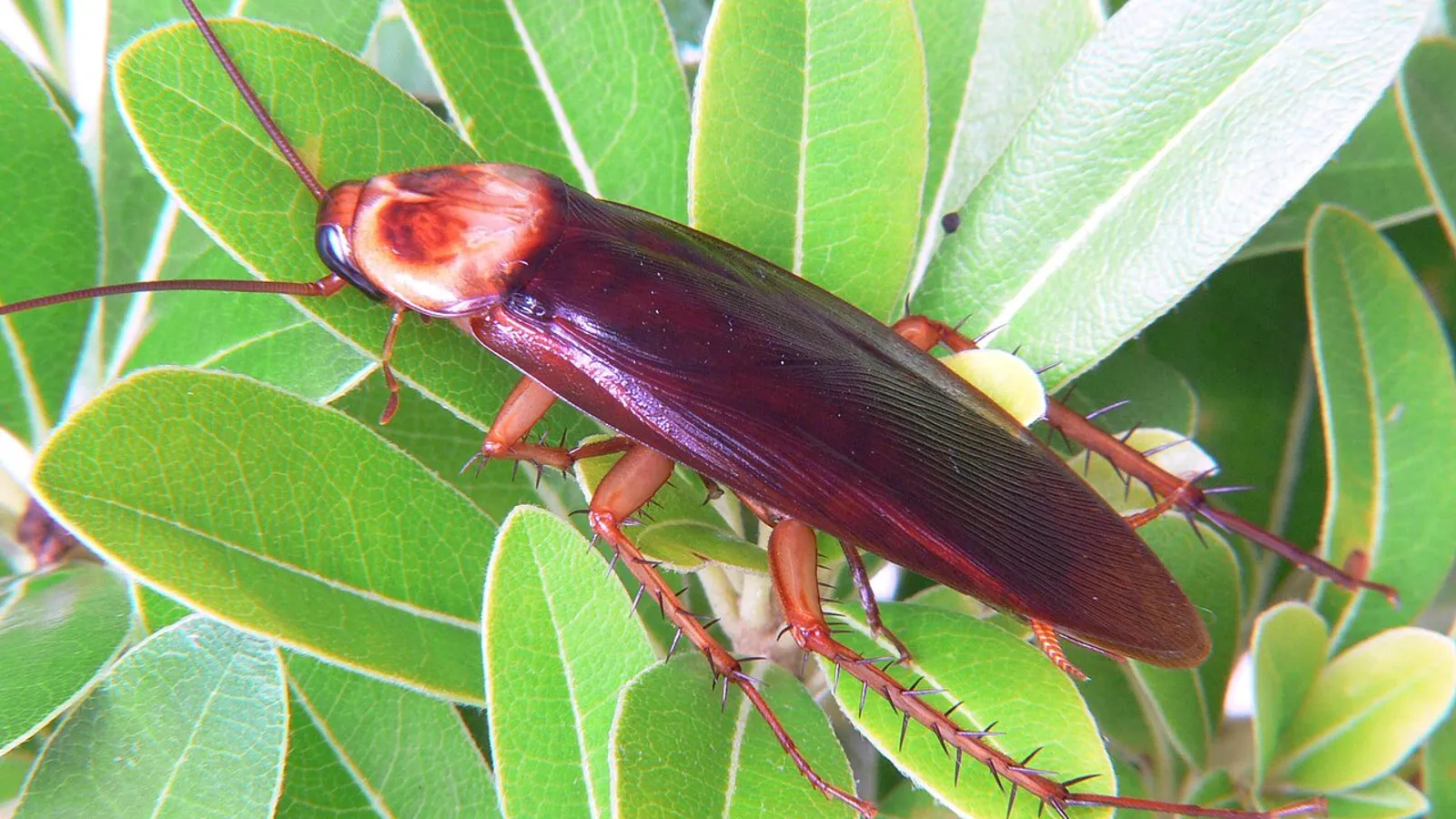
— Where the name comes from
Periplaneta is Greek for “that wanders all around”, from perí and planáō, to stray — the same root as the planets, which were the wandering stars. Americana is instead a mistake that nobody has ever corrected: the species comes from tropical Africa, and reached America on the slave ships between the seventeenth and eighteenth centuries. It was named for where it was found, not where it was born.
— Facts
- Group
- Insects · Insecta
- Order
- Cockroaches and termites
- Habitat
- Sewers, cellars, kitchens, ships, warm damp pipework
- Range
- African in origin; today in every city in the world
- Size
- 35–40 mm, the largest domestic cockroach
- Diet
- Omnivorous: any organic matter, paper included
- Lifespan
- 1–2 years
— Characteristics
- 01
It runs at a metre and a half a second, fifty body lengths.
- 02
It survives a week without a head, and dies of thirst, not of the wound.
- 03
The cerci at the end of the abdomen feel the air moved by a hand.
— What sets it apart
It can live about a week after being decapitated, and this is not a legend: its blood is not under pressure and the wound seals itself, it breathes through openings along its flanks rather than through its mouth, and the nerve ganglia along its body are enough to handle movement. What kills it is thirst, because without a mouth it cannot drink. Its escape speed depends instead on the two cerci at the end of the abdomen: they feel the air displaced by a descending hand and start the run in four hundredths of a second, before the brain has been consulted.
