
Oriental cockroach
Blatta orientalis
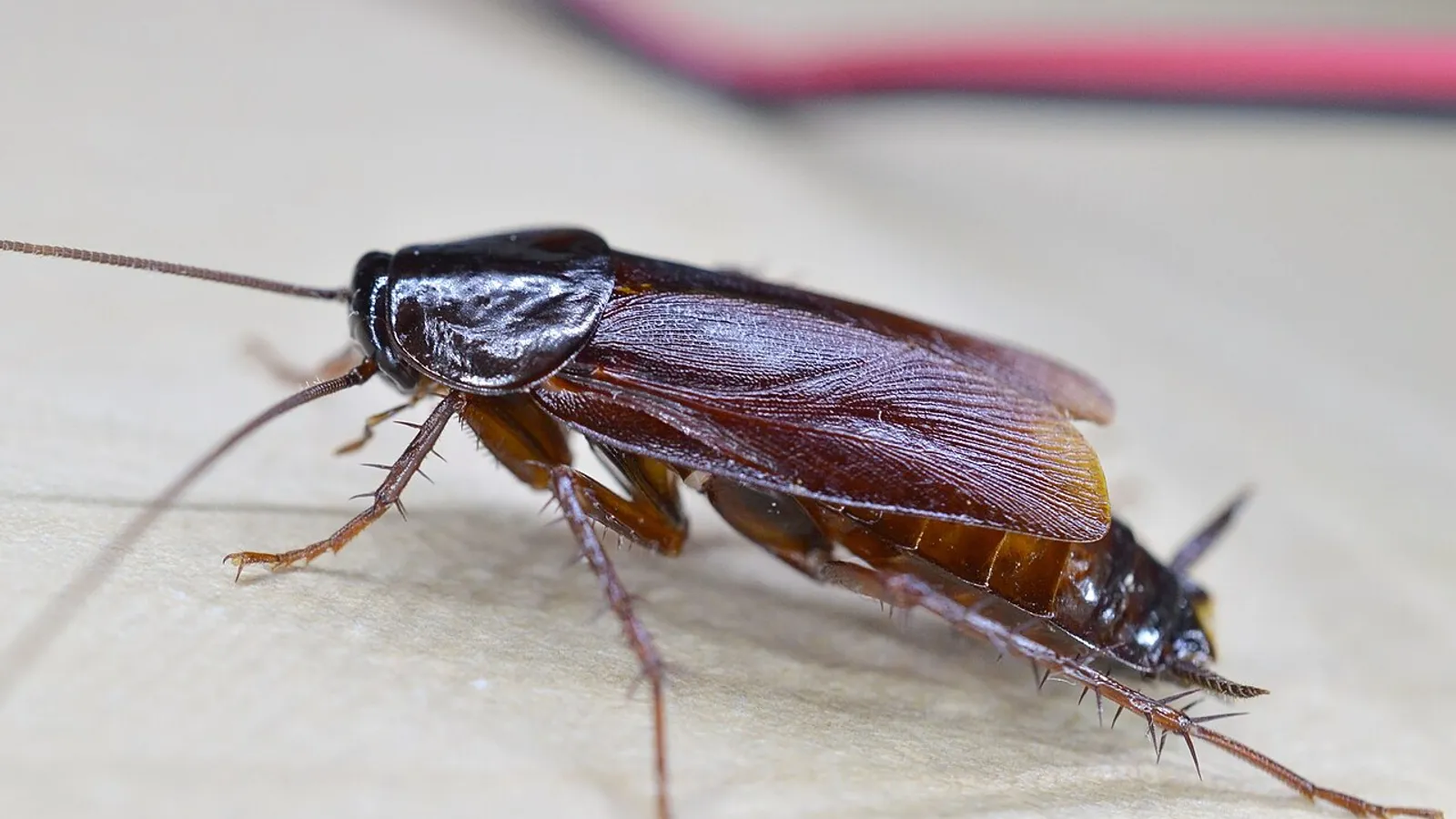
— Where the name comes from
Blatta is Latin, of uncertain origin, and named the insects that flee the light — from clothes moths to cockroaches. Orientalis is a second mistaken name: Linnaeus believed it Asian, but modern research places its origin in the region between the Black Sea and the Caspian. Two of the commonest cockroaches in the world, the “American” and the “Oriental”, therefore both bear the name of a place where they were not born.
— Facts
- Group
- Insects · Insecta
- Order
- Cockroaches and termites
- Habitat
- Cellars, basements, cool damp cavities
- Range
- Ponto-Caspian in origin; today every temperate region
- Size
- 20–29 mm; the female stockier and with reduced wings
- Diet
- Organic debris, refuse, starches
- Lifespan
- 6 months–1 year as an adult
— Characteristics
- 01
The female has vestigial wings and does not fly; the male flies badly.
- 02
It prefers cool places, unlike other domestic cockroaches.
- 03
It deposits the ootheca — a dark capsule with sixteen eggs — in a sheltered corner.
— What sets it apart
The eggs are not laid one by one but inside a case of hardened protein, the ootheca, which the female carries for a few days protruding from her abdomen and then glues into a crack. It is a sealed box: it resists dryness, many insecticides and crushing that would kill the adult, and the sixteen or eighteen eggs it holds hatch even if the mother has been dead for weeks. That is why treating a cellar takes two passes a month apart — the first kills the adults, the second lies in wait for the newly hatched.
