
Bharal
Pseudois nayaur
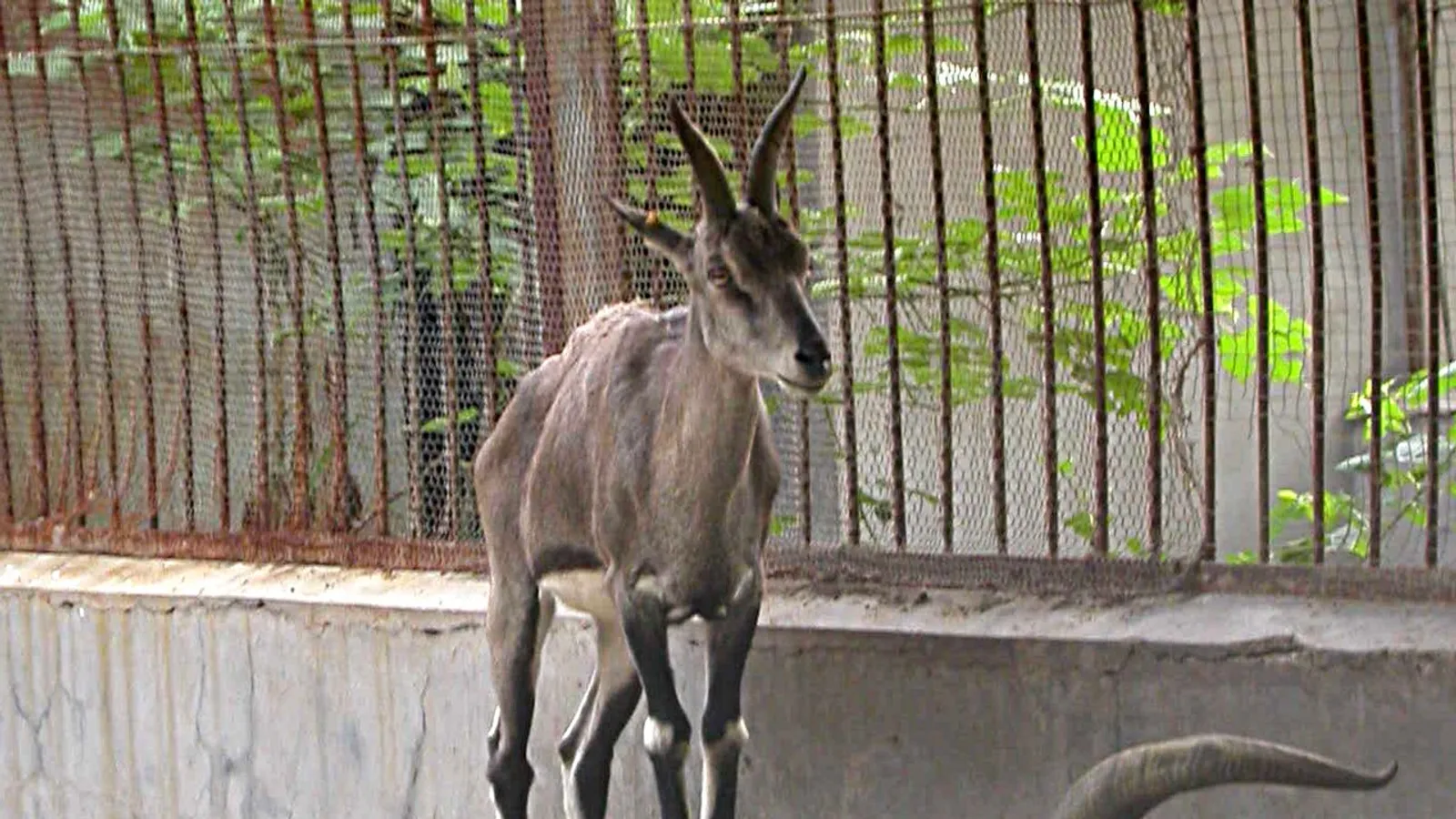
— Where the name comes from
Pseudois is “false sheep”, from the Greek pseudḗs and óis: whoever named it had grasped that it resembled a sheep without being one. Nayaur renders the Nepali name. In English it is the blue sheep, for the slate sheen of the coat, and that is imprecise too — it is not blue and not a sheep, but sits between sheep and goats, closer to the latter.
— Facts
- Group
- Mammals · Mammalia
- Order
- Even-toed ungulates
- Habitat
- Open high-altitude slopes between 2,500 and 5,500 m, above the treeline
- Range
- The Himalaya, Tibet, western China, Nepal, Bhutan, northern India
- Size
- 115–165 cm of body, 35–75 kg
- Diet
- Herbivore — high-altitude grasses and lichens
- Lifespan
- 12–15 years
— Characteristics
- 01
The slate-grey coat makes it nearly invisible against bare rock.
- 02
It does not hide in caves: in danger it freezes in the open.
- 03
It is the chief prey of the snow leopard across much of its range.
— What sets it apart
Its defence is to stand still. It does not run for cover like an ibex: it freezes on the open slope and trusts its slate grey to make it vanish into the rock — a wager that works against distant eyes and fails against a snow leopard that has already seen it. It was Peter Matthiessen’s book The Snow Leopard that made it famous in the West: George Schaller had gone to Nepal to study bharal, and the leopard, which neither of them ever managed to see, was only the shadow following them.
