Scopoli's shearwater
Calonectris diomedea
— Where the name comes from
Calonectris is Greek, kalós, “beautiful”, and nḗktris, “swimmer”. Diomedea comes from myth: when Diomedes, hero of the Trojan War, died on the Tremiti islands, his companions were turned into seabirds that mourn him by night ever since. The Tremiti were called the Diomedean islands, and shearwaters still nest there, with a call that in the dark sounds like a crying child.
— Facts
- Group
- Birds · Aves
- Order
- Tubenoses
- Habitat
- Open sea; nests in holes and crevices on rocky islands
- Range
- Breeds in the Mediterranean; winters in the Atlantic off western and southern Africa
- Size
- 45–56 cm, wingspan 112–126 cm, 560–730 g
- Diet
- Fish, squid, crustaceans
- Lifespan
- Over 25 years
— Characteristics
- 01
It returns to the colony only at night, to avoid the gulls.
- 02
It lays a single egg a year.
- 03
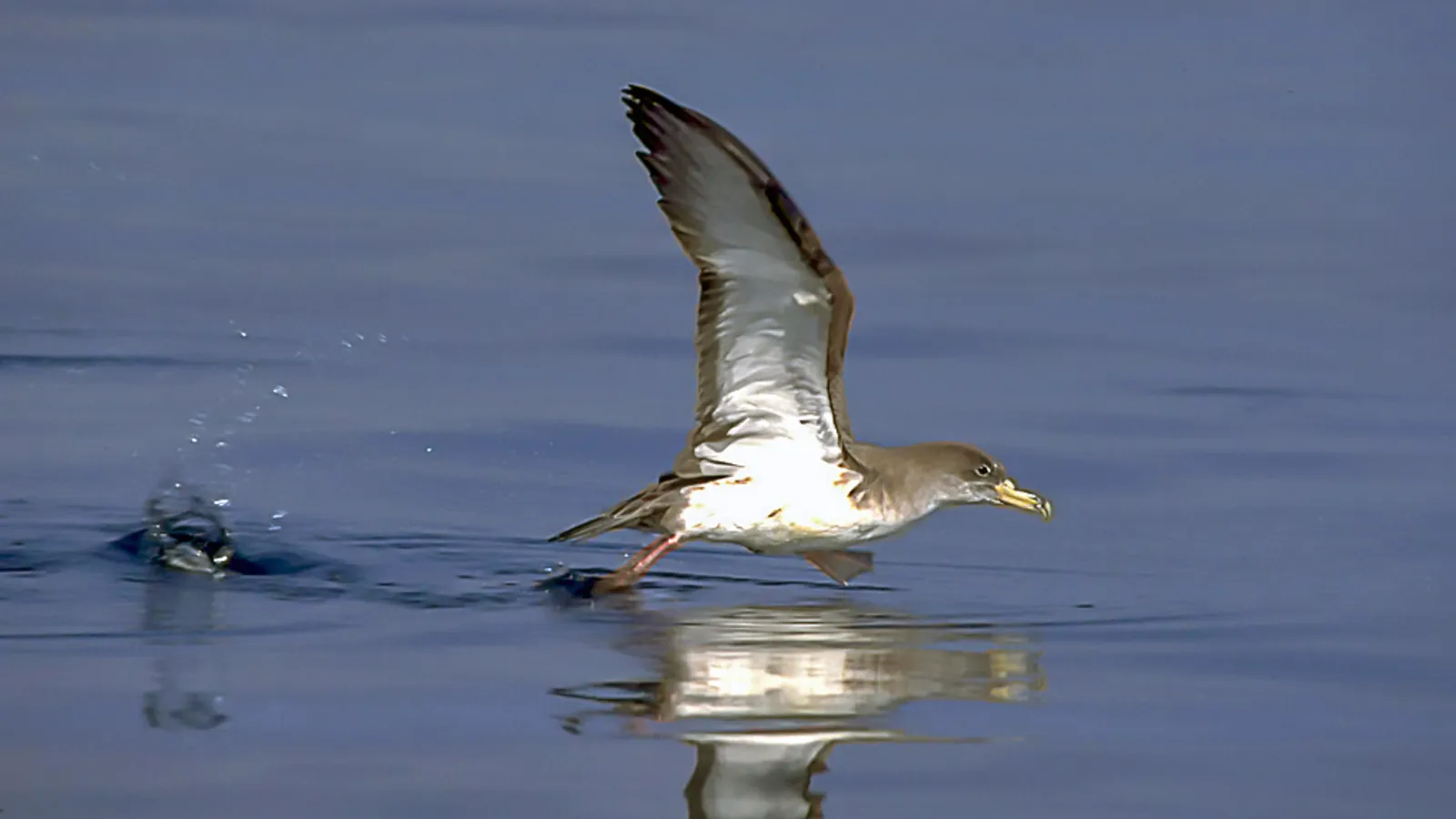
It glides low over the waves on stiff wings, barely flapping.
— What sets it apart
It finds its way by nose. Shearwaters belong to the tube-nosed birds, which have an acute sense of smell: they scent plankton and fish through the molecules these release into the sea, and recognise their own burrow by its smell. Italian researchers have shown that navigation on the open sea depends on smell too: shearwaters temporarily deprived of their sense of smell and released far from the colony wandered for days before finding it again, while those with their noses intact flew straight home.