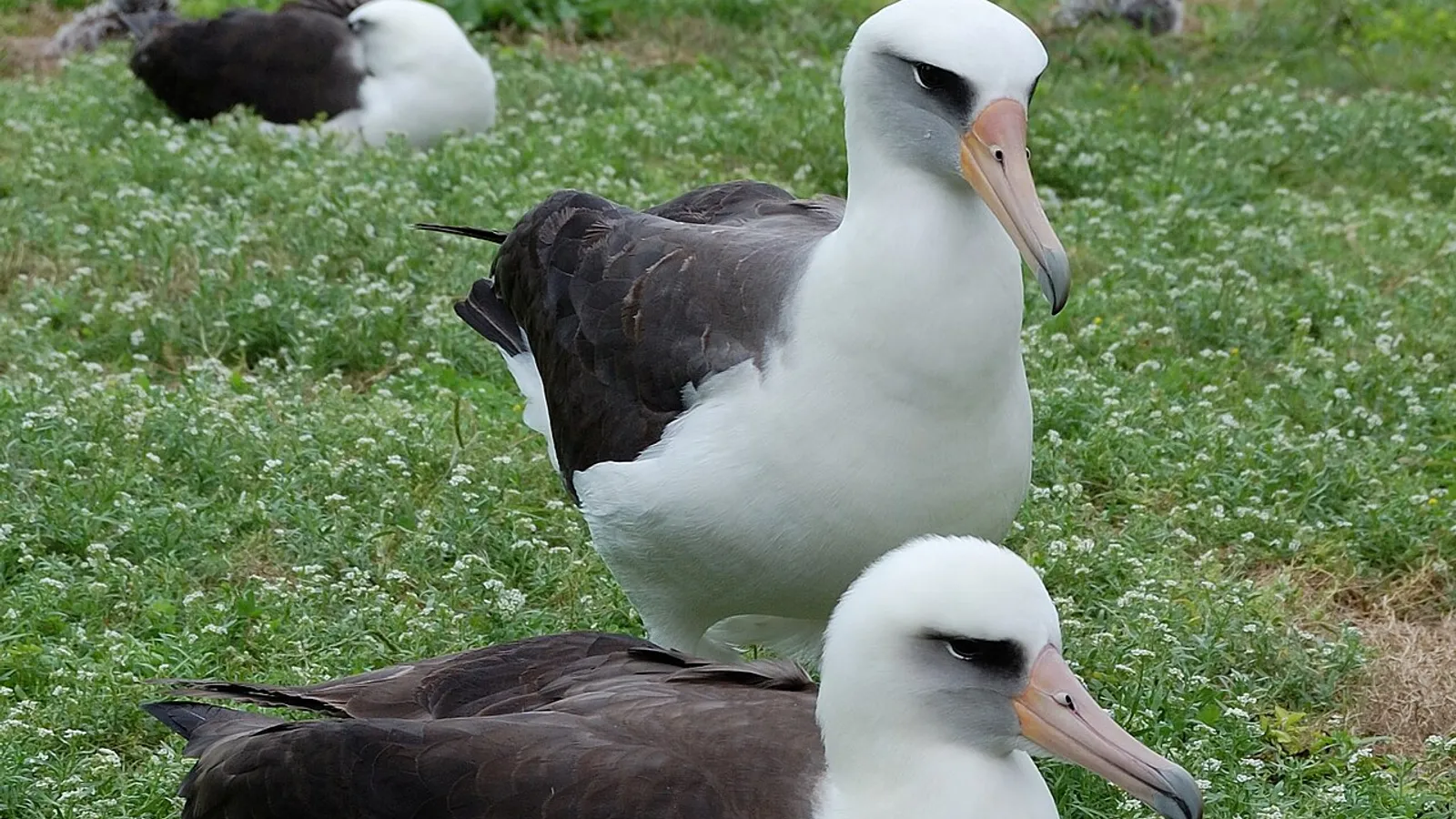
Laysan albatross
Phoebastria immutabilis
— Where the name comes from
Phoebastria comes from the Greek phoibástria, “prophetess”, from Phoebus Apollo, god of oracles: sailors looked on albatrosses as omens. Immutabilis in Latin means “unchanging”, because the plumage stays the same through the seasons. Laysan is a coral island in the north-western Hawaiian archipelago.
— Facts
- Group
- Birds · Aves
- Order
- Tubenoses
- Habitat
- The open North Pacific; nests on low, sandy islands
- Range
- North Pacific; 70% of pairs nest on Midway Atoll
- Size
- 79–81 cm, wingspan 195–203 cm, 2.4–4.1 kg
- Diet
- Squid, fish eggs, crustaceans
- Lifespan
- Over 60 years
— Characteristics
- 01
Pairs stay together for life and reunite each year with a dance of bows and bill-clapping.
- 02
A parent may fly thousands of kilometres on a single trip to feed its chick.
- 03
On Oahu about a third of pairs are two females raising a chick together.
— What sets it apart
The oldest known wild bird is a Laysan albatross. She is called Wisdom, and she was ringed on Midway Atoll in 1956 by an ornithologist who judged her already adult, that is at least five years old. In 2025, almost seventy years later, she was still laying eggs, having outlived several mates. In the same colony, though, the albatrosses pay the price of plastic: they mistake bottle caps and floating fragments for food and bring them to their chicks, and on the nests of Midway lie the bodies of young birds with stomachs full of rubbish.