
Bohemian waxwing
Bombycilla garrulus
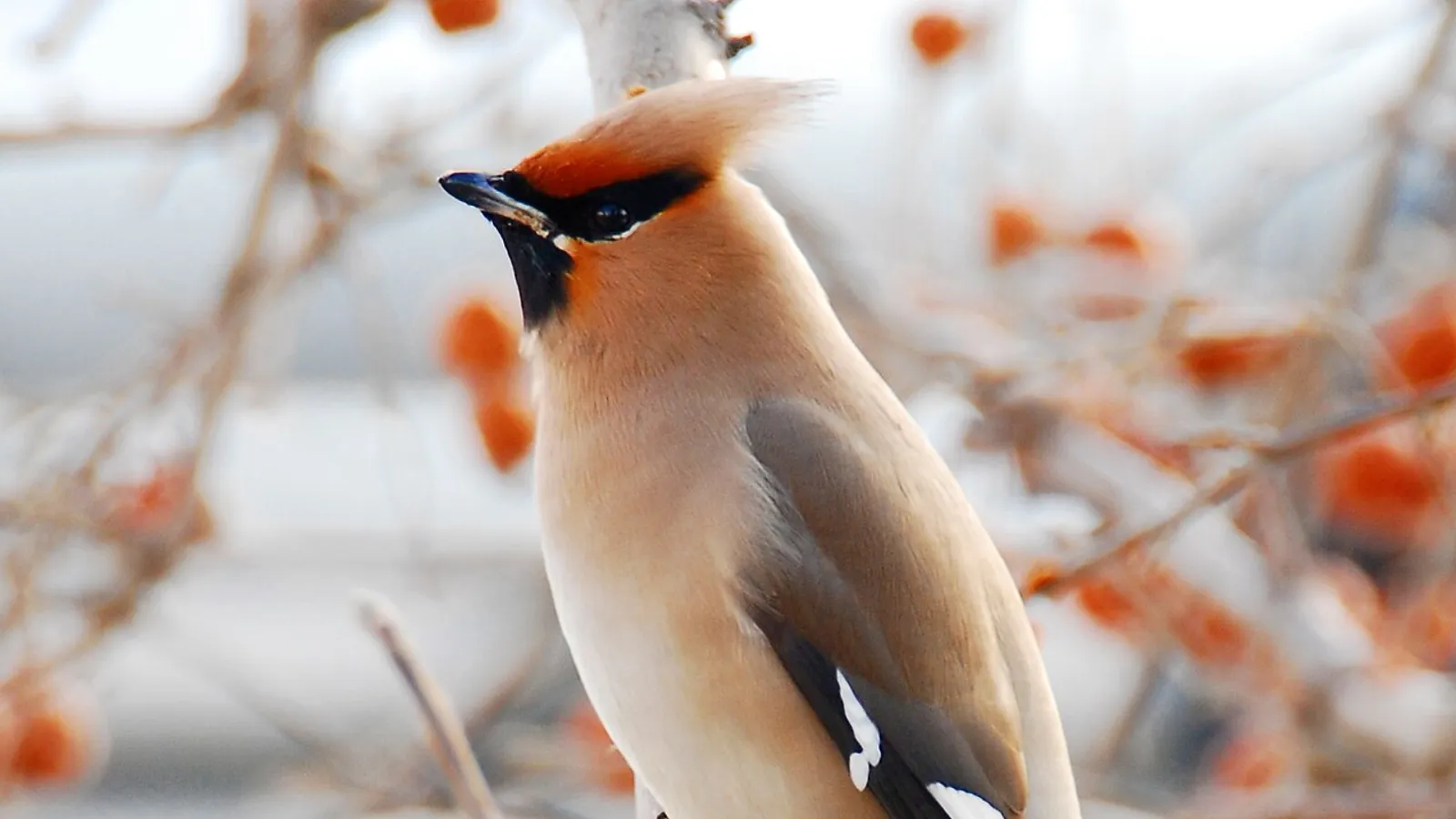
— Where the name comes from
Bombycilla is an invented word: the naturalist Vieillot wanted to render the German Seidenschwanz, “silk tail”, in Latin and put together bombyx, the silkworm, with that cilla which was believed to mean tail — the same mistake as the wagtail’s. Garrulus, “chatterer”, describes the constant silvery trilling of the flocks.
— Facts
- Group
- Birds · Aves
- Order
- Passerines
- Habitat
- Taiga in summer, hedges and gardens with berries in winter
- Range
- Northern Scandinavia, Russia and Canada; moves into Europe in winter
- Size
- 18–21 cm, wingspan 32–35 cm, 45–70 g
- Diet
- Rowan, juniper and mistletoe berries; insects in summer
- Lifespan
- 5 years in the wild
— Characteristics
- 01
On the wings it carries small red tips that look like drops of sealing wax.
- 02
It can swallow hundreds of berries a day, many times its own weight.
- 03
It holds no territory: it moves in tight flocks that arrive without warning.
— What sets it apart
In some winters it comes south in numbers far beyond the usual, and in the northern countries these were called “waxwing years” and taken as an omen of plague. The cause is mundane — a failure of the rowan crop in Scandinavia — but the consequence less so: eating old fermented berries, these birds really do get drunk, and every so often one is found dazed at the foot of a tree or dead against a window. They have a very large liver for their size, which is probably how a species living on fermented fruit has protected itself from its own dinner.
