
Eurasian oystercatcher
Haematopus ostralegus
— Where the name comes from
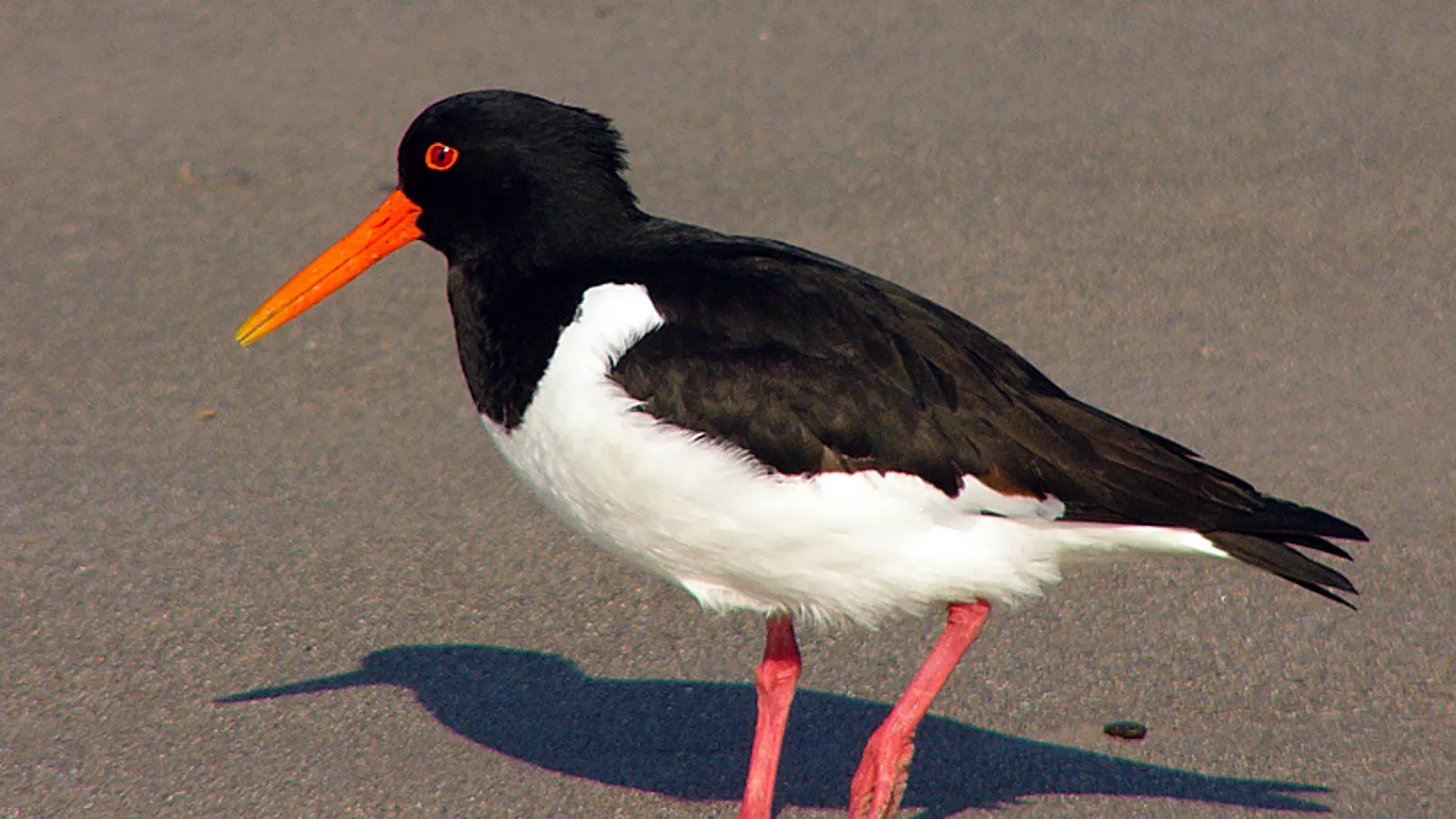
Haematopus is “blood foot”, from haîma and poús, and misses its target: the legs are pale pink, while the thing that is bright red is the bill. Ostralegus means “oyster gatherer”, and misses too, because it hardly ever eats oysters — it lives on mussels, cockles and worms. The Italian name adds a third error: it is no woodcock.
— Facts
- Group
- Birds · Aves
- Order
- Shorebirds
- Habitat
- Beaches, estuaries, coastal mudflats, saltmarsh
- Range
- European and Asian coasts; some populations nest inland
- Size
- 40–47 cm, wingspan 72–89 cm, 400–800 g
- Diet
- Mussels, cockles, worms, crabs
- Lifespan
- 40 years in the wild
— Characteristics
- 01
The bill grows half a millimetre a day and wears down with use.
- 02
It is among the longest-lived European birds: individuals of forty are known.
- 03
The young stay with their parents for months, learning how to eat.
— What sets it apart
There are two trades, and the bill takes the shape of whichever one is learned. Some birds slip the bill between the parted valves of a mussel and cut the muscle, and have a tip as thin as a blade; others smash their way in by hammering, and have a blunt one. The technique is learned from the parents in the first months rather than inherited, and an adult that changes method changes the shape of its bill within a few weeks, because that tip grows continuously and wears according to use. It is a culture written into anatomy.
