Eurasian woodcock
Scolopax rusticola
— Where the name comes from
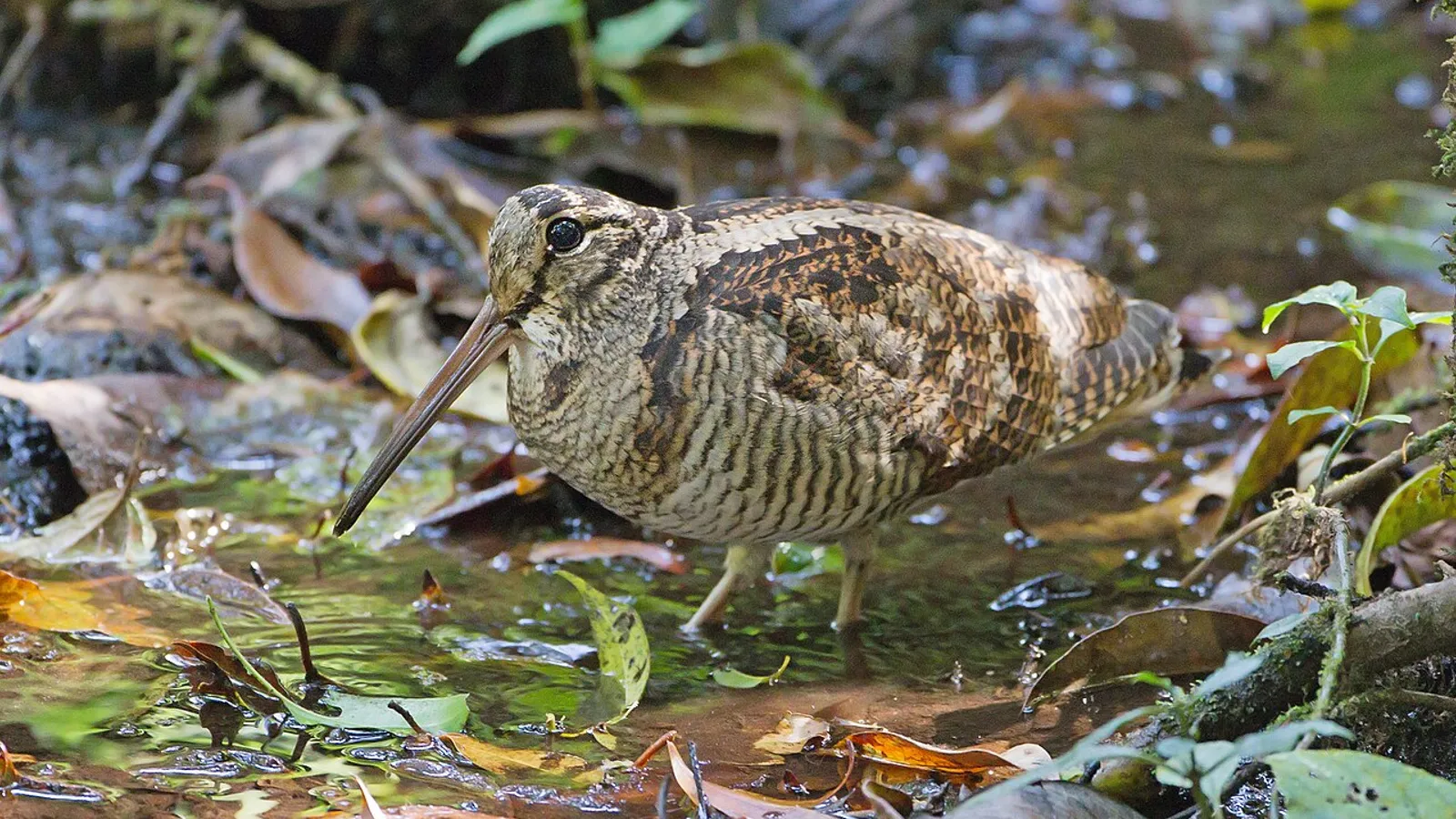
Scolopax is the name the Greeks already gave this bird, skolópax, mentioned by Aristotle. Rusticola is Latin, “country-dweller”, from rus and colere. The Italian beccaccia is a pejorative augmentative of becco, beak: its most obvious feature is a bill almost as long as its head and neck together.
— Facts
- Group
- Birds · Aves
- Order
- Shorebirds
- Habitat
- Damp broadleaf and mixed woodland with undergrowth and clearings
- Range
- Europe and temperate Asia; winters in southern Europe and North Africa
- Size
- 33–38 cm, wingspan 55–65 cm, 250–420 g
- Diet
- Mainly earthworms; insect larvae
- Lifespan
- A few years on average, 15 the record
— Characteristics
- 01
Its eyes sit so far back and so high on the head that it sees 360 degrees, above itself too.
- 02
It can open just the tip of its bill, underground, to seize a worm.
- 03
Its dead-leaf plumage makes it invisible until it takes flight.
— What sets it apart
Its eyes have migrated so far back, to watch the sky while the bill is buried in mud, that the brain has had to adapt: in the woodcock the brain is rotated backwards in the skull compared with other birds. The tip of the bill is flexible and packed with receptors, letting it feel worms moving in the soil. For centuries hunters have told of females carrying their chicks in flight clutched between their legs, and some observations seem to confirm it.